Imagine you are lost in a thick forest with nothing to eat. Your stomach growls louder than a drum. Suddenly, you notice a plump grub crawling on a fallen tree. Most of us would quickly say, “No way!” Yet survival experts like Bear Grylls would simply smile and say, “Food is food.” What looks like a nightmare to one person may be a feast to another. As the proverb says, “Necessity is the mother of invention.” The tiny insects we often brush away may quietly hold one of the biggest answers to the world’s growing food problem.
It may sound surprising, but eating insects is not strange for much of the world. More than 2 billion people across nearly 80 percent of countries already include insects in their diet. Crispy grasshoppers, roasted crickets, red ants, and mealworms are enjoyed as regular foods in many cultures. These tiny creatures are often called “micro livestock” because they provide valuable nutrition while needing far fewer resources than cows, chickens, or goats. What many people call “yuck” today could become tomorrow’s “yum.”
The reason is simple. The world’s population is expected to approach 9 billion people in the coming decades. Feeding everyone with traditional livestock alone is becoming increasingly difficult. Large-scale animal farming demands enormous amounts of water, land, and animal feed. It also contributes significantly to greenhouse gas emissions that warm our planet. The Earth seems to whisper, “I cannot carry this burden forever.” Nature is asking us to rethink what we place on our plates.

Scientists studying sustainable food systems point to insects as highly efficient biological converters. They transform small amounts of feed into large amounts of high-quality protein in a remarkably short time. This is known as feed conversion efficiency, a scientific term describing how effectively an organism converts food into body weight. In simple words, insects do more with less. They are like tiny factories working day and night without asking for much in return.
The numbers tell an impressive story. Producing one kilogram of chicken meat may require about 4,000 to 5,000 litres of water. In contrast, crickets need only a few litres of water and very little feed to produce the same amount of protein. To produce one kilogram of beef, cattle require many times more land and feed than crickets. It is a classic case of “small body, big power.” Like a compact car that travels farther on less fuel, insects offer maximum nutrition with minimum waste.
Another advantage is speed. Cows and other livestock may take months or even years to reach market size. Many edible insects complete their life cycle within one or two months. Farmers can also raise them in stacked shelves inside buildings, allowing vertical farming that saves precious land. Empty warehouses can become buzzing protein factories, proving that sometimes the smallest workers carry the biggest responsibilities.
Nutrition is another reason scientists are excited. Crickets are rich in high-quality protein, essential amino acids, iron, calcium, healthy fats, vitamin B12, and other important nutrients. Gram for gram, some edible insects contain more protein than beef and more iron than spinach. They are tiny treasure chests packed with nutrients. As one might say, “Do not judge a book by its cover.” Their size hides their remarkable nutritional value.
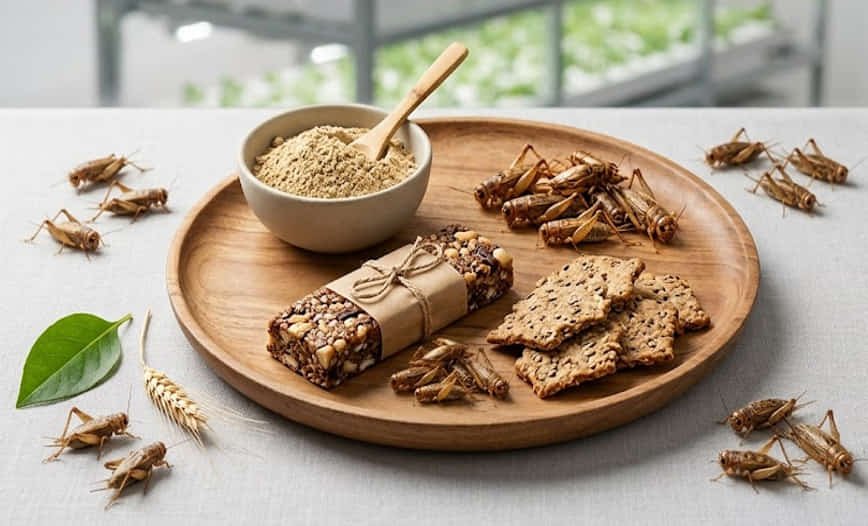
“But do we have to eat whole insects?” many people ask. Fortunately, the answer is no. Modern food technology has found a smart solution. After careful cleaning, drying, and grinding, insects are converted into a fine protein-rich flour. This powder has no legs, wings, or familiar insect shape. It blends smoothly into everyday foods without changing their appearance. The insect quietly says, “You may not even notice I am here.”
Today, insect protein is already appearing in protein powders, nutrition bars, biscuits, cookies, pasta, breakfast cereals, snack chips, and sports supplements. For fitness enthusiasts, it offers another sustainable source of protein alongside whey and plant proteins. Food scientists continue to improve its taste, texture, and safety through advanced processing technologies.
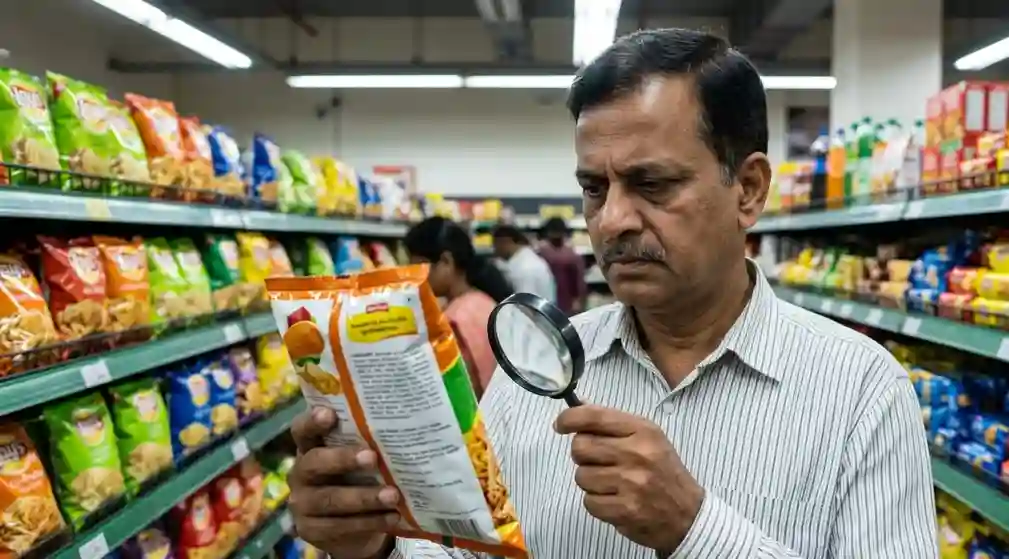
Surprisingly, insects also have unique flavours. Ants provide a tangy, nutty taste. Mealworms and termites remind many people of whole wheat bread and earthy mushrooms. Some stink bugs have fruity notes similar to apples, while certain leaf footed bugs carry a mild flavour resembling roasted pumpkin. Nature seems to have hidden an entire spice box inside the insect world.
Of course, edible insects are not a magical answer to every food challenge. People with shellfish allergies may also react to some insect proteins because they share similar allergens. Strict farming standards, food safety regulations, and consumer acceptance remain important challenges before insect-based foods become common in every supermarket.
Still, the idea is gaining attention because it brings together nutrition, sustainability, and innovation. If humanity wishes to reduce pressure on forests, conserve water, lower greenhouse gas emissions, and feed a growing population, insects may become an important part of the solution. They may never completely replace traditional foods, but they could become valuable partners on our plates.
The next time a cricket hops across your path, you may see it differently. Instead of a tiny insect, imagine a miniature protein powerhouse carrying tomorrow’s dinner in its backpack. Sometimes the future does not arrive with a roar. Sometimes it arrives with a gentle chirp.