Why are some people naturally outgoing, while others prefer quiet settings? Why do some of us plan everything carefully, while others are more spontaneous? Personality is shaped by our experiences, but our genes may also contribute to these differences.
To investigate how much DNA matters, an international team of researchers analysed genetic and personality data from more than one million people. The study, published in Nature, identified 1,260 genetic variants associated with five major personality traits. More than 800 of these associations had not previously been linked to the corresponding traits.
The researchers examined what psychologists call the Big Five: five broad dimensions used to describe personality.

- Extraversion: sociability, energy and assertiveness.
- Agreeableness: compassion, cooperation and consideration for others.
- Conscientiousness: organisation, responsibility and self-discipline.
- Neuroticism: the tendency to experience negative emotions such as anxiety.
- Openness to experience: curiosity, imagination and interest in new ideas.
But how do genes influence something as complicated as personality?
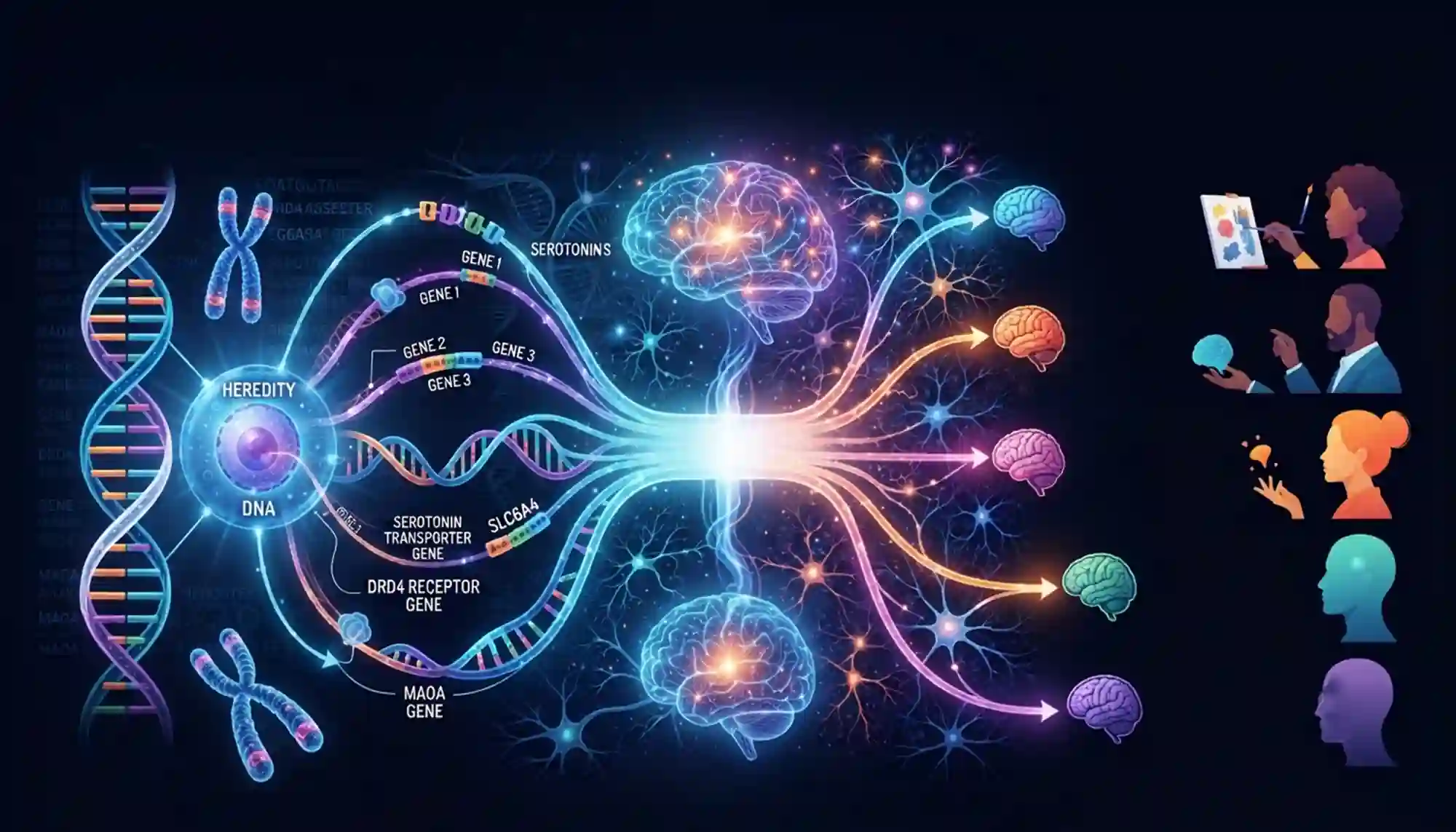
The answer is not a handful of genes that make someone shy or confident. Instead, personality is polygenic, meaning that thousands of genetic differences contribute to it, with each one having a very small effect. The researchers estimated that common genetic variants accounted for roughly 5–9% of differences in these traits in their main analysis. Think of it as a recipe with thousands of ingredients. No single ingredient determines the final flavour, but many small contributions can add up to influence the result.
The team also found genetic links between personality traits and aspects of health and behaviour. For example, genetic patterns associated with neuroticism overlapped with those linked to several psychiatric conditions, while patterns associated with conscientiousness were linked to lower levels of substance use and more frequent exercise. These are statistical associations across groups, not predictions about what any one person will do. And there is a crucial limitation: genes are only part of the picture. Family life, culture, relationships, life events and personal experiences also shape personality. The researchers emphasised that their findings cannot be used to predict an individual’s personality or future behaviour from DNA. The study also included far more participants with European-like genetic ancestry than other backgrounds, so larger and more diverse studies are needed to understand how well the findings apply across populations. Ultimately, our genes may influence the tendencies we begin with, but they do not write a fixed script for who we become. Personality emerges from the ongoing interaction between our biology and the lives we experience.
Sources
Schwaba, T., Clapp Sullivan, M. L., Akingbuwa, W. A., et al. (2026). Robust inference and correlates from genetic associations with personality. Nature