DNA databases contain an enormous amount of information, but finding something genuinely unusual among millions of sequences can be like looking for a pattern hidden in a mountain of text. Researchers at Anthropic have now used Claude AI agents to do exactly that. And the search uncovered a previously uncharacterized biological system in viruses that infect bacteria.
The system was found in bacteriophages, or phages, which are viruses that infect bacteria. It is built around an enzyme called a reverse transcriptase, which can copy RNA into DNA. The enzyme itself was not new; what Claude noticed was the unusual genetic arrangement surrounding it. Around 950 Claude agents searched more than 200,000 reverse transcriptases for about 21 hours. They identified roughly 3,500 candidate systems before narrowing these down to 20 for detailed analysis.
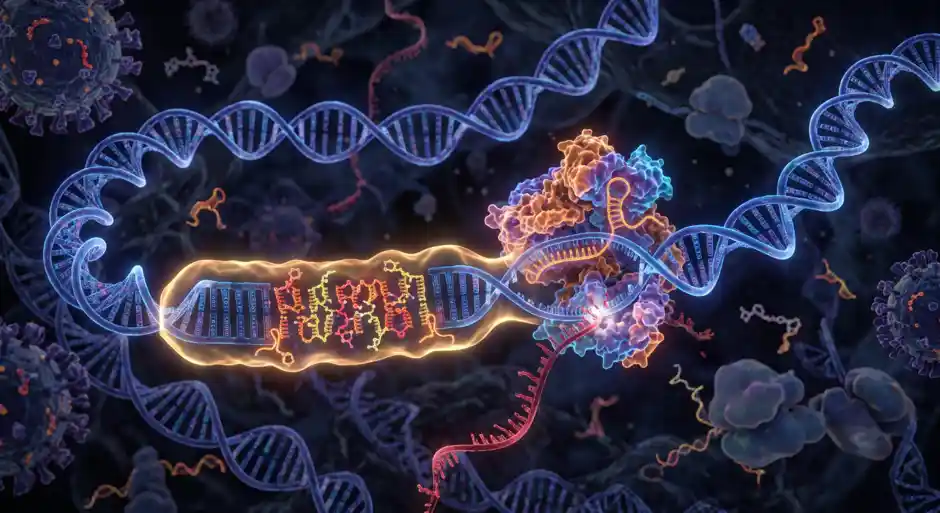
One agent noticed something particularly unusual next to one of the reverse-transcriptase genes: a long stretch of regularly spaced DNA repeats. That caught the researchers’ attention because the arrangement resembles a CRISPR array.

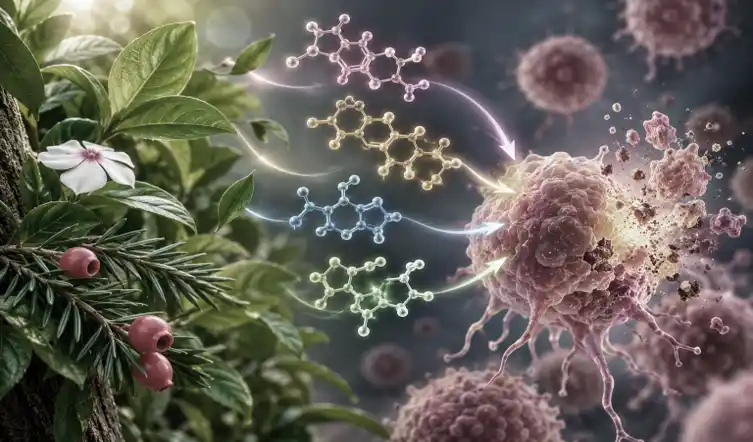
CRISPR systems contain repeating DNA sequences interspersed with snippets of genetic material. These sequences can ultimately produce short RNAs that help guide CRISPR proteins toward particular genetic targets. This programmability is what made CRISPR such a powerful gene-editing technology.
The newly identified system, which researchers call array-associated reverse transcriptases (ART), contains three main components: the reverse transcriptase, a neighbouring partner gene and the unusual repeat array. Early experiments found that the repeat region is transcribed into multiple short RNAs. Another feature that makes the system interesting.
But there is an important distinction. Scientists do not yet know what ART actually does. The researchers have not shown that it can edit DNA, and it has not been demonstrated as a gene-editing tool. The comparison with CRISPR comes from its unusual repeat-and-RNA architecture, not from a demonstrated ability to perform the same functions.
The discovery therefore represents something more fundamental: AI helped scientists notice a biological pattern that had been hiding in genomic data. The next step is figuring out what that pattern is actually for. If ART turns out to have a useful biological function, it could eventually become a new tool for biotechnology. For now, however, it remains a molecular mystery – one that AI helped bring into view.
Sources: