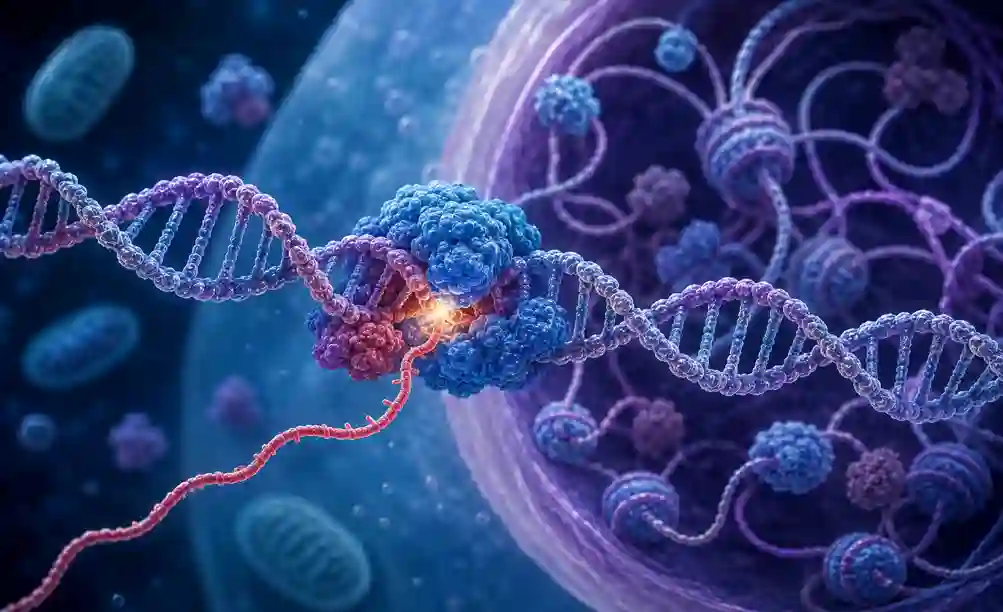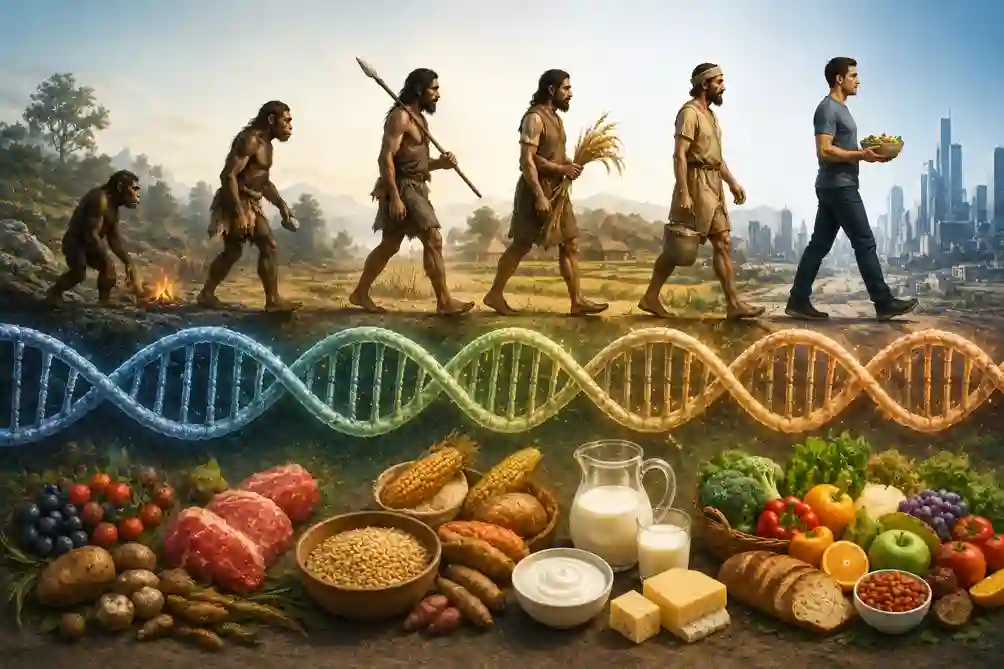
Human diets have changed dramatically throughout evolution. Our ancestors moved from hunting and gathering to farming, began consuming more grains and dairy, developed new food-processing methods, and adapted to environments ranging from tropical forests to the Arctic. Surprisingly, some of these dietary changes may have left measurable signatures in our DNA.
One of the clearest examples is lactase persistence the ability to digest lactose, the sugar in milk, well into adulthood. In most mammals, including most humans, production of the enzyme lactase decreases after childhood. But in populations with a long history of dairy farming, genetic variants near the LCT gene allow lactase production to continue throughout adulthood. These variants appear to have undergone strong natural selection over the past several thousand years.
Another fascinating example involves starch digestion.
Starchy foods became increasingly important as humans adopted agriculture. The AMY1 gene helps produce salivary amylase, an enzyme that begins breaking down starch in the mouth. Humans differ in the number of copies of this gene, and populations with traditionally starch-rich diets tend to have higher AMY1 copy numbers. More recent research using ancient and modern genomes has provided additional evidence that amylase gene duplications increased in some agricultural populations during the past 12,000 years.
Our relationship with dietary fats may have shaped our genomes as well.
Genes in the FADS family help the body process polyunsaturated fatty acids. Different variants are distributed at different frequencies among populations with historically different diets, including plant-rich and marine-animal-based diets. Researchers are investigating how these differences may reflect adaptation to the types of fats available in local food environments.
These examples reveal an important concept: culture can change the environment in which natural selection operates.
When humans began farming or domesticating animals, they didn’t simply change what they ate they changed the selective pressures acting on their bodies. Over many generations, genetic variants that improved survival or reproduction under those conditions could become more common.
However, evolution does not instantly adjust our genes every time our diet changes. Genetic adaptation generally requires many generations, and not every difference between populations is necessarily an adaptation to food. Scientists therefore examine ancient DNA, modern genomes, archaeological evidence, and physiological effects together before drawing conclusions.
The story of food and genetics is therefore much deeper than simply asking what humans should eat.
Our diets have helped shape us and, in some cases, our genes have changed in response.
The next time you eat bread, drink milk, or digest a meal rich in starch, you may be experiencing the result of an evolutionary relationship between human biology and food that has been developing for thousands of years.
Sources: