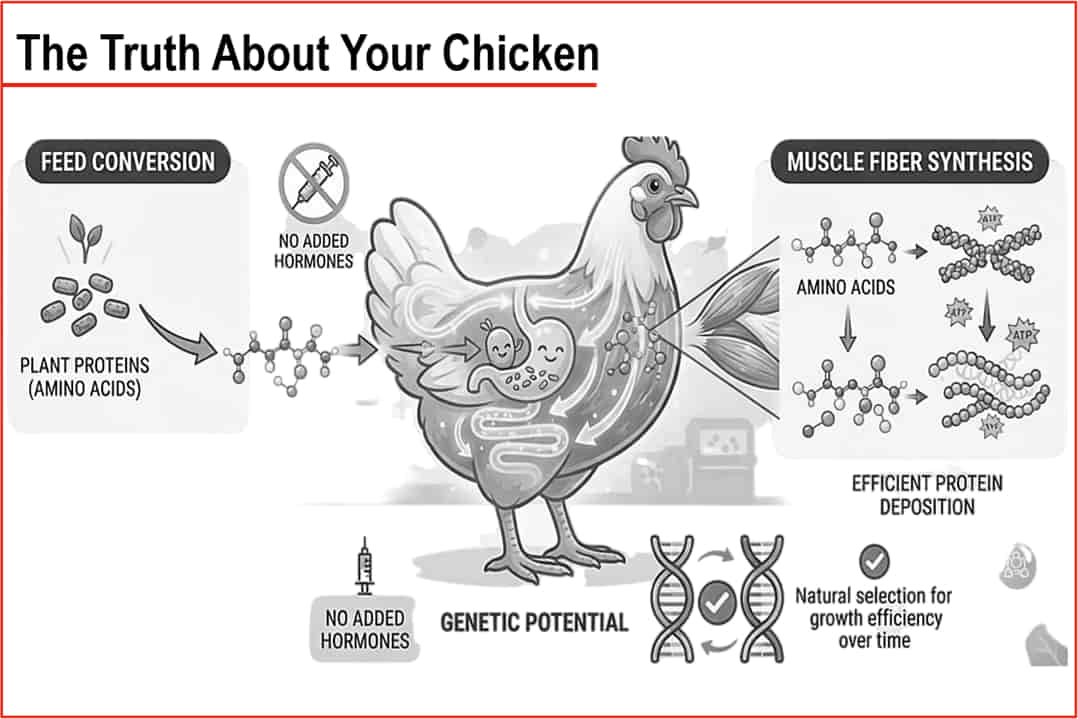
Chicken is one of India’s most popular and accessible sources of animal protein. It is a staple food that cuts across different regions, income groups, and cultural food habits. However, despite its widespread acceptance, few foods attract as much suspicion and fear as the standard broiler chicken.
A deeply embedded belief in public opinion suggests that broiler chickens grow unnaturally fast because they are pumped full of steroids and growth hormones. For many consumers, the rapid development of these birds automatically points to chemical intervention. Over time, this unchallenged assumption has heavily shaped family eating habits, purchasing decisions, and even informal medical advice passed down through generations.
The Root of Consumer Fear

In India, food is never just about fuel; it is deeply linked to health, longevity, and generational wellbeing. Families take concerns around early childhood maturity, hormonal imbalances, and long-term health risks very seriously. When doubts arise about how a specific food is produced, most people feel that avoiding the food entirely is much safer than investigating the facts.
This fear is strengthened by the visible differences between modern broiler chickens and the traditional village birds remembered from previous decades. Today’s chickens exhibit faster growth, higher meat yield, and much shorter rearing cycles. Without clear, accessible scientific explanations from the poultry industry, these traits appear unnatural to the untrained eye. In the absence of transparent communication, public speculation has filled the gap, and decades of repetition have turned a simple rumor into an accepted truth.
Moving From Fear to Facts
However, cultural beliefs alone cannot define scientific reality. It is essential to understand exactly how modern poultry production works before making drastic dietary conclusions. These assumptions do not just cause unnecessary worry; they also directly impact public nutrition, harm the livelihoods of poultry farmers, and damage consumer confidence in affordable food sources.
Are steroids or hormones truly involved in raising broiler chickens? Or are we simply mistaking biological progress, advanced breeding, and improved farming practices for chemical intervention? These questions deserve direct, evidence-based clarity rather than emotional assumptions.
To make informed dietary choices, we must replace fear with facts. The reality behind rapid poultry growth does not involve secret chemicals. Instead, it is driven by decades of natural genetic potential, precisely balanced animal nutrition, and highly controlled modern farming environments. Understanding this science is the first step toward reclaiming confidence in what we eat.