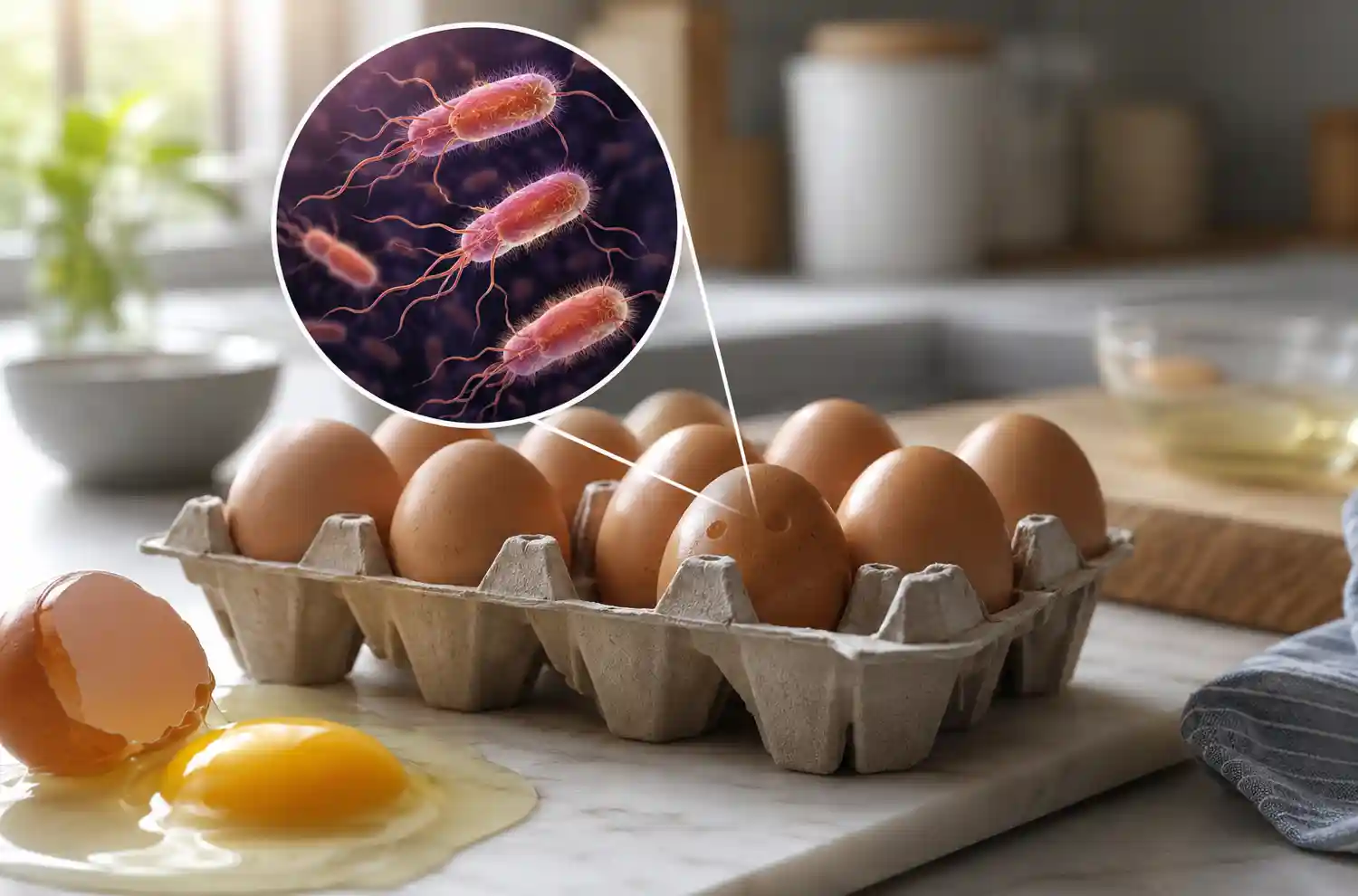
A simple breakfast staple has once again become the centre of a public health emergency. Sometimes, the smallest crack can open the biggest crisis. In late July and early August 2026, U.S. health authorities linked a multistate outbreak of Salmonella Enteritidis to shell eggs produced by Midwest Poultry Services in Texas. Nearly 1.6 million cartons of eggs were recalled after infections spread across 17 states, leaving close to 100 people ill and dozens hospitalized. Consumers were urged to discard or return the recalled eggs while investigators traced the bacterial source through environmental monitoring and epidemiological surveillance. A breakfast that usually begins the day with comfort suddenly became a silent messenger of disease.
Yet this story is much larger than one recall. It is another chapter in humanity’s long-running battle against one of the world’s most persistent foodborne pathogens. The fight resembles a never-ending game of hide-and-seek, where science keeps searching while bacteria keep finding new hiding places. Every outbreak reminds us that even ordinary foods can sometimes carry extraordinary risks.
A tiny invader with a global footprint

Salmonella is a genus of bacteria capable of infecting both humans and animals. Although microscopic, it behaves like an invisible thief, quietly entering the body and stealing health before anyone notices. Every year, millions of people worldwide develop salmonellosis, characterized by diarrhoea, fever, abdominal cramps, nausea, and vomiting. While most patients recover within a week, infants, older adults, pregnant women, and immunocompromised individuals face a much greater risk of severe bloodstream infections. In microbiological jargon, Salmonella is one of the most important foodborne pathogens monitored by public health agencies worldwide.
History reminds us that Salmonella rarely strikes only once. The infamous 1985 milk contamination in the United States sickened more than 160,000 people. The 2008 to 2009 peanut butter outbreak triggered one of the largest food recalls in U.S. history. The 2010 Iowa egg crisis led to the recall of more than half a billion eggs after widespread contamination. Europe, Asia, Australia, and Africa have also witnessed repeated outbreaks involving poultry, eggs, meat, vegetables, spices, sprouts, chocolate, and fresh produce. These recurring events highlight a sobering reality, food safety is only as strong as its weakest link. History seems to whisper, “Learn from me, or prepare to repeat me.”
How does Salmonella reach our food?
The journey of Salmonella often begins long before food reaches supermarket shelves. The bacteria travel through the food chain like an uninvited passenger who quietly boards a crowded train without anyone noticing.
In poultry farms, infected hens may carry the bacterium without showing symptoms. The bacteria can contaminate eggs externally through faecal material deposited on the shells or internally if the reproductive tract becomes infected before shell formation. Because eggshells are porous, bacteria may penetrate microscopic openings, especially when eggs are improperly washed or stored. What appears perfectly clean on the outside may sometimes hide an unseen biological drama within.
Contamination is equally possible during slaughter, food processing, transportation, packaging, or kitchen handling. Cross-contamination occurs when raw poultry or eggs come into contact with ready-to-eat foods through contaminated knives, cutting boards, or hands. Poor refrigeration further accelerates bacterial multiplication. It is almost as if the bacteria patiently wait for one small mistake before making their move.
It is a classic example of the “farm-to-fork” continuum, where failure at any stage can ripple through the entire food chain. Like falling dominoes, one weak point can trigger consequences far beyond its origin.
Hunting an invisible enemy
Modern food microbiology has transformed outbreak detection into molecular detective work. Scientists now investigate outbreaks much like skilled detectives solving a complex mystery, except their clues are hidden inside DNA instead of fingerprints.
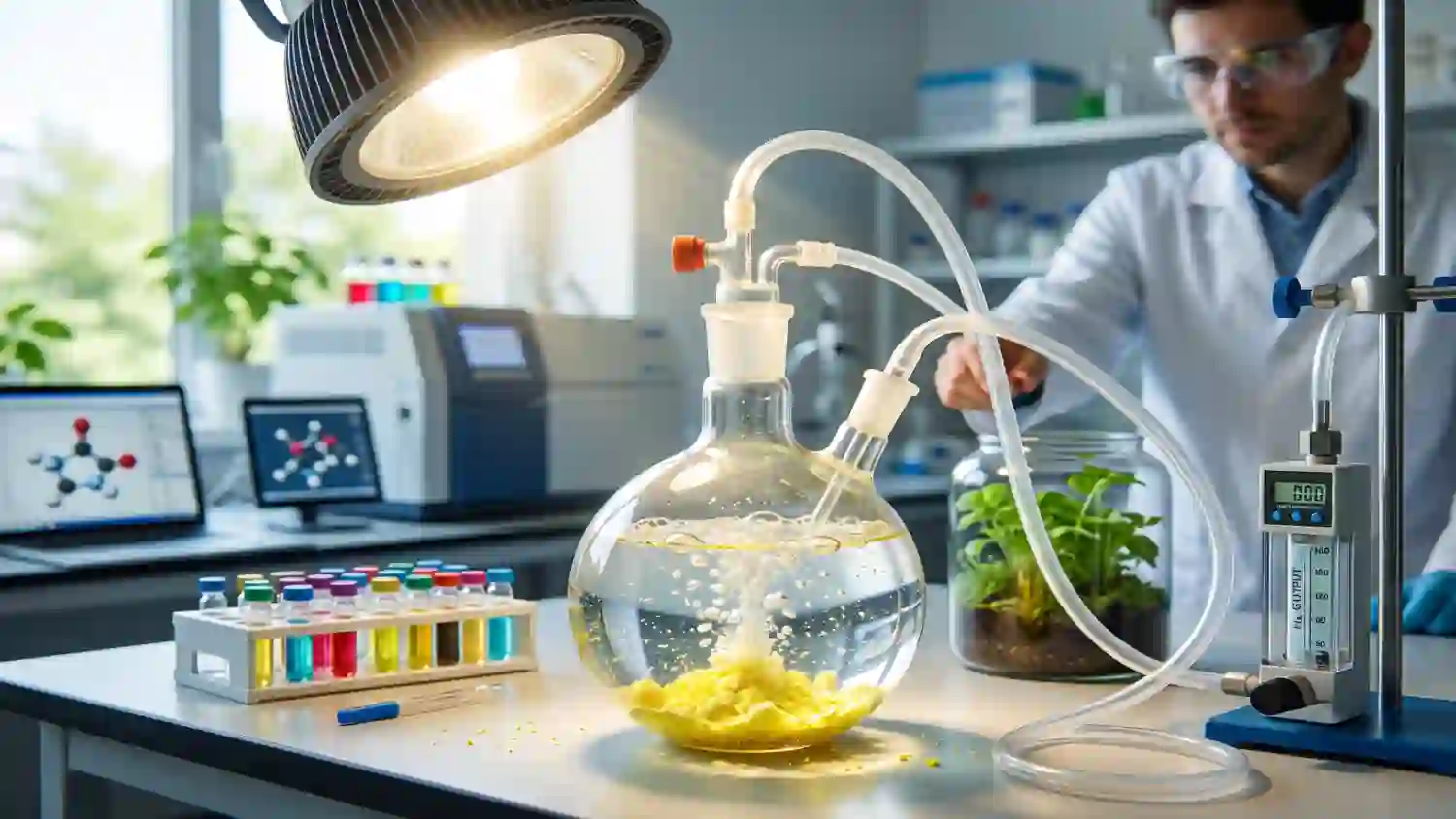
Traditional culture-based isolation remains the gold standard, allowing scientists to grow bacteria on selective media followed by biochemical and serological confirmation. However, today’s investigations move much faster. Science has traded the magnifying glass for powerful genetic tools.
Polymerase Chain Reaction, or PCR, and quantitative PCR detect Salmonella DNA within hours instead of days. Whole Genome Sequencing, or WGS, has revolutionized outbreak investigations by comparing bacterial genomes from patients, food samples, and production facilities with remarkable precision. Scientists can determine whether infections occurring hundreds of kilometres apart originated from the same contamination source. It is like matching tiny biological fingerprints across an entire country.
Other advanced approaches include enzyme-linked immunosorbent assays, or ELISA, immunomagnetic separation, loop-mediated isothermal amplification, or LAMP, biosensor technologies, CRISPR-based diagnostics, metagenomic sequencing, and artificial intelligence algorithms capable of predicting contamination hotspots from environmental and production data. Together, these technologies transform food safety into a high-resolution genomic surveillance network capable of identifying outbreaks before they spiral out of control. Science is steadily turning the tables, making bacteria leave more clues than ever before.
Prevention is better than recall
Food safety experts emphasize that preventing contamination is far more effective than responding after an outbreak. Closing the stable door before the horse bolts remains the wiser choice, especially when public health is at stake.
On farms, vaccination of laying hens, routine environmental monitoring, biosecurity measures, pest control, clean feed, and safe water reduce bacterial spread. During processing, strict sanitation, Hazard Analysis and Critical Control Point, or HACCP, programmes, and continuous microbiological surveillance minimize contamination risks. Every layer of protection acts like another lock on the door against unwanted microbial visitors.
Consumers also play a vital role. Eggs should be refrigerated promptly, cooked until both the yolk and white are firm, and raw eggs should never come into contact with ready-to-eat foods. Hand hygiene, clean utensils, and proper kitchen sanitation remain simple yet powerful defences. “Wash well, cook well, stay well,” could easily become the golden rule of every kitchen.
The road ahead
The latest U.S. egg recall is more than another headline, it is a reminder that microorganisms constantly exploit weaknesses in our global food system. In today’s interconnected world, a contaminated poultry farm can affect consumers hundreds or even thousands of kilometres away. Our food network resembles a giant web, where a disturbance at one corner can shake the entire structure.
The encouraging news is that science is fighting back. Advances in genomics, rapid diagnostics, biosensors, and AI-driven surveillance are transforming food safety from reactive crisis management into proactive prevention. The battle against Salmonella is no longer fought only in laboratories, it begins on farms, continues through supply chains, and ends in every household kitchen. Every careful farmer, food worker, scientist, and consumer becomes a soldier in this quiet battle. In the age of precision microbiology, protecting our breakfast may be one of the greatest victories modern science can deliver. After all, the safest meal is not simply the tastiest one, but the one that reaches the table without unwanted microscopic guests.
Source: Bermudez-Aguirre D, Carter J, Niemira BA. An Investigation About the Historic Global Foodborne Outbreaks of Salmonella spp. in Eggs: From Hatcheries to Tables. Compr Rev Food Sci Food Saf. 2025 May;24(3):e70202. doi: 10.1111/1541-4337.70202. PMID: 40391412; PMCID: PMC12090039.