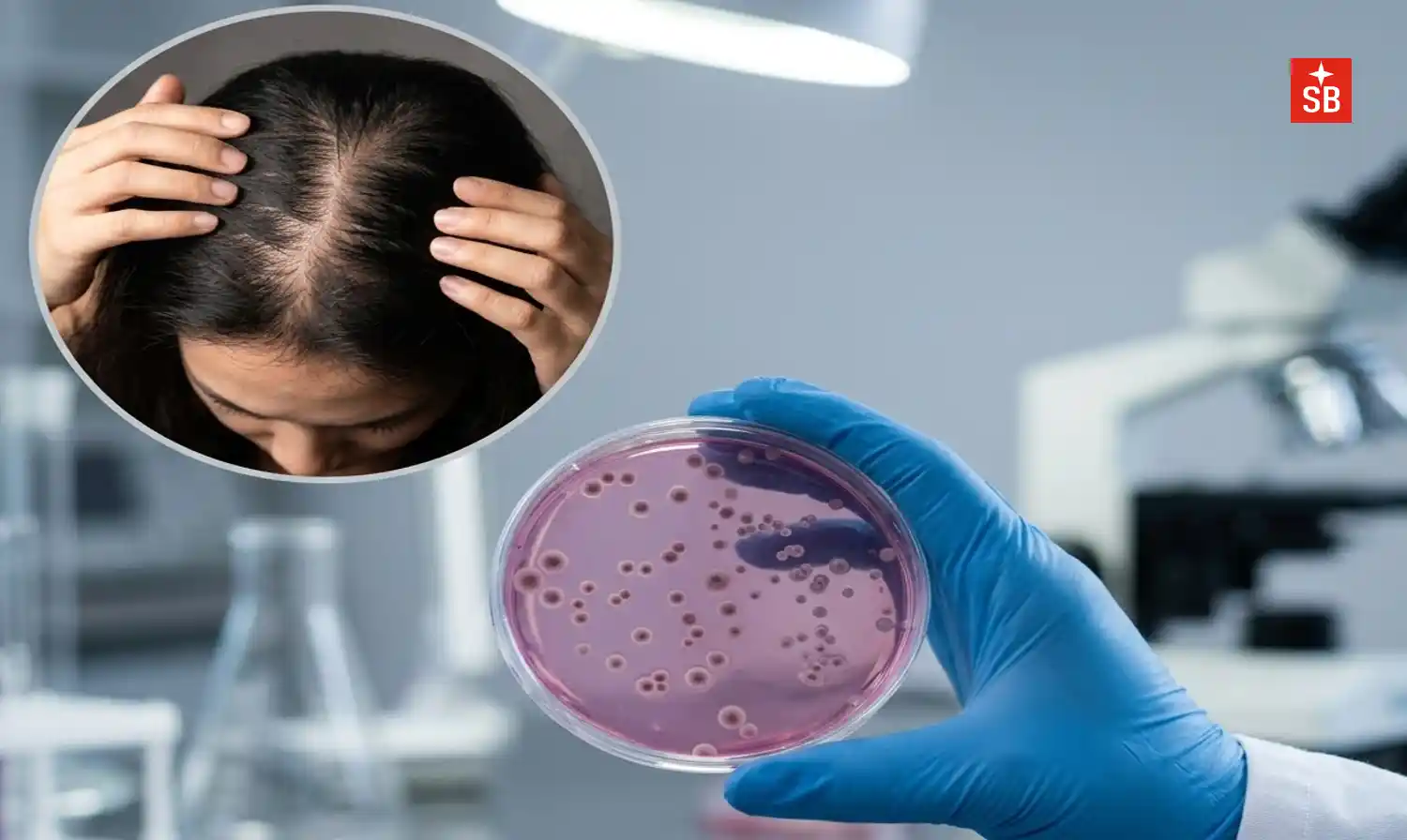
A drug-resistant fungus is spreading across the United States, with Candida auris reported in 23 states in 2026. CDC data reported more than 3,100 clinical cases by mid-July, highlighting the growing public health concern around a fungus that can spread in healthcare settings and cause severe, sometimes life-threatening infections.
But the latest concern is not only where Candida auris is spreading. Scientists have now uncovered a surprising clue about how this fungus may remain on the body without causing obvious symptoms. A new study suggests that C. auris can settle deep inside hair follicles and alter the local immune response, creating conditions that help it persist on the skin.
Candida auris is an emerging yeast that can be resistant to several antifungal medicines. It is particularly dangerous for people who are already seriously ill or have weakened immune defences. The fungus can colonise the skin without causing symptoms, allowing it to quietly travel from person to person, especially in healthcare environments. The CDC notes that C. auris spreads easily among patients in healthcare facilities and can cause severe, often multidrug-resistant illness.
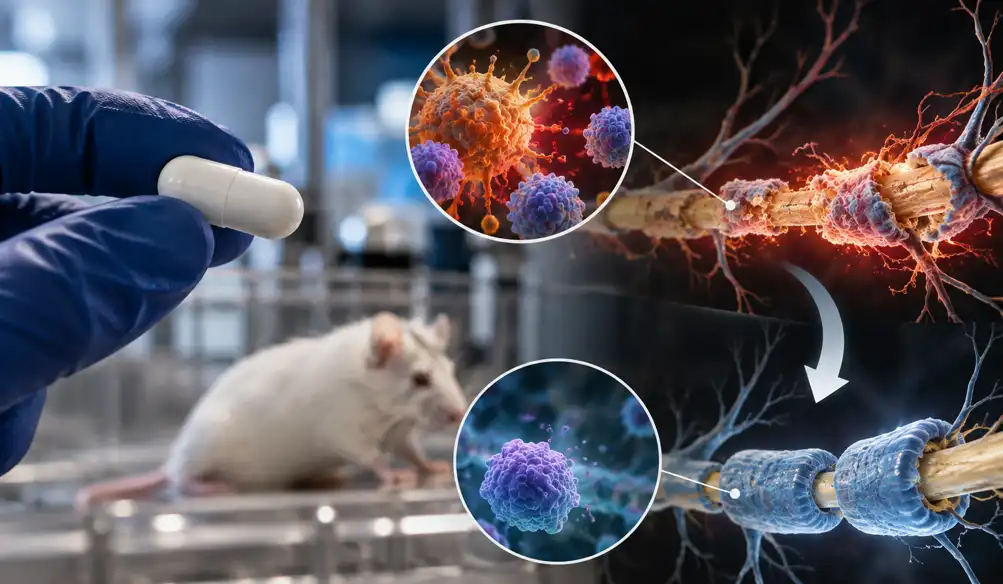
The new research, led by Merrill et al., looked at why C. auris behaves differently from Candida albicans, a closely related fungus that is cleared from the skin more effectively. Using mouse models, fungal and mouse genetics, immunology, single-cell RNA sequencing and advanced confocal microscopy, the researchers examined how the two fungi interact with skin.
Merrill et al. found that C. auris colonised mouse skin at higher levels and remained there for longer than C. albicans. The fungus also showed a strong tendency to bind to hair and settle inside hair follicles. These tiny structures, which normally support hair growth, appeared to become a favourable hiding place for the pathogen.
The finding becomes even more interesting when the immune system enters the story. C. albicans triggered a type 3/17 immune response involving interleukin-17A, or IL-17A, which supports antifungal protection at the skin barrier. C. auris, however, pushed the immune response in a different direction, towards a type 1 response.
This response was associated with increased activity of several immune cells, including type 1 conventional dendritic cells, cytotoxic T cells and T helper 1 cells. The researchers also detected increased production of interferon-γ, or IFNγ, a powerful immune signalling molecule.
Here comes the biological twist. IFNγ normally has important protective roles during deeper infections, but in the skin environment studied by the researchers, it appeared to help C. auris stay rather than leave. The molecule signalled directly to keratinocytes, the cells that form much of the skin’s outer layer, and reduced the expression of genes linked to IL-17A-driven antifungal defence and skin barrier function.
It was almost as though the fungus had found a way to make the body’s security system guard the wrong door.

The researchers then investigated what C. auris was doing at the molecular level. When exposed to conditions that resemble human skin, including synthetic sweat, high salt, limited nutrients and a temperature of 37°C, the fungus changed the composition of its cell wall.
One important change involved chitin, a structural component of the fungal cell wall. Under skin-like conditions, C. auris increased the amount of chitin exposed on its surface. C. albicans responded differently, showing increased β-1,3-glucan instead.
That difference may be a key part of the fungus’s survival strategy. Experiments that genetically or pharmacologically altered fungal chitin also changed the immune response and affected how well C. auris persisted on the skin. In other words, the fungus’s outer shell was not simply armour. It was also helping shape the immune conversation around it.
The researchers propose that exposed chitin helps C. auris redirect the skin’s immune response away from the protective type 3/17 pathway and towards a type 1 IFNγ-driven response. This shift can weaken parts of the skin’s antifungal defence and create a more favourable environment for long-term colonisation of hair follicles.
However, the researchers also found an important distinction. IFNγ did not simply become harmful everywhere. In deeper skin or bloodstream infections, it retained its classic protective role. This means the effect of the immune signal depends strongly on where the infection is located.
The study therefore reveals a fascinating example of microbial-immune crosstalk. Rather than simply hiding from the immune system, C. auris appears capable of influencing the type of immune response generated around it. The fungus may be changing the rules of the game while the body’s defence system is still playing.
The findings also help explain why silent colonisation matters. A person carrying C. auris on the skin may have no obvious symptoms but can still provide an opportunity for transmission. If the fungus later reaches deeper tissues, particularly in people with weakened immune systems, it can cause invasive disease.
The growing number of U.S. cases makes this biology particularly important. CDC surveillance has shown that C. auris cases have increased over recent years, while current 2026 reports show the fungus across 23 states. The CDC stresses that early detection, screening and strong infection-prevention measures can help control its spread in healthcare settings.
Still, one important caution remains. The hair-follicle mechanism described in this study was demonstrated primarily in mouse models. It does not mean that scientists have proved that C. auris uses exactly the same pathway to hide in human hair follicles. Instead, the work provides a valuable biological model for understanding how skin colonisation may occur.
The study by Merrill et al., published in Science, therefore adds an important piece to the C. auris puzzle. The research suggests that the fungus can remodel its cell wall, expose chitin, alter local immune signalling and promote its own persistence in hair follicles. A microscopic organism may be small, but its biological strategy is anything but simple.
Source: Merrill, E. D., Prudent, V., Basso, P., Rapp, E., Moghadam, P., Rodriguez, A., Hung, E., Hurabielle, C., Cheng, J., Cho, R. J., Abegaze, B., Buck, A., Pyper, K., Veinbachs, A., Wells, E. K. C., Scharschmidt, T. C., Rosenblum, M. D., Molofsky, A. B., & Noble, S. M. (2026). The fungal pathogen Candida auris exposes chitin to trigger IFNγ and persist in hair follicles. Science (New York, N.Y.), 393(6811), eadu6688. https://doi.org/10.1126/science.adu6688