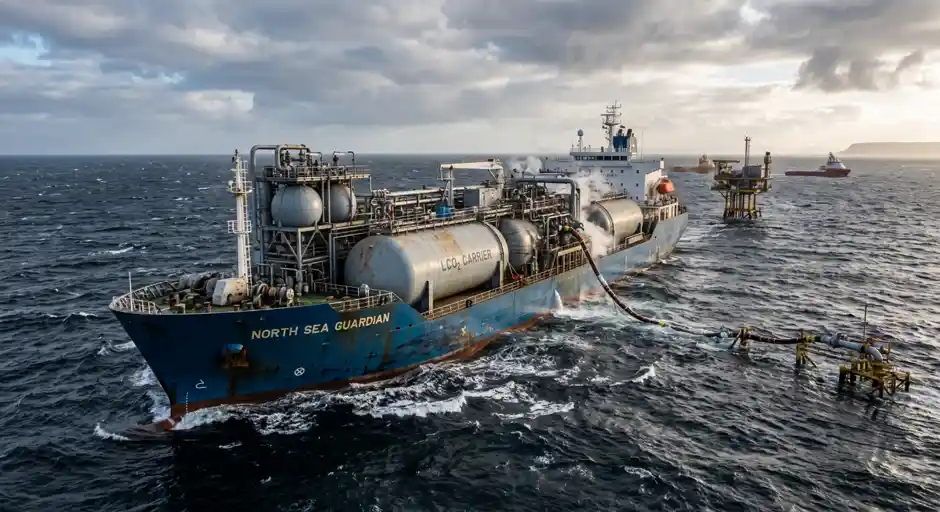
At a fertilizer plant in the Netherlands, carbon dioxide is being captured, chilled into a liquid and loaded onto specially designed ships. The ships then carry it to Norway, where the CO₂ is sent more than 8,500 feet beneath the seabed for permanent storage. It is one of Europe’s first large-scale attempts to capture industrial carbon dioxide and keep it out of the atmosphere.
The journey begins at Yara’s fertilizer plant in Sluiskil, the largest ammonia and mineral fertilizer production site in Europe. Producing ammonia releases large amounts of CO₂, so the plant captures the gas and processes it before transportation. The captured CO₂ is compressed, dried and cooled until it becomes a dense liquid that can be transported efficiently.
Why ship it instead of sending it through a pipeline?

The industries producing CO₂ are spread across Europe, while suitable geological storage sites are concentrated in particular regions. Specialised ships allow the captured carbon to travel between these locations.
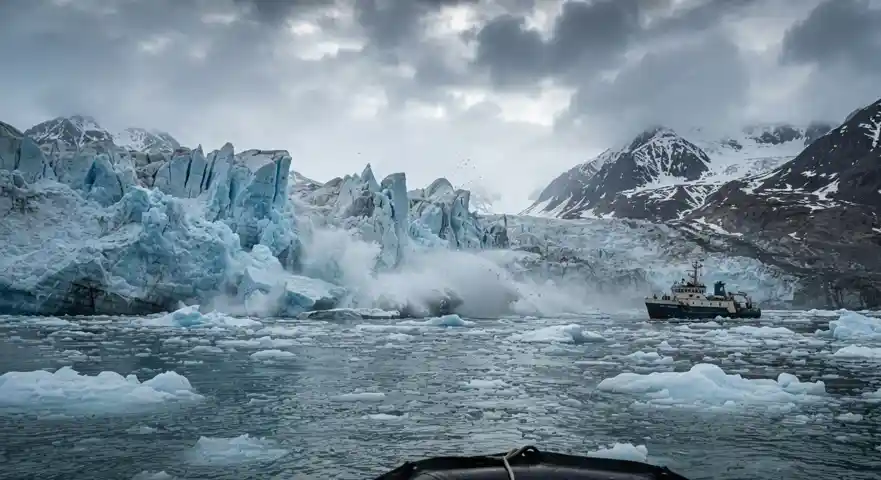
Yara’s Sluiskil project is expected to capture and liquefy up to 800,000 tonnes of CO₂ every year. The liquid CO₂ is transported to Norway by dedicated vessels operated by Northern Lights, a partnership between Equinor, Shell and TotalEnergies.
Once the ship reaches Norway, the CO₂ is transferred to an onshore terminal. From there, a pipeline carries it roughly 100 kilometres offshore to the Aurora storage site. The CO₂ is then injected about 2,600 metres (8,530 feet) beneath the seabed into a deep geological formation designed for long-term storage.
The idea is called carbon capture and storage (CCS). Instead of allowing CO₂ from an industrial process to enter the atmosphere, it is captured and stored underground.
The system is now operating commercially, but CCS is not a way to make every source of emissions disappear. It requires substantial infrastructure, energy and monitoring, and it only addresses the emissions that are actually captured.
Still, the project demonstrates something unusual: carbon dioxide can now be treated almost like a cargo – captured at one industrial site, transported across national borders and stored deep beneath the ocean floor.
Source: