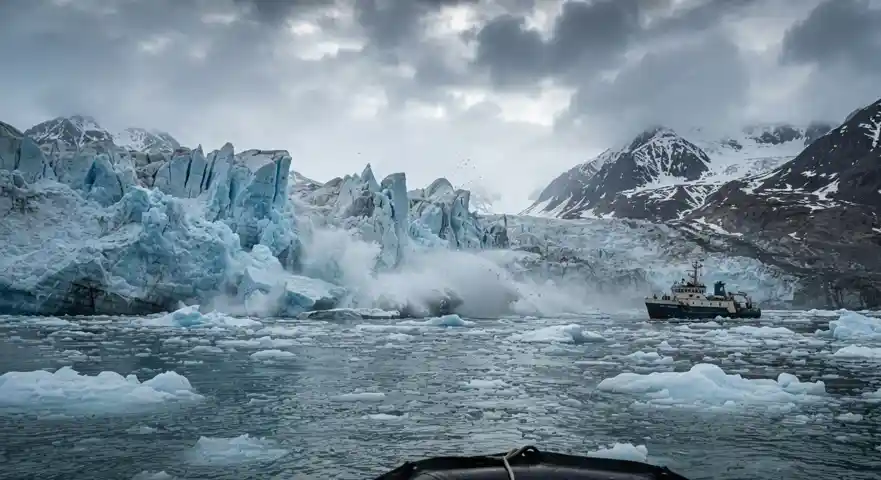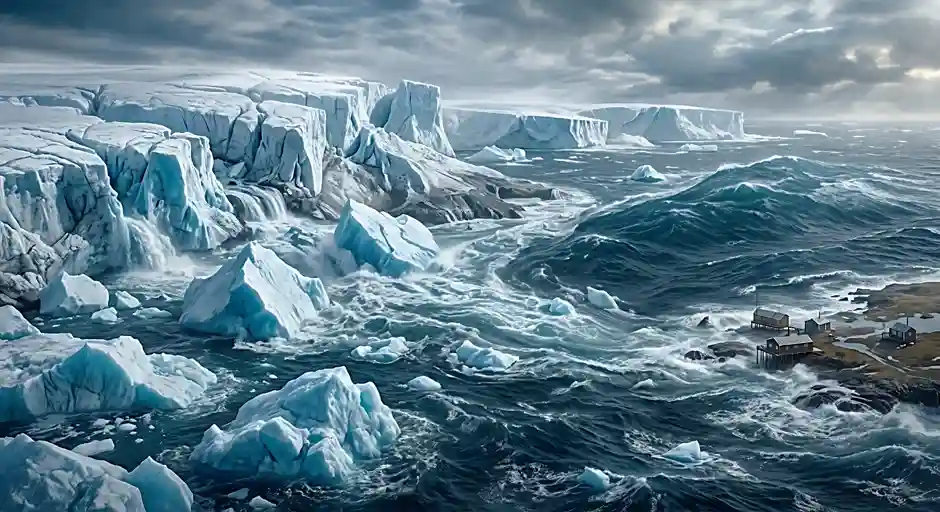
More than 12 trillion tons of ice have disappeared from Greenland and Antarctica since 1979. That sounds like an enormous amount of melting, but new satellite data reveals that much of the ice did not simply melt away at the surface.
Instead, glaciers have been moving faster and carrying more ice into the ocean. Researchers from the international Ice Sheet Mass Balance Inter-Comparison Exercise (IMBIE) combined 42 independent satellite surveys from 27 satellite missions to reconstruct how the two ice sheets changed between 1979 and 2023. Their analysis found that Greenland and Antarctica lost about 11.3 trillion metric tons of ice, raising global sea levels by approximately 3.1 centimetres.
To understand where that ice went, it helps to think of an ice sheet as a huge frozen reservoir. Snow adds ice to the top, while ice is removed through surface melting and through glaciers that flow outward toward the ocean. They found that about 84% of the ice loss came from changes in glacier movement. In other words, glaciers accelerated and discharged more ice directly into the ocean. Only about 16% came from a reduction in surface mass balance, such as increased melting or reduced snowfall.
Why does this matter?
When ice that was sitting on land flows into the ocean, it contributes to sea-level rise. The 3.1 centimetres from these two ice sheets is only part of the total rise in global sea level, which also has other causes, including the expansion of warming seawater and ice loss from glaciers elsewhere.The satellite record also shows that the loss has accelerated over time, particularly since the 1990s and into the 2010s. They link the long-term changes to a warming climate, including warmer ocean water interacting with the edges and undersides of glaciers.
There was a temporary slowdown in the measured loss between 2020 and 2023, particularly in Antarctica. But they say this was largely influenced by short-term weather patterns, including unusually heavy snowfall in East Antarctica, rather than a reversal of the longer-term trend. The importance of the new record is therefore bigger than one enormous number. For the first time, satellites have given scientists a nearly half-century view of how Earth’s two largest ice sheets are changing. And that history shows that the movement of ice itself is becoming an increasingly important part of the story of rising seas.
Source: