For decades, scientists knew what was helping many pancreatic cancers grow. The problem was that they couldn’t stop it. Now, that may be changing.
The U.S. Food and Drug Administration has approved Rasonque (daraxonrasib), a new once-daily pill for adults with previously treated metastatic pancreatic cancer. The drug targets a family of proteins called RAS, which normally help control cell growth but can become dangerously overactive when mutated.
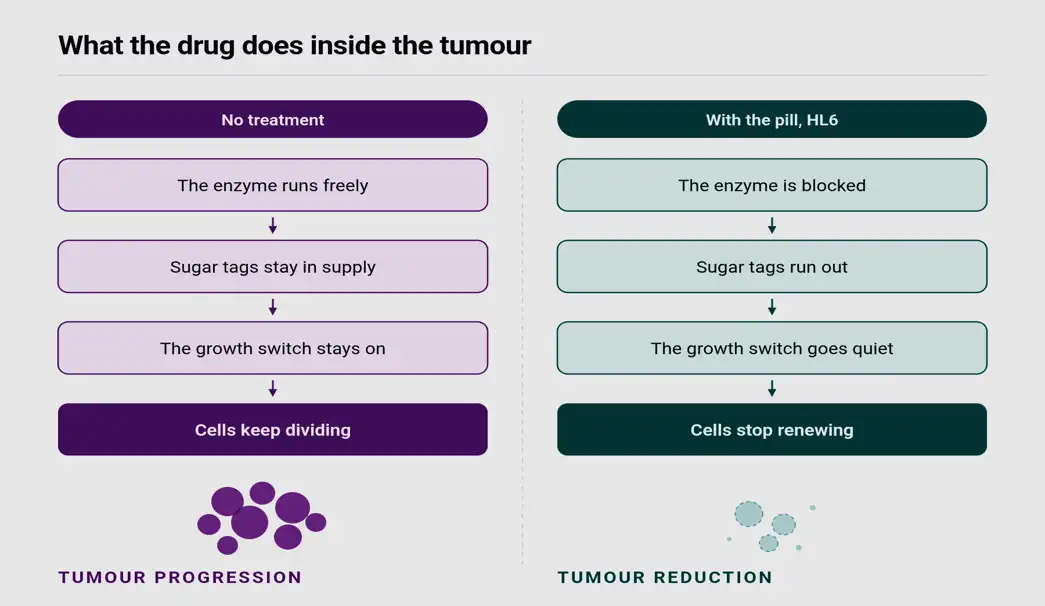
One mutation in particular, KRAS, is found in more than 90% of pancreatic ductal adenocarcinomas, the most common form of pancreatic cancer. For years, KRAS was considered one of cancer biology’s most difficult targets because of the shape and behaviour of the protein. Scientists could see the problem, but finding a drug that could effectively shut it down proved extremely difficult. Daraxonrasib takes a different approach. Instead of allowing the mutated RAS protein to keep switching between signals that tell cancer cells to grow, the drug binds to RAS and interferes with its activity.
This can disrupt the molecular signals that cancer cells rely on for continued growth and survival. The results from the clinical trial are what made the approval particularly notable. In a randomized trial involving 500 patients with previously treated metastatic pancreatic cancer, people receiving daraxonrasib had a median overall survival of 13.2 months, compared with 6.7 months for those receiving standard chemotherapy. That is almost twice as long.
But the number does not mean every patient will live exactly 13.2 months, nor does it mean the drug cures pancreatic cancer. Median survival simply means that half of the patients lived longer than that time and half lived for less. The approval is still significant because pancreatic cancer has remained particularly difficult to treat, especially once it has spread to other parts of the body. The new drug gives doctors another targeted option for patients whose cancer has already been treated. And the implications could extend beyond pancreatic cancer.
RAS mutations are involved in several other cancers, including some lung and colorectal cancers. Studies are going on whether drugs built around this approach could work against other RAS-driven tumours. There is still a long way to go. Daraxonrasib is not a cure,but a hope for many. Its current FDA approval is specifically for previously treated metastatic pancreatic cancer.
But after decades of trying to target RAS, they have finally found a way to interfere with one of cancer’s most important growth signals. Sometimes a breakthrough in cancer treatment isn’t about discovering a completely new target. It’s about finally finding a way to hit the target which was already known.
Sources: