The immune system does not remain biologically identical throughout life. As we age, its ability to respond to new threats gradually changes a phenomenon known as immunosenescence. At the same time, older bodies often develop a persistent, low-level inflammatory state called inflammaging. Together, these processes create a paradox: an ageing immune system can become less effective at fighting certain infections while becoming more prone to inappropriate or chronic inflammation.
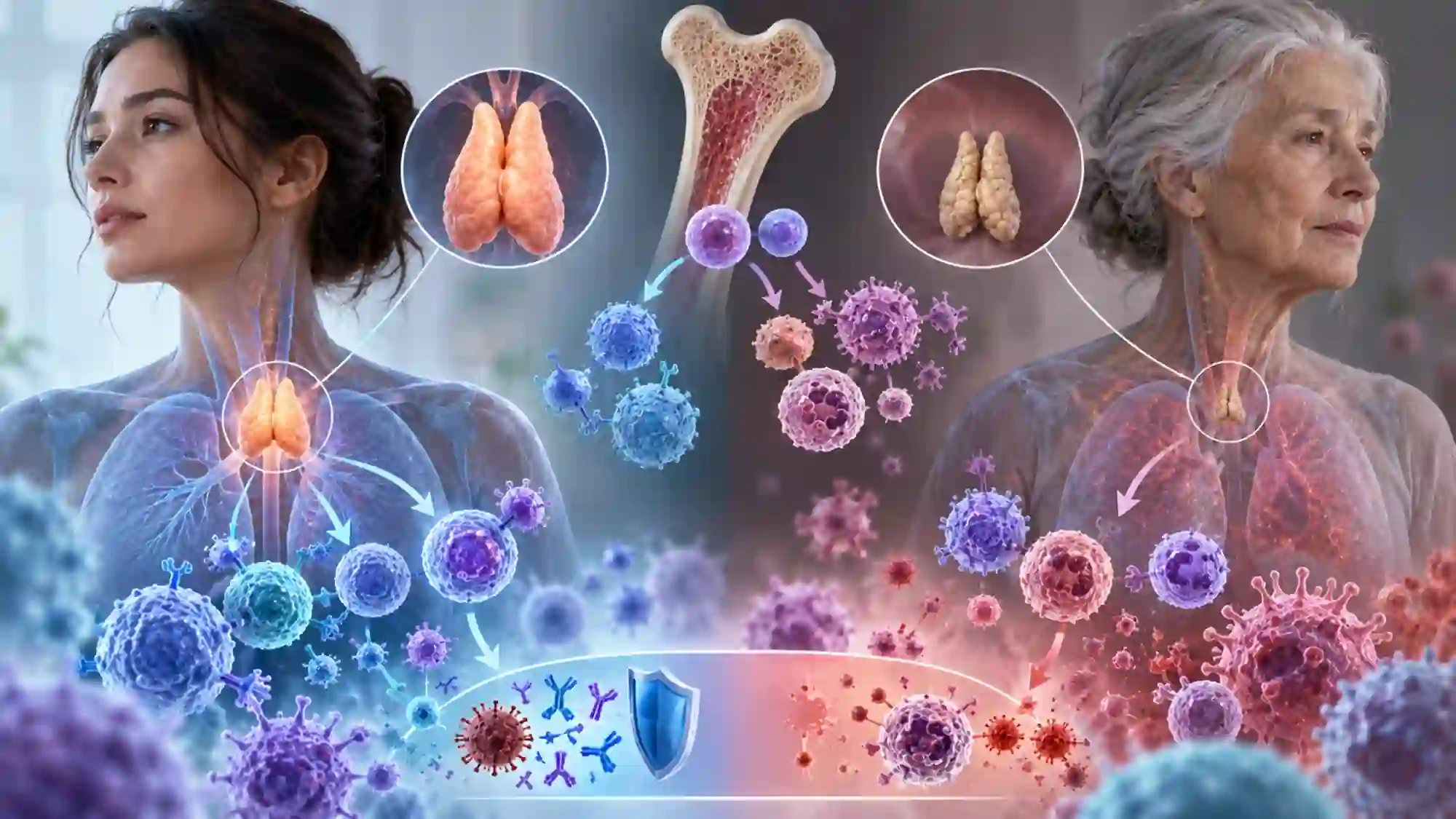
One of the most important changes occurs in the thymus, the organ where T cells mature. The thymus begins shrinking and becoming less active relatively early in life. With increasing age, it produces fewer naïve T cells, meaning there is a smaller pool of lymphocytes available to recognise unfamiliar pathogens. The T-cell repertoire also becomes more restricted, potentially contributing to weaker responses to newly encountered infections and vaccines.
The bone marrow also changes. Ageing hematopoietic stem cells increasingly favour production of myeloid cells over lymphoid cells, contributing to alterations in the balance and function of immune-cell populations. These changes can affect the production of B and T lymphocytes, important components of adaptive immunity.

Meanwhile, immune cells themselves undergo functional changes. Some T cells become highly differentiated or exhausted after years of exposure to antigens, while alterations in B cells can affect the production of effective antibodies. Cells of the innate immune system, including macrophages and neutrophils, can also display altered inflammatory responses.
This is where inflammaging becomes important. Rather than being completely switched off after an immune challenge, inflammatory signalling can remain chronically elevated with age. Cellular senescence, accumulated molecular damage, persistent infections and changes in tissue environments can all contribute to this inflammatory state.
Interestingly, researchers increasingly view immunosenescence not simply as a passive deterioration. A major 2026 review proposed that the ageing immune system may itself contribute to ageing in other organs. Dysfunctional immune cells can release inflammatory signals and influence tissues throughout the body, potentially creating a feedback loop between immune ageing and systemic ageing.
This has made immune rejuvenation an important area of research. Scientists are investigating approaches that could restore thymic function, modify dysfunctional immune cells, reduce harmful inflammation or improve the body’s ability to generate new immune responses. However, these strategies remain an active area of research rather than established methods for reversing human immune ageing.
Ageing, therefore, does not simply make the immune system “weaker.” It changes its architecture, cellular composition and behaviour. The challenge for modern medicine may not be to make an older immune system behave exactly like a young one, but to restore the balance between effective defence and controlled inflammation. The ageing immune system may not be disappearing it is being rewired.
Sources:
Jang IH, Niedernhofer LJ, Robbins PD, Camell CD. The ageing immune system as a driver of systemic ageing. Nat Rev Immunol. 2026 Jul;26(7):489-506. doi: 10.1038/s41577-026-01269-3. Epub 2026 Feb 13. PMID: 41688787; PMCID: PMC13723950.
Goyani P, Christodoulou R, Vassiliou E. Immunosenescence: Aging and Immune System Decline. Vaccines (Basel). 2024 Nov 23;12(12):1314. doi: 10.3390/vaccines12121314. PMID: 39771976; PMCID: PMC11680340.