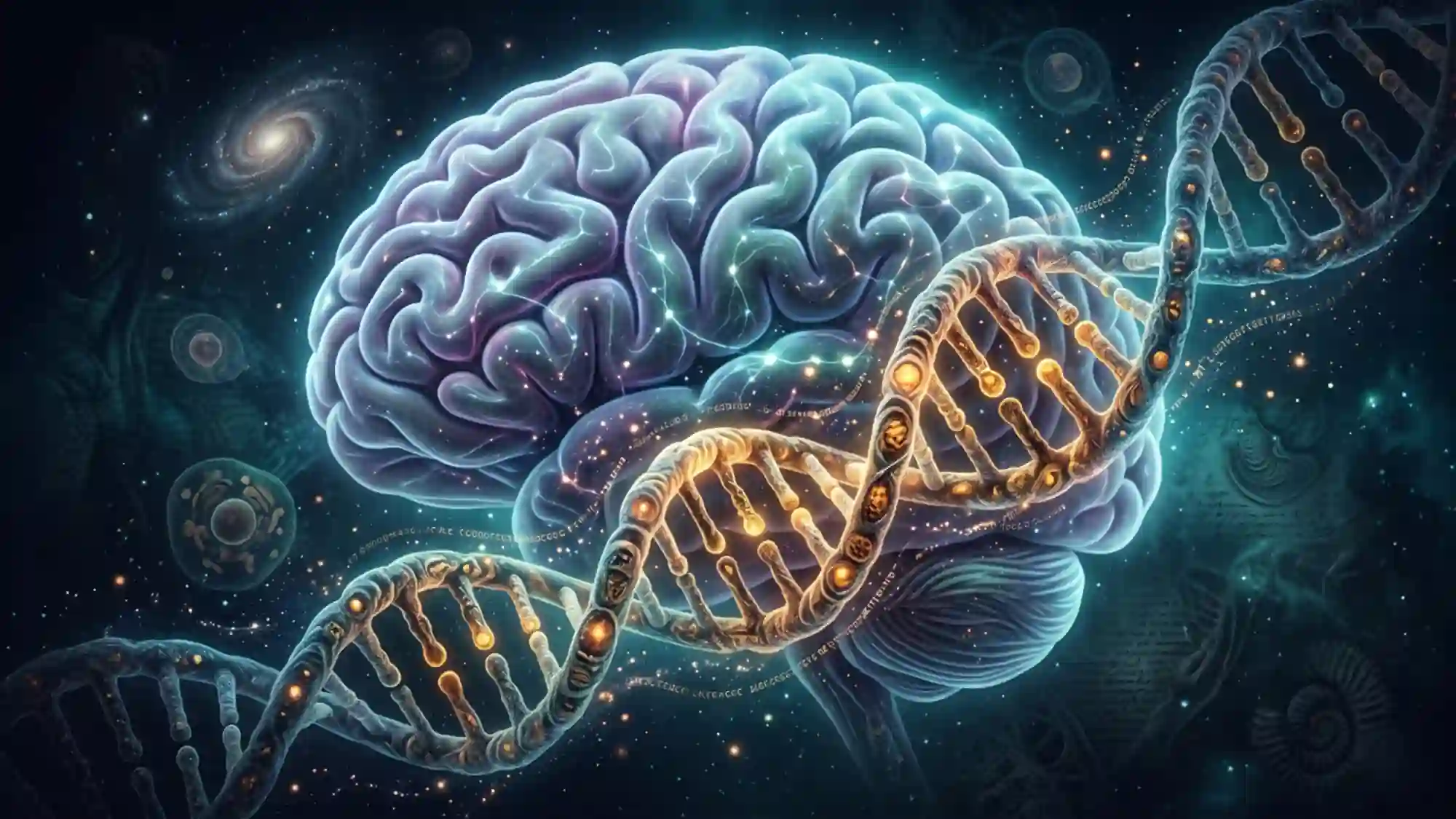
The human brain is full of ridges and grooves, allowing its large outer layer to fit inside the skull. But these folds are more than a distinctive feature of human anatomy. They reflect changes in the cerebral cortex during evolution. Now, scientists have identified an ancient gene that may have helped drive this transformation, offering a new clue to how primate brains gradually became larger and more folded. The gene, called CCNB1IP1, was investigated by researchers led by the Kunming Institute of Zoology under the Chinese Academy of Sciences. Their findings, published in Nature Genetics, suggest that brain evolution may depend not only on the emergence of new genes, but also on changes in how existing genes are switched on.
The researchers compared gene-expression patterns in developing brains from humans, macaques, marmosets, mice and Chinese tree shrews. By including species with different brain sizes and degrees of cortical folding, they could investigate how gene activity changed across evolutionary lineages. They found that CCNB1IP1 expression increased across the primates examined, broadly tracking the expansion and folding of the cerebral cortex. The team also identified evolutionary changes in regulatory DNA sequences that help control the gene’s activity. This is an important distinction. The gene itself was not newly invented during human evolution. Instead, changes in its regulatory instructions appear to have increased its expression in the developing primate brain.
How can gene activity shape brain folds?

During development, neural progenitor cells divide to produce neurons and other cells that build the cerebral cortex. The number of these progenitors and how frequently they divide can influence how much cortical tissue develops. They found that increased CCNB1IP1 activity affected cell-cycle regulation and increased the abundance of basal progenitor cells and neurons. These changes can contribute to cortical expansion, creating conditions that favour folding. They also identified a molecular pathway involving E2F1, a transcription factor that regulates genes associated with the cell cycle. CCNB1IP1 promotes E2F1 degradation through a ubiquitin-mediated process, helping alter the balance of cell proliferation during brain development. One of the most striking experiments involved mice, whose cerebral cortex is normally relatively smooth. Introducing CCNB1IP1 into the mice led to cortical expansion and the development of folds. The modified mice also performed better in certain learning and memory tests. However, these results do not mean that the gene alone determines intelligence, or that the same effects would occur in humans.
What does this reveal about human evolution? The findings highlight how changes in gene regulation can contribute to major anatomical differences over evolutionary time. An existing genetic mechanism can acquire a new developmental influence when its expression changes. The study may also help researchers investigate conditions in which cortical development is altered. However, it does not establish that CCNB1IP1 alone explains human brain folding or that modifying the gene would improve cognition or treat neurological disorders. Instead, the research reveals another piece of a complex evolutionary puzzle. Sometimes, evolution does not need to invent a new genetic tool. Changing when, where and how strongly an ancient gene operates may help reshape an organ as complex as the brain.
Sources:
Hu, T., Ma, P., Kong, Y., Tan, Y., Sun, X., Wang, J., Xiang, K., Mao, B., Wu, Q., Yi, S. V., & Shi, L. (2026). CCNB1IP1 regulatory evolution underlies gradual increases in cortical size and folding in primates. Nature Genetics, 58(10), 2630-2644. https://doi.org/10.1038/s41588-026-02773-x