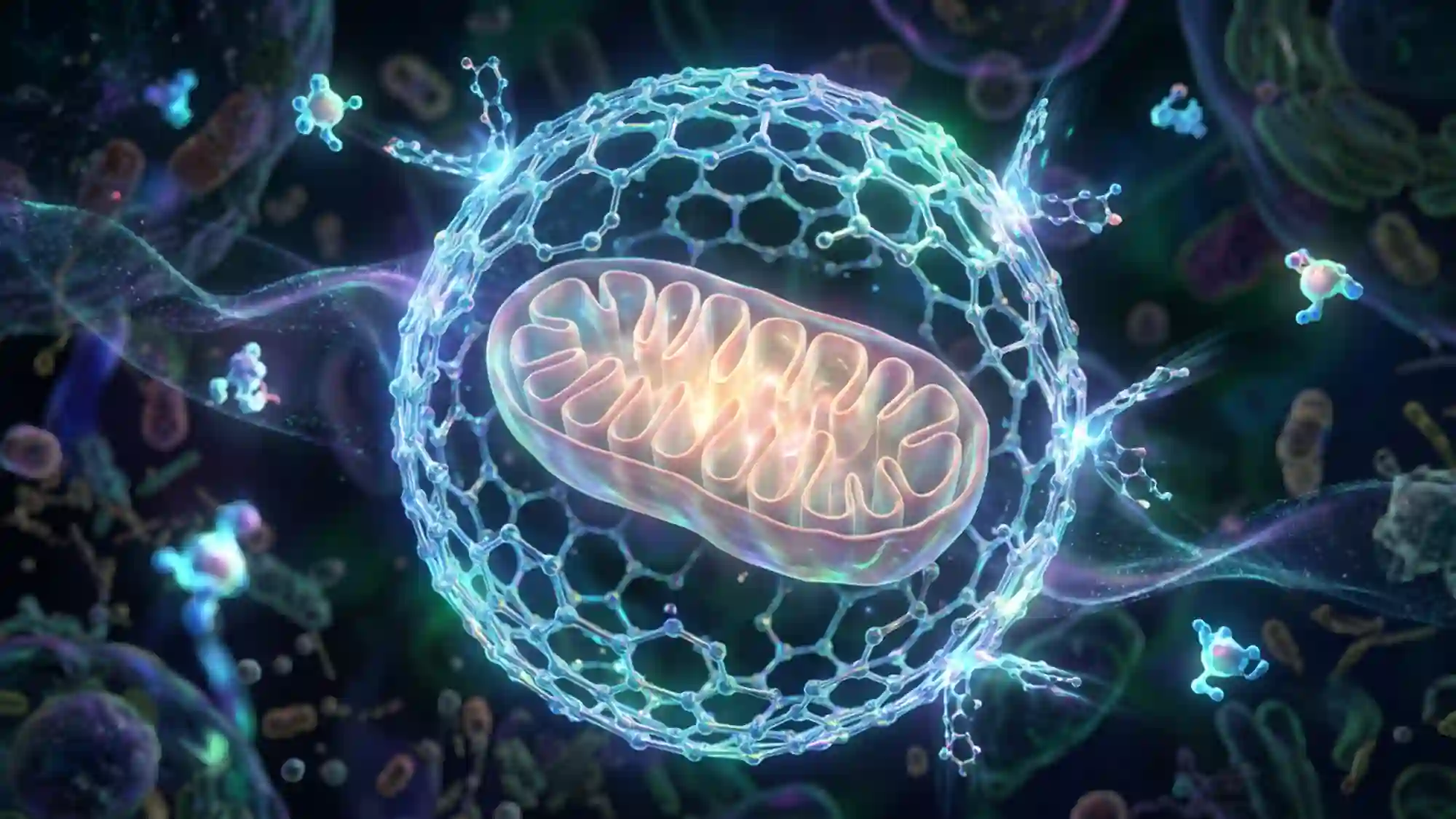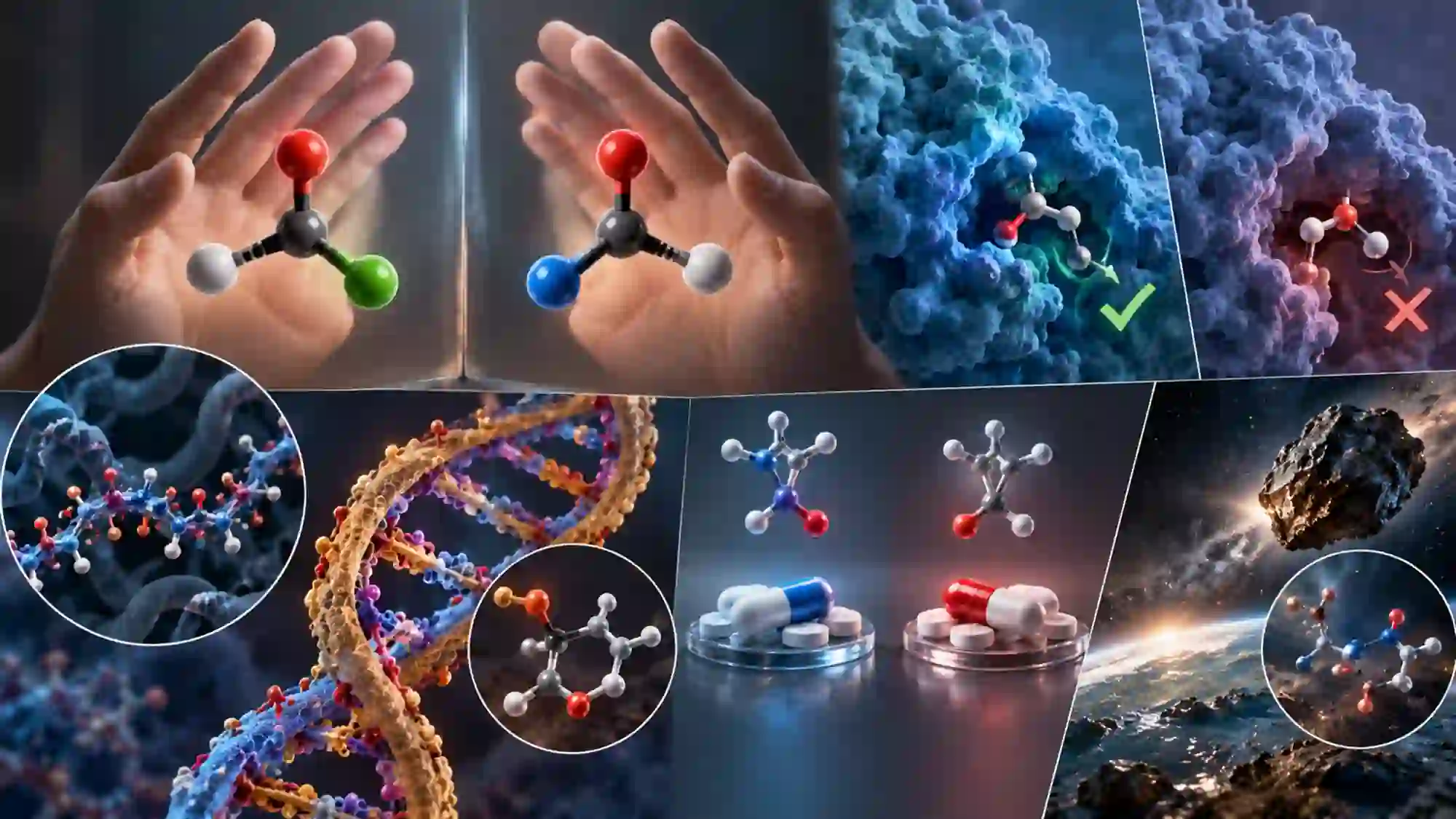
For years, AI in biology meant predicting things, mainly how a protein folds. A paper published in Science on November 19, 2026 pushes toward something harder: Gina El Nesr and colleagues report the zero-shot de novo design of a metalloenzyme. The design is a working catalyst that evolution never produced.
Why enzymes are so hard to design
An enzyme is more than a folded protein. Its atoms must be positioned so that a chemical reaction’s energy barrier drops by many orders of magnitude. Most earlier design efforts took a shortcut. They copied a catalytic motif from nature and built a protein scaffold around it.
The dEVA work tries to drop that crutch. dEVA, short for design by EVolutionary Algorithm, needs no structure prediction, natural templates, or predefined motifs to generate designs, though these can be added as extra objectives.
How dEVA works
dEVA borrows the logic of natural selection. It is built on the non-dominated sorting genetic algorithm (NSGA-II), which lets designers encode several objectives at once, and the final design is picked at the knee of the Pareto front, the best balanced trade-off across all goals. researchhub
In each round, deep-learning tools do the heavy lifting. LigandMPNN proposes mutations and sidechain conformations, then Metal3D predicts where the metal ions sit. The algorithm keeps what scores well and iterates, a bit like selection pressure running in silico.
Warming up with metal-binding sites
Before attempting an enzyme, the team tested whether dEVA could build metal-binding sites from scratch. One design, desH2C2, uses a His₂Cys₂ zinc site. It binds zinc tightly, with a dissociation constant of about 37 nM. Its spectroscopic signature suggested a motif distinct from the canonical zinc finger.
The star: desB
The main result is desB. It is a de novo TIM-barrel protein with a two-zinc active site, and it was found among only three experimentally tested designs. It breaks down two chemically stubborn classes of molecules. It acts on both phosphomonoesters and phosphodiesters, reaching a catalytic efficiency (kcat/KM) of up to 1500 M⁻¹s⁻¹ and a rate enhancement of up to 3 × 10¹³ over the uncatalyzed reaction. That is roughly 30 trillion-fold, and it is comparable to natural phosphatases.
The first author put the significance this way: it is the first time the field has used de novo design for an enzyme that catalyzes some of the highest-energy-barrier reactions in biology. The design was also notably lean. It used fixed-backbone design, optimizing sequence and side chains with LigandMPNN and the metal coordination sphere with Metal3D-Cat.
Why it matters
The conceptual shift is the real story. dEVA is pitched as a general, modular strategy for programmable design of protein function without dependence on natural templates. If the objectives can simply be swapped for new targets, the same recipe could in principle be pointed at industrial, environmental, or therapeutic reactions. AI is moving from reading the protein universe to writing new entries into it.
Sources:
El Nesr, G., Dürr, S. L., Mathews, I. I., Wen, Q., Zhao, K., Sarangi, R., Röthlisberger, U., Sunden, F., & Huang, P.-S. (2026). Zero-shot de novo design of a metalloenzyme. Science. Advance online publication. https://doi.org/10.1126/science.aej3009
El Nesr, G., Dürr, S. L., Mathews, I. I., Wen, Q., Zhao, K., Sarangi, R., Röthlisberger, U., Sunden, F., & Huang, P.-S. (2026). Zero-shot design of a de novo metalloenzyme. bioRxiv. https://doi.org/10.64898/2026.04.23.720277