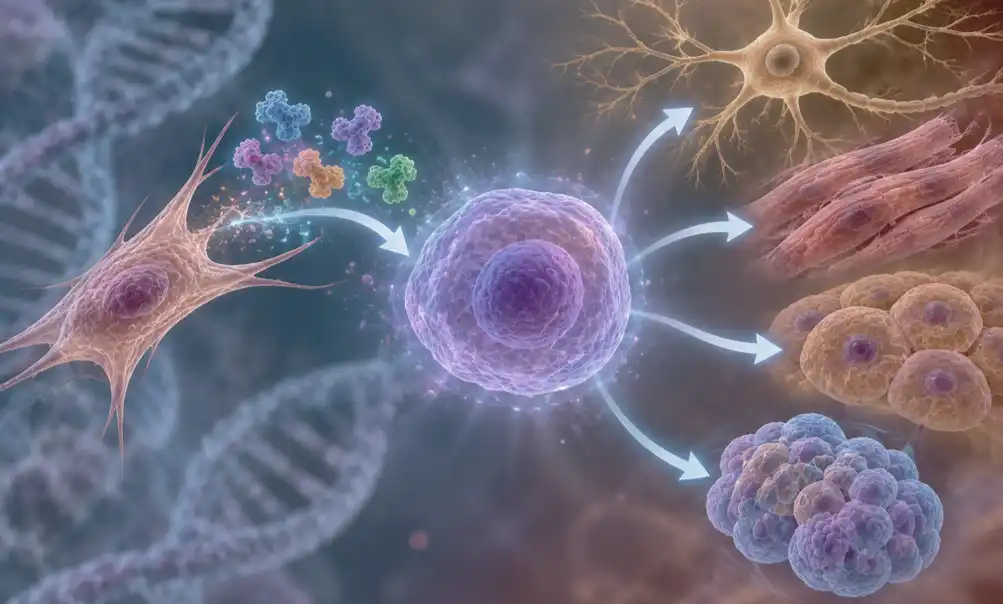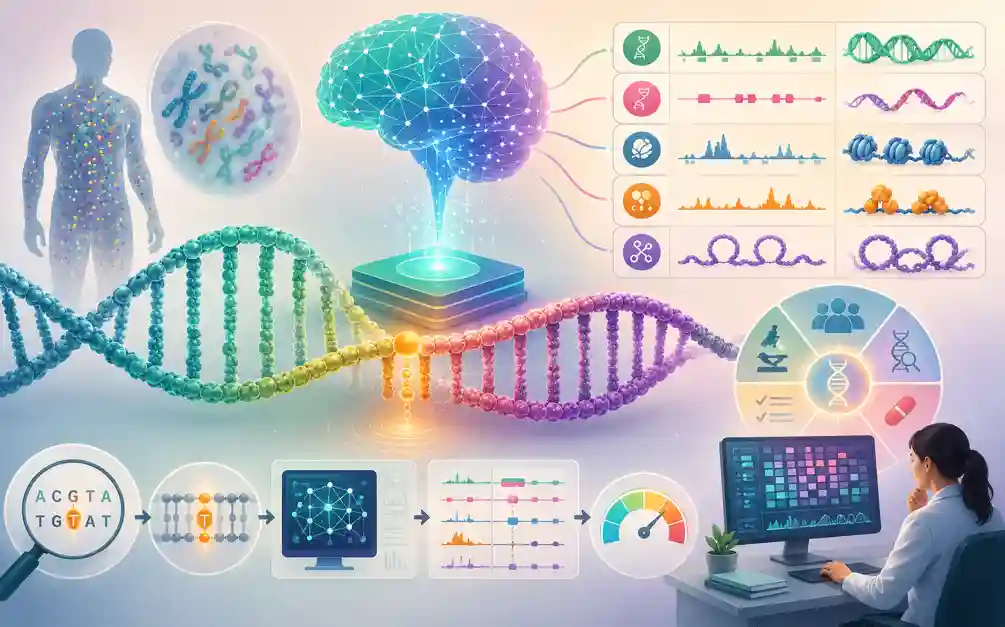
The human genome contains more than 3 billion DNA letters, and no two people have exactly the same sequence. Each person carries millions of genetic variations, most of which are harmless. But a small number can increase the risk of diseases such as cancer, heart disease, or rare inherited disorders. The challenge is figuring out which mutations actually matter. In simple terms, DNA is like a vast instruction book, but scientists are still learning the meaning of many of its words and sentences. A tiny change in one letter may sometimes do nothing, while another may completely alter the biological message.
Traditionally, answering this question has required years of laboratory experiments. Now, a new artificial intelligence system called AlphaGenome, developed by Google DeepMind, aims to dramatically speed up that process. Instead of checking one genetic change at a time, AI can examine enormous amounts of genetic information at remarkable speed. It is like giving a scientist a powerful magnifying glass that can scan an entire library in moments.
But can AI really predict what every DNA mutation does?

Not every mutation, but it represents one of the biggest advances yet. That small correction is important because biology rarely gives us simple yes-or-no answers. The genome is more like a crowded city than a straight road, with genes, switches, signals, and regulatory regions constantly interacting.
Unlike earlier AI tools that focused mainly on protein-coding genes, AlphaGenome analyzes long stretches of DNA, including the 98% of the human genome that does not code for proteins. Once dismissed as “junk DNA,” these non-coding regions are now known to contain regulatory elements that control when, where, and how strongly genes are switched on or off. The old label “junk DNA” now looks almost ironic, because some of these regions behave less like rubbish and more like traffic signals directing the flow of genetic information. In genetics, what looks silent may still have something important to say.
AlphaGenome can examine up to one million DNA base pairs at a time and predict how a genetic change may influence thousands of biological processes. These include gene expression, RNA splicing, chromatin accessibility, transcription factor binding, and the three-dimensional organisation of DNA. By comparing predictions before and after a mutation, the model estimates whether that variant is likely to disrupt normal gene regulation.
This is where the jargon becomes useful. Gene expression refers to how genetic instructions are used, while RNA splicing helps prepare genetic messages for use by cells. Chromatin accessibility describes how easily cellular machinery can reach DNA. In a sense, AlphaGenome is not merely reading the genetic script, it is trying to understand the stage directions behind it. The DNA may contain the words, but regulatory signals help decide when those words should be spoken.
Why is this important?
Every year, genetic testing identifies millions of DNA variants whose significance remains unknown. These are known as variants of uncertain significance (VUS). Determining whether such variants are harmless or disease-causing often requires months or even years of experimental work. AI models like AlphaGenome could help researchers prioritise the variants most likely to affect health, accelerating studies of rare diseases, cancer biology, and the discovery of new drug targets.
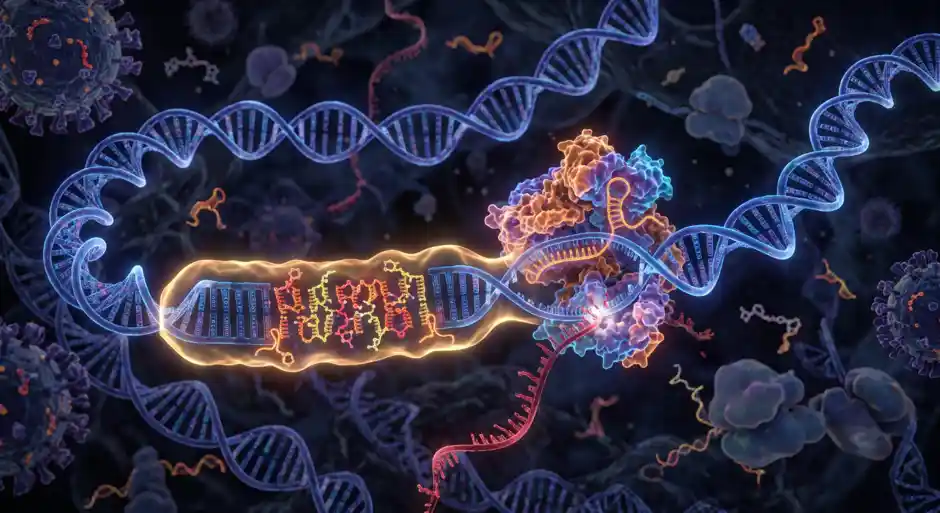
For researchers, this could turn a mountain of genetic information into a more manageable map. Instead of searching blindly through millions of variants, scientists may be able to focus their laboratory efforts on the most suspicious ones. It is a classic case of “finding a needle in a haystack”, except the haystack contains billions of DNA letters.
However, AlphaGenome is not a diagnostic test. Its predictions are based on patterns learned from large genomic datasets rather than direct evidence from individual patients. Even highly accurate predictions must still be confirmed through laboratory experiments and clinical studies. Factors such as a person’s environment, lifestyle, and interactions between multiple genes also influence whether a mutation actually leads to disease.
This limitation is crucial. AI can spot patterns, but biology can still surprise us. A computer may say that a genetic change looks important, yet only experiments and clinical evidence can tell us what actually happens inside a living person. The irony is that the more powerful our genetic models become, the more clearly they reveal how much remains unknown.
So, can AI predict what every DNA mutation does?
Not yet. The human genome is far too complex for any model to provide perfect answers. But AlphaGenome marks a major step toward understanding how genetic variation influences health. Instead of replacing laboratory research, it acts as an exceptionally powerful guide, helping scientists identify the most promising mutations to investigate.
In other words, AI is becoming a compass rather than a crystal ball. It may not tell scientists exactly what lies ahead, but it can point them towards the most important questions. As the proverb says, “A journey of a thousand miles begins with a single step.” In genomics, that first step may be understanding which DNA letters deserve the closest look.
The future of genetics may not lie in reading DNA faster, but in finally understanding what each letter truly means. The genome has been described as a biological book, but we are still learning its language, grammar, punctuation, and hidden footnotes. AlphaGenome may not yet translate every sentence perfectly, but it could help scientists read this extraordinary book with sharper eyes.