What if a cancer vaccine could be designed specifically for your tumour?
That is the idea behind a personalised mRNA vaccine being developed for melanoma. Instead of giving every patient the same vaccine, scientists analyse the mutations in a person’s tumour and use that information to create a vaccine containing instructions tailored to that particular cancer.
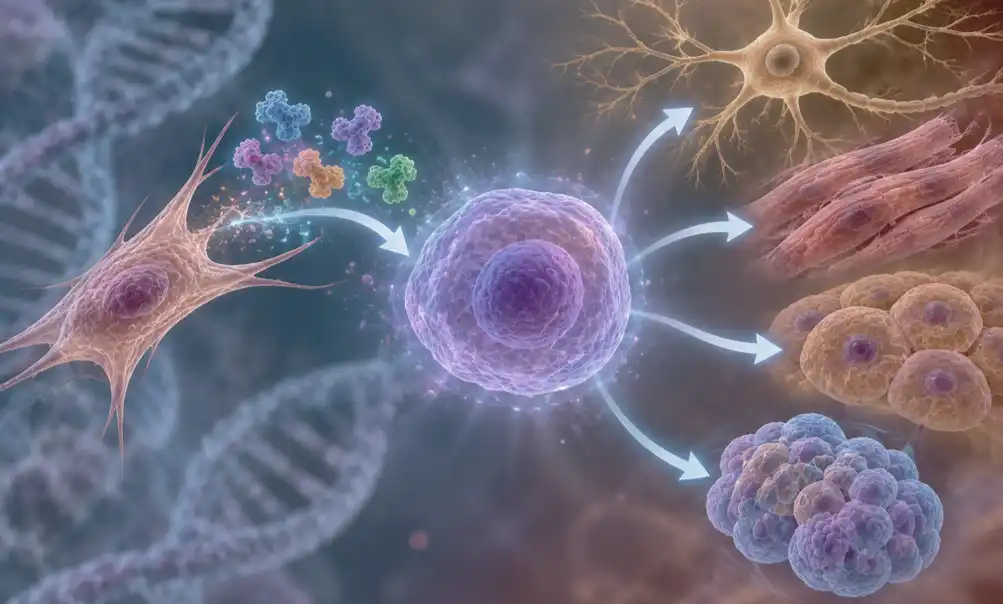
The reason this works starts with a problem: cancer cells come from our own cells. That means the immune system cannot always recognise them as foreign. But as cancer cells accumulate mutations, some of those mutations can create unusual proteins or protein fragments that healthy cells do not normally carry. These tumour-specific targets are called neoantigens.
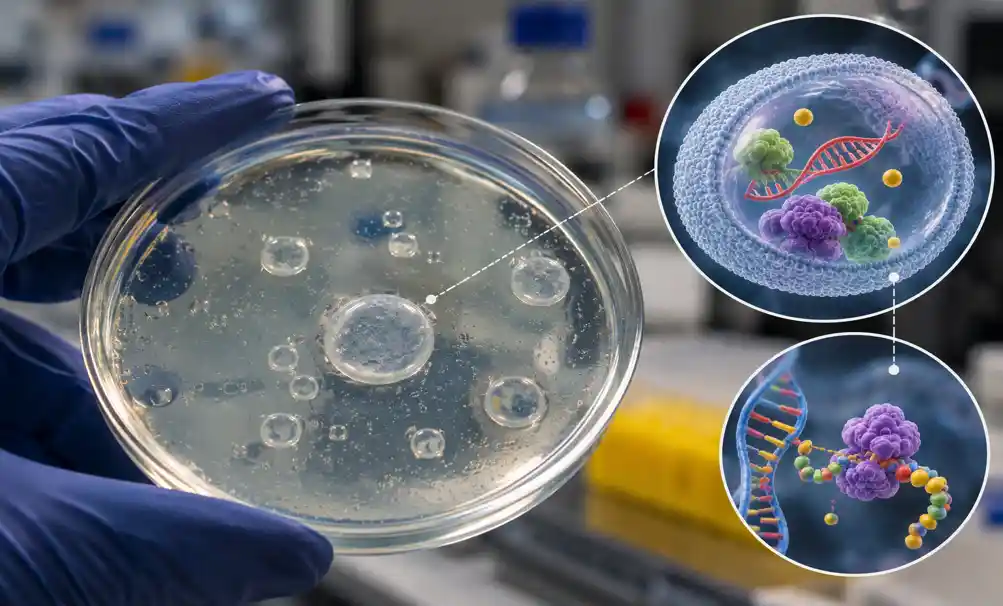
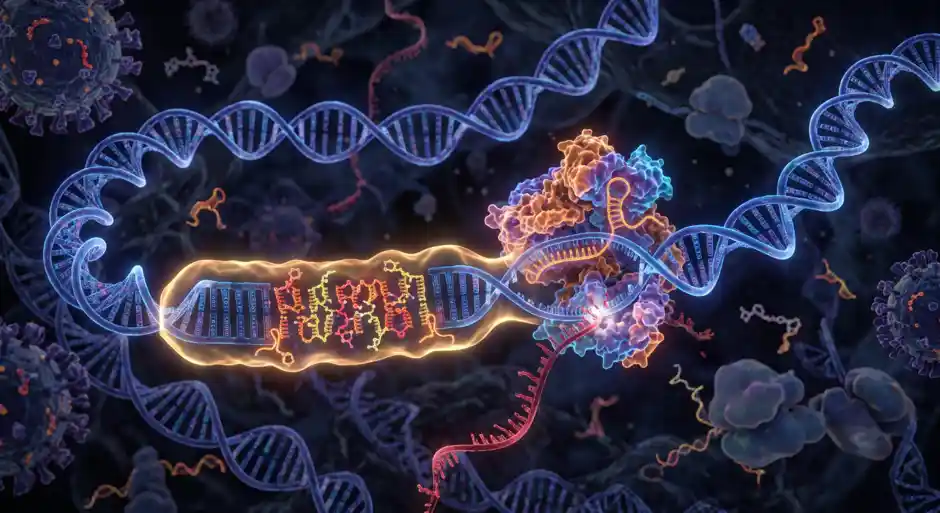
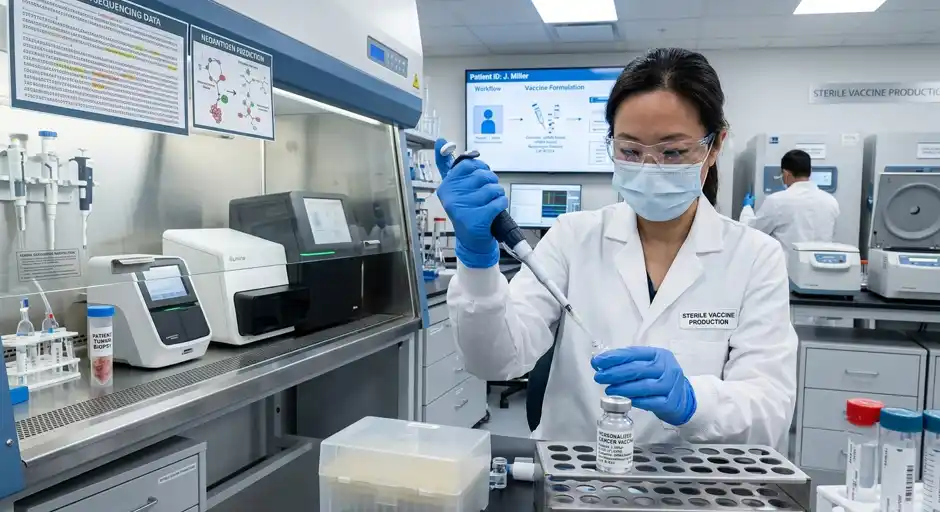
Researchers can identify these mutations by sequencing a patient’s tumour. They then select a set of promising neoantigens and encode the instructions for them into an mRNA vaccine. The vaccine does not contain cancer cells. Instead, the mRNA temporarily instructs cells in the body to make harmless pieces representing those tumour-specific targets.
The immune system then gets a kind of preview.
Immune cells process these pieces and learn to recognise the corresponding neoantigens. In particular, T cells can become primed to recognise cells displaying those abnormal targets. If melanoma cells carrying the same mutations remain in the body, these trained T cells may be better equipped to find and destroy them.
This is especially useful after a tumour has been surgically removed. Even when scans show no visible cancer, microscopic cancer cells can sometimes remain behind and eventually grow into a new tumour. The vaccine is therefore being tested as an adjuvant treatment which is something given after the main treatment to reduce the risk of the cancer returning.
In the phase 2b KEYNOTE-942 trial, 157 people with high-risk melanoma that had been surgically removed received either pembrolizumab alone or pembrolizumab combined with the personalised mRNA vaccine, called mRNA-4157/V940. After 18 months, about 79% of patients receiving the combination remained recurrence-free, compared with about 62% receiving pembrolizumab alone.
The combination reduced the relative risk of recurrence or death by roughly 44% in the initial analysis. But this is not yet a cancer vaccine available to everyone. The trial was relatively small, and the treatment remains investigational. Larger, late-stage studies are needed to confirm how well it works and how long the protection lasts.

Still, the idea represents a major shift in cancer treatment: instead of trying to find one vaccine that recognises every cancer, scientists are asking whether a vaccine can be built around the unique genetic fingerprints of each patient’s tumour.
Sources: