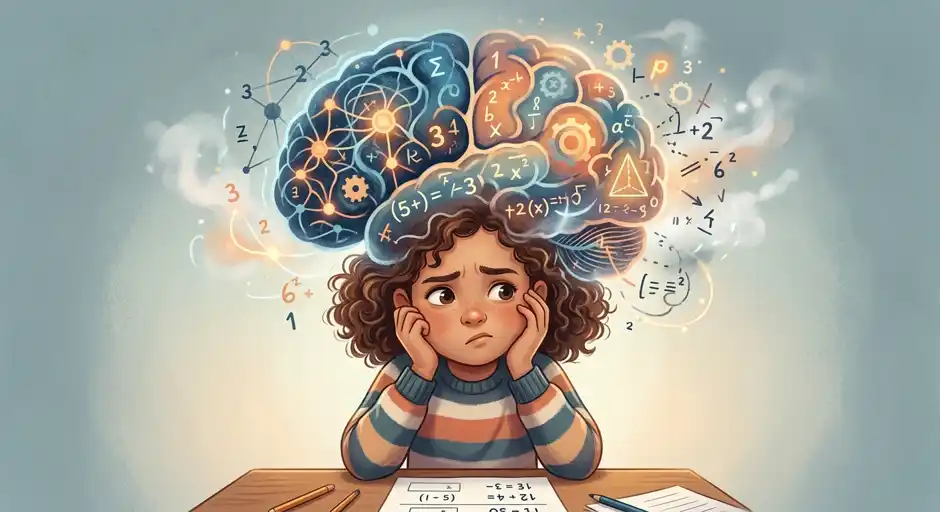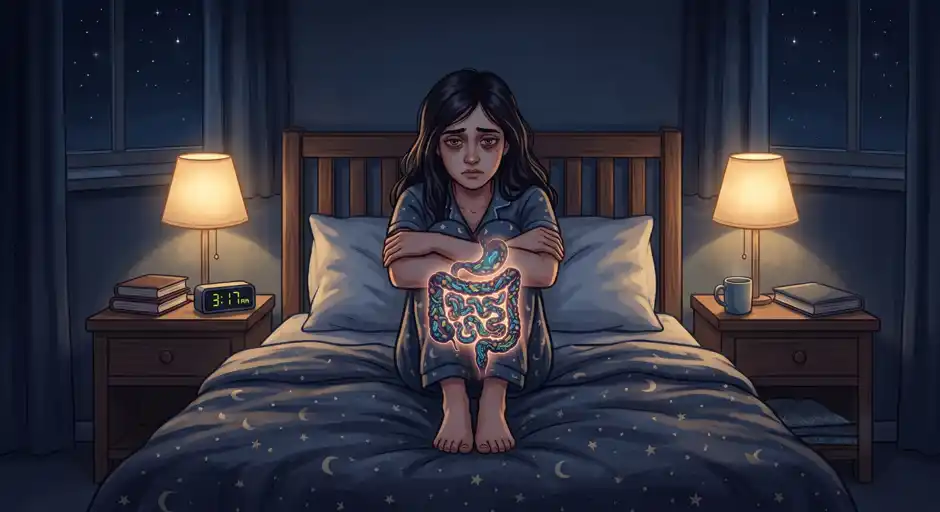
You might think that losing a few hours of sleep would affect only your brain. But your sleepless night may also be noticed by the trillions of microorganisms living inside your gut. Scientists are increasingly finding a connection between sleep and the gut microbiome, the community of bacteria and other microorganisms living in the digestive tract. A 2026 systematic review and meta-analysis found that sleep deprivation was associated with changes in gut microbial composition, including reduced measures of microbial diversity. However, the evidence was much stronger in animals than in humans.
The idea makes sense biologically because sleep and the gut are not completely separate systems. The gut microbiome follows daily rhythms, while sleep influences hormones, metabolism, immune activity and the body’s circadian clock. Disturbing one system could therefore affect the others. But what happens when people actually take away sleep? In one controlled study, nine healthy young men went through two nights of partial sleep deprivation, with only about four hours of sleep per night. Their gut microbiomes showed several changes, including an increase in the Firmicutes-to-Bacteroidetes ratio and changes in several bacterial families. At the same time, their insulin sensitivity decreased.
Another experiment produced a more cautious result. They restricted 19 healthy young men to only two hours of sleep for three consecutive nights. Their gut microbiome showed a 21% reduction in one measure of microbial richness. However, other measures of diversity and overall community composition did not significantly change, and intestinal permeability remained unaffected. So, does insufficient sleep definitely disrupt the human gut microbiome? The answer is becoming “possibly, but it depends.”
A 2026 meta-analysis combined 20 studies involving humans and rodents. Overall, sleep deprivation was associated with altered microbiome composition and reduced alpha diversity. But when they looked specifically at humans, the trends were not statistically significant in some analyses, largely because relatively few human studies exist and their sample sizes are small. It was concluded that better-standardised human studies are needed. There is also evidence pointing in the opposite direction of causality. Earlier research found that people with better sleep efficiency and longer total sleep time tended to have greater gut microbiome diversity. That means the relationship may not be a simple “less sleep causes unhealthy gut bacteria” pathway. The microbiome may also influence sleep, creating a two-way relationship between the gut and the brain.
And that is perhaps the most interesting part of the story. Your sleep is not just a nightly reset for your brain. It is part of a larger biological rhythm involving hormones, metabolism, immunity and the microorganisms living inside you. We are only beginning to understand how these systems communicate. A restless night may end when you wake up, but its effects may not stop there.
Source:
- Wiley- Sleep Deprivation Alters Gut Microbiome Diversity and Taxonomy: A Systematic Review and Meta-Analysis of Human and Rodent Studies
- Nature Scientific Reports- Severe, short-term sleep restriction reduces gut microbiota community richness but does not alter intestinal permeability in healthy young men