What if a medical device could be swallowed, work inside the body for a few days and then leave behind almost nothing?
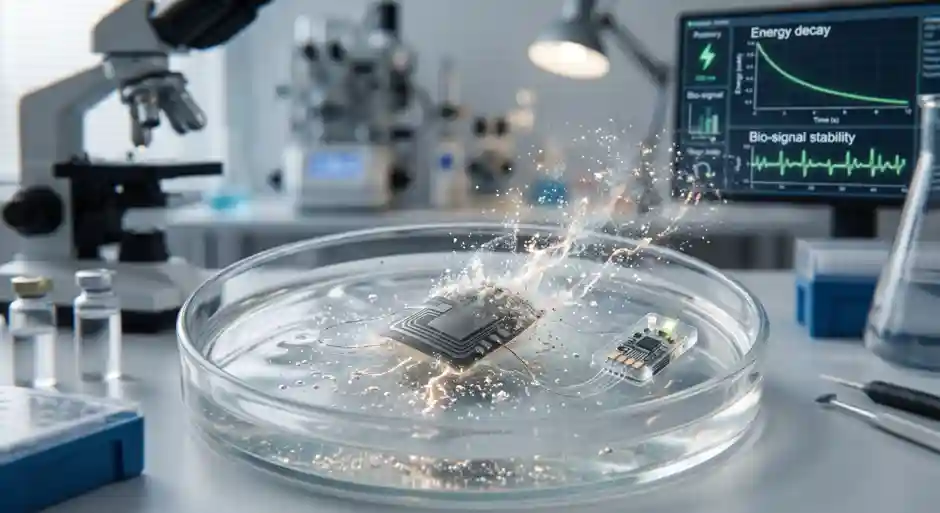
Scientists have developed a paper-based battery designed to do exactly that. The battery can power small medical devices inside the gastrointestinal tract and is made from materials that gradually break down after their job is done. The key idea is bioresorbability. Unlike a conventional battery, which needs to remain sealed and eventually be removed or passed through the body as a complete object, a bioresorbable battery is designed to gradually degrade under biological conditions.
The new battery uses magnesium as its negative electrode and molybdenum trioxide as its positive electrode. A biodegradable electrolyte sits between them and allows the battery to generate an electrical current. The researchers used cellulose nanofibrils to give the battery a thin, porous, paper-like structure. Natural wax coatings slow down the battery’s degradation so it does not stop working immediately in stomach acid. In laboratory testing, the smaller version produced about 1.77 volts and could fit inside a standard gelatin capsule. A larger version reached a peak voltage of 1.84 volts. The researchers then tested the batteries inside pigs, where they continued working for up to three days before gradually losing their electrical performance.
But could such a small battery actually do anything useful?
The researchers connected one battery to a wireless RFID tag inside a capsule. The tag could communicate with a receiver about 1.5 metres away, allowing researchers to track when medication had been swallowed. A larger battery powered another capsule that delivered electrical stimulation to the stomach. This increased levels of the hormone ghrelin in the pigs without visible tissue damage at the stimulation site. The technology is still experimental. The tests involved pigs, not humans, and the electronic circuit board used in the stomach-stimulation device was not itself bioresorbable. Researchers also need better control over exactly how quickly the batteries degrade and need larger safety studies before human testing.
Still, the concept solves an unusual problem: how do you power something inside the body when you don’t want the battery to stay there? Instead of designing a battery that lasts indefinitely, researchers are designing one that lasts just long enough to finish the job.
Source: