Can we build a living cell with an artificial genetic code?

Scientists are redesigning the genetic code and integrating synthetic cellular functions, bringing artificial cells closer to reality. However, fully autonomous synthetic life remains a major scientific challenge.

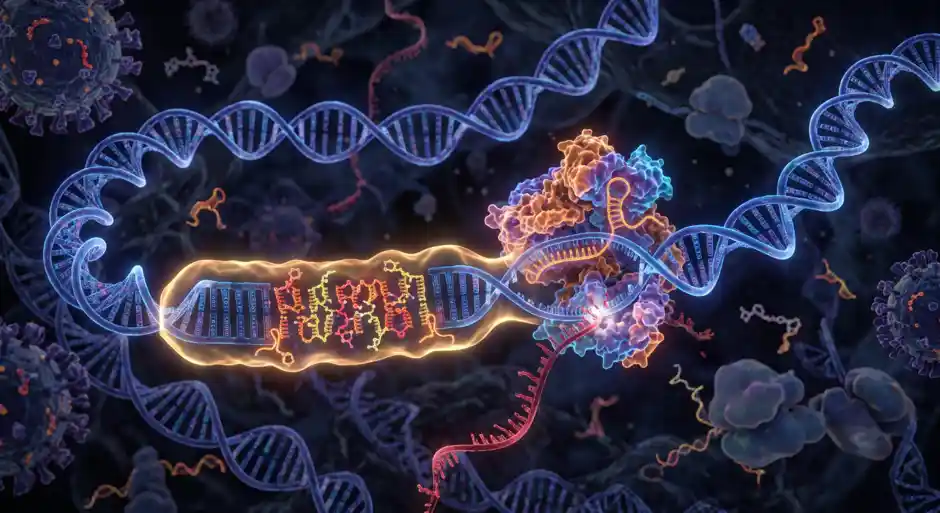
Every living cell follows a remarkably consistent molecular language. DNA stores information in four chemical letters, and the genetic code translates groups of three DNA bases into amino acids the building blocks of proteins. But what if scientists could redesign that language? Researchers are now working toward a remarkable goal: constructing synthetic cells whose genetic instructions are designed by humans rather than inherited from nature. Rewriting life's molecular language The standard genetic code contains 64 possible three-letter codons that specify 20 canonical amino acids, along with signals that tell the cell when to stop making a protein. Scientists have already shown that this code is not completely fixed. By engineering tRNAs, aminoacyl-tRNA synthetases and ribosomes, researchers can reassign codons and introduce non-standard amino acids into proteins. This gives cells the ability to manufacture molecules that ordinary biology cannot easily produce. In August 2026, researchers reported an automated system capable of testing alternative genetic codes in cell-free translation systems. They demonstrated compressed codes supporting 34 amino acids and 34 codons, including the incorporation of non-standard amino acids and reassignment of multiple codons. But an artificial code is only one part of a cell Changing the genetic code does not automatically create life. A living cell needs much more than DNA. It must copy its genetic information, manufacture proteins, maintain a membrane, obtain and use energy, regulate internal chemistry and reproduce. This is why synthetic biology researchers are attempting to build these functions separately and then integrate them. A 2026 Nature Communications study demonstrated an important step: researchers created lipid vesicles containing a synthetic DNA program capable of transcription and translation, DNA self-replication and membrane synthesis. The system encoded six proteins and produced distinct cellular phenotypes. It is not yet a fully autonomous artificial organism, but it demonstrates that several fundamental cellular processes can operate together inside a synthetic compartment. So, can we build a completely artificial cell? Not yet. Scientists can now reproduce individual functions of life and integrate increasingly complex combinations of them. But creating a truly autonomous cell that can continuously obtain energy, maintain itself, reproduce and evolve using an entirely artificial genetic system remains an enormous challenge. One reason is that biology is not simply a collection of independent parts. Cellular systems are deeply interconnected, and changing one component can affect dozens of others. A 2026 Nature Biotechnology framework for synthetic-cell research describes precisely this integration problem as one of the field's major remaining bottlenecks. Why build one? A synthetic cell with an artificial genetic code could become more than a scientific curiosity. It could help researchers understand what makes something alive, create proteins with entirely new chemical properties, manufacture medicines and materials, and explore alternative forms of biological information processing. Perhaps the most profound possibility is that scientists may eventually be able to construct a biological system whose molecular language is different from the one life inherited from its ancient ancestors. We are not there yet. But for the first time, researchers are beginning to manipulate both the language of life and the cellular machinery that reads it.

Every living cell follows a remarkably consistent molecular language. DNA stores information in four chemical letters, and the genetic code translates groups of three DNA bases into amino acids the building blocks of proteins.

But what if scientists could redesign that language?

Researchers are now working toward a remarkable goal: constructing synthetic cells whose genetic instructions are designed by humans rather than inherited from nature.
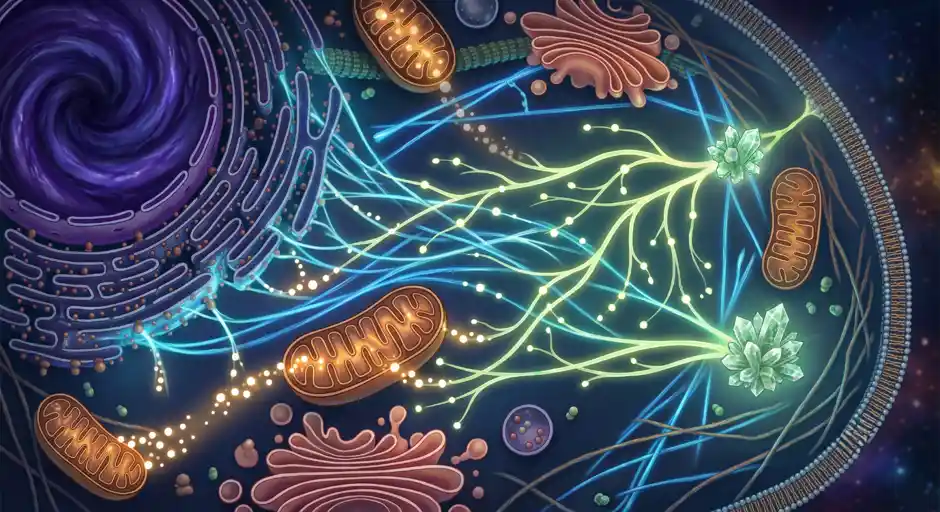
Rewriting life’s molecular language

The standard genetic code contains 64 possible three-letter codons that specify 20 canonical amino acids, along with signals that tell the cell when to stop making a protein.

Scientists have already shown that this code is not completely fixed.

By engineering tRNAs, aminoacyl-tRNA synthetases and ribosomes, researchers can reassign codons and introduce non-standard amino acids into proteins. This gives cells the ability to manufacture molecules that ordinary biology cannot easily produce.

In August 2026, researchers reported an automated system capable of testing alternative genetic codes in cell-free translation systems. They demonstrated compressed codes supporting 34 amino acids and 34 codons, including the incorporation of non-standard amino acids and reassignment of multiple codons.

But an artificial code is only one part of a cell
Changing the genetic code does not automatically create life.

A living cell needs much more than DNA. It must copy its genetic information, manufacture proteins, maintain a membrane, obtain and use energy, regulate internal chemistry and reproduce.

This is why synthetic biology researchers are attempting to build these functions separately and then integrate them.

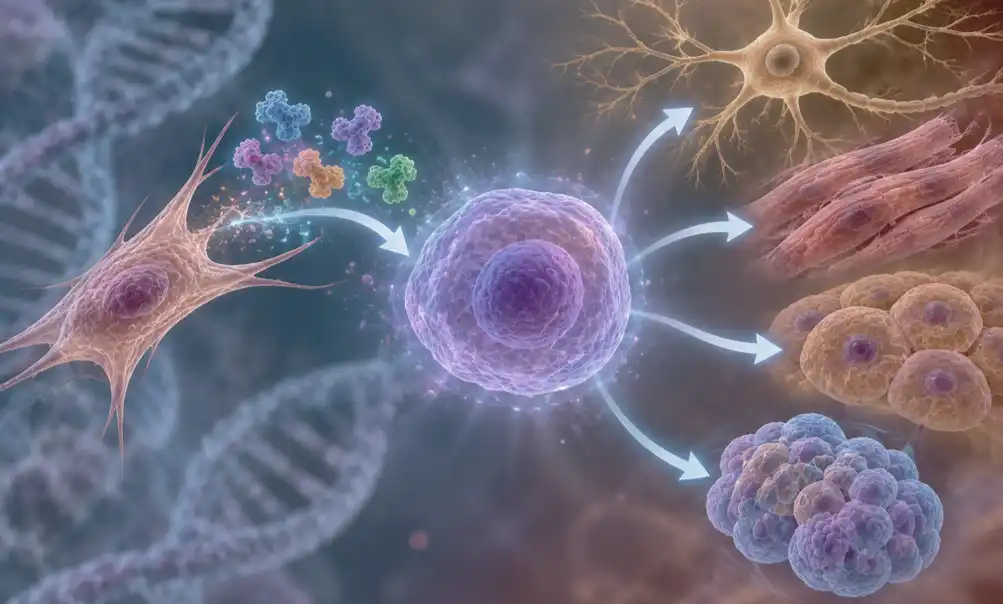
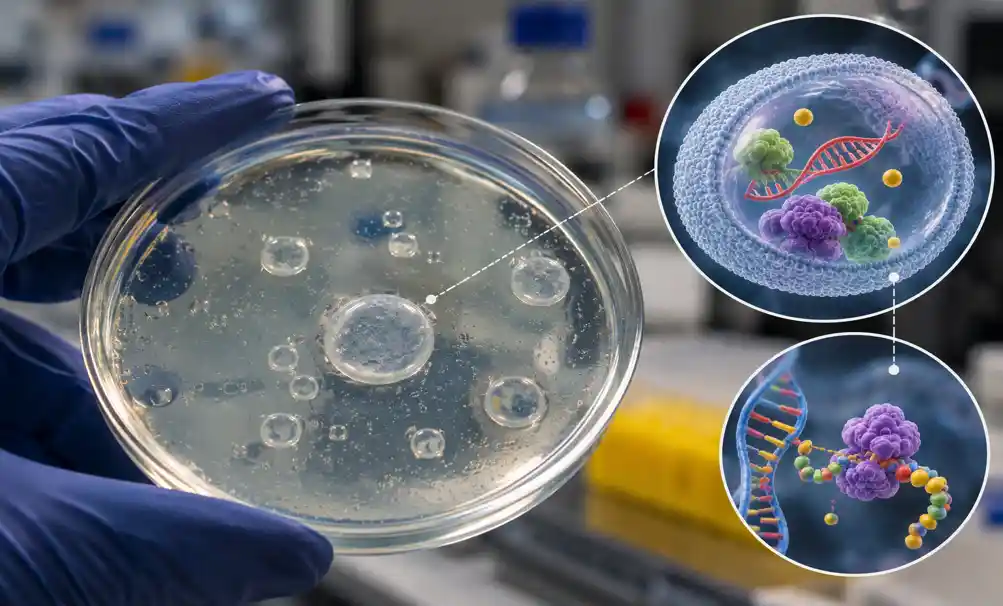
A 2026 Nature Communications study demonstrated an important step: researchers created lipid vesicles containing a synthetic DNA program capable of transcription and translation, DNA self-replication and membrane synthesis. The system encoded six proteins and produced distinct cellular phenotypes.

It is not yet a fully autonomous artificial organism, but it demonstrates that several fundamental cellular processes can operate together inside a synthetic compartment.

So, can we build a completely artificial cell?

Not yet.

Scientists can now reproduce individual functions of life and integrate increasingly complex combinations of them. But creating a truly autonomous cell that can continuously obtain energy, maintain itself, reproduce and evolve using an entirely artificial genetic system remains an enormous challenge.

One reason is that biology is not simply a collection of independent parts. Cellular systems are deeply interconnected, and changing one component can affect dozens of others.

A 2026 Nature Biotechnology framework for synthetic-cell research describes precisely this integration problem as one of the field’s major remaining bottlenecks.

Why build one?

A synthetic cell with an artificial genetic code could become more than a scientific curiosity.

It could help researchers understand what makes something alive, create proteins with entirely new chemical properties, manufacture medicines and materials, and explore alternative forms of biological information processing.

Perhaps the most profound possibility is that scientists may eventually be able to construct a biological system whose molecular language is different from the one life inherited from its ancient ancestors.

We are not there yet.

But for the first time, researchers are beginning to manipulate both the language of life and the cellular machinery that reads it.

Sources:

https://www.nature.com/articles/s41586-026-10949-y?

https://www.nature.com/articles/s41587-026-03153-w?