We rarely think about Earth’s magnetic field because it is invisible and constantly surrounding us. But what if our cells have been responding to it all along?
A new study suggests that Earth’s magnetic field may interact with some of the most fundamental processes inside living organisms. When researchers almost completely shielded fruit flies from Earth’s magnetic field, they observed changes in mitochondrial activity, movement and lifespan. The surprising part was that the response depended on the condition of the flies. Healthy flies and flies carrying a mutation associated with Parkinson’s disease reacted in very different ways.
What happens when magnetism almost disappears?

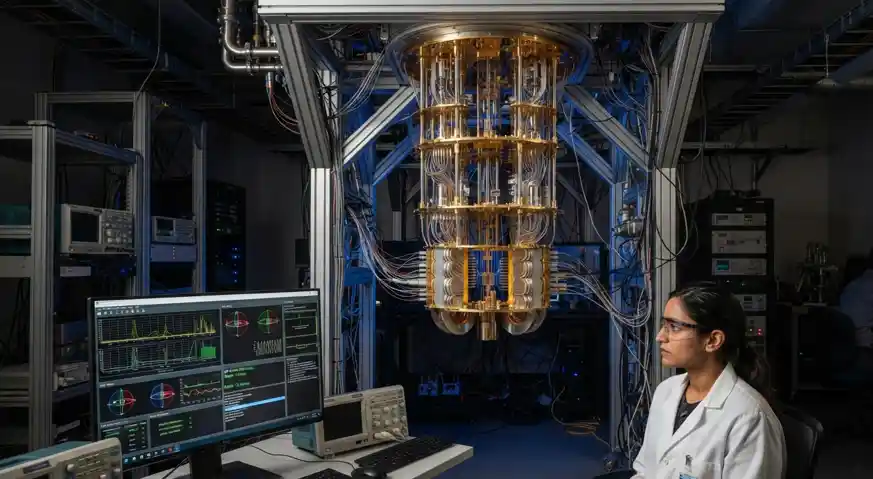
Earth’s geomagnetic field normally ranges from roughly 25 to 60 microteslas, depending on location. They created a hypomagnetic environment by placing fruit flies inside a specially designed magnetic shield.
The field inside the shield was reduced to about 5 nanoteslas, thousands of times weaker than the normal geomagnetic field. They then compared ordinary Drosophila melanogaster with flies carrying a loss-of-function mutation in Pink1, a gene involved in mitochondrial quality control and associated with inherited early-onset Parkinson’s disease in humans. They followed the flies for up to 70 days, measuring survival and climbing ability while also examining mitochondrial respiration and reactive oxygen species.
One magnetic environment, two very different outcomes The most unexpected result came from the Pink1 mutant flies.
When exposed to the hypomagnetic environment for 20 days, these flies showed an approximately 20% increase in lifespan compared with comparable mutant flies under the normal geomagnetic field. Their mortality risk in that treatment group was approximately half that of the control group. But living longer did not mean performing better.
The hypomagnetic Pink1 flies showed worse climbing ability, indicating that the effect on lifespan was accompanied by a decline in physical performance. Healthy flies showed almost the opposite pattern. Their climbing performance improved under hypomagnetic conditions at several ages, while they did not find a statistically significant change in their mortality risk. So removing the magnetic field did not simply make the flies healthier or less healthy. The outcome depended strongly on the biological state of the animal.
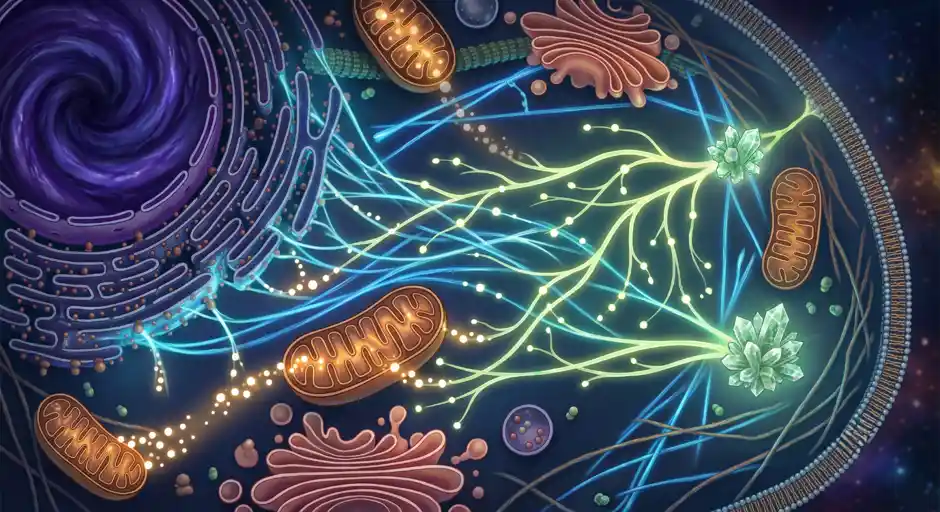
The mitochondria may hold the clue. They then looked at mitochondria, the structures responsible for producing much of a cell’s usable energy. High-resolution respirometry revealed changes in mitochondrial metabolism under the weakened magnetic field, including increased activity involving mitochondrial complex II. The team also detected changes in superoxide, a reactive oxygen species produced during mitochondrial activity.

One possibility is that magnetic fields somehow influence chemical reactions involving reactive molecules inside cells. Scientists already know that some biological magnetic responses can involve radical-pair chemistry, in which magnetic fields influence the behavior of pairs of molecules containing unpaired electrons. But exactly how the geomagnetic field interacts with mitochondria remains unresolved.
The experiment was conducted in male fruit flies, not humans. The Pink1 flies are a model of mitochondrial dysfunction and Parkinson’s-related biology, but they do not reproduce the full complexity of human aging or Parkinson’s disease. The magnetic field reduction was also extreme. They essentially removed the geomagnetic background rather than exposing the animals to the ordinary variations people experience on Earth. So the study does not show that Earth’s magnetic field determines how quickly humans age, or that changing someone’s magnetic environment could extend human lifespan.
Instead, it provides evidence that a physical force we normally take for granted can interact with cellular physiology under experimental conditions. That could become particularly relevant beyond Earth. Astronauts traveling far from our planet would experience environments with dramatically different magnetic protection. Understanding what happens to mitochondria when that background changes could therefore matter for future deep-space missions. For now, Earth’s magnetic field remains less of an anti-aging switch and more of an unexpected piece of the biological environment that scientists are only beginning to understand.