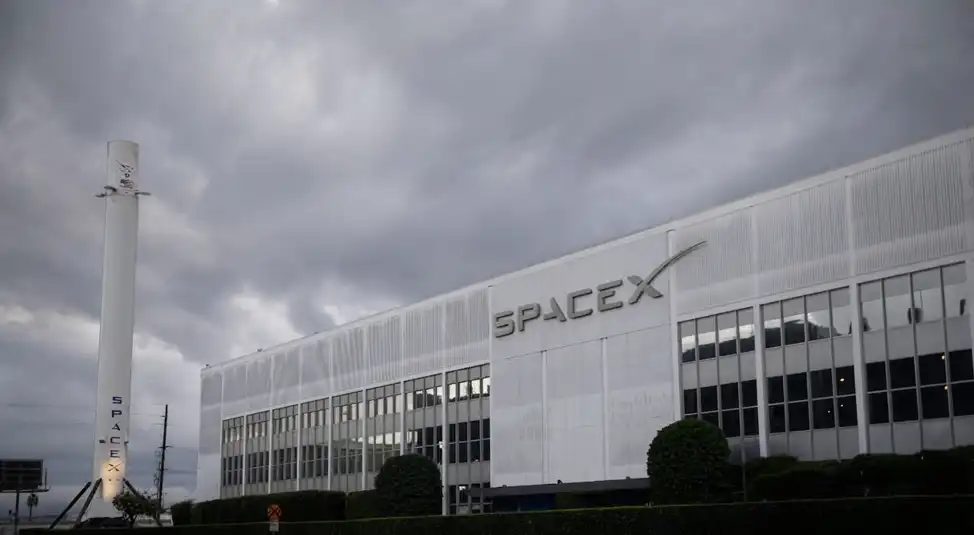
Starship reached orbit for the first time. The vehicle lifted off from Starbase, Texas at 8:48 AM. EDT on its 14th test flight, the third to use the Version 3 design. About 25 minutes after liftoff, Ship 41 fired a single Raptor engine briefly to enter orbit. The stated target was a roughly 275 km circular orbit, circularized by a single Raptor 3 engine.
Anomaly #1: The engine that quit
During ascent, one of the Ship’s six engines went out, and SpaceX spokesperson Dan Huot even announced that the orbital attempt was called off before controllers reversed course. The live coverage reported that one Raptor 3 engine shut down early, but the Ship was able to compensate and complete its burn. Other reports identified it as one of the vacuum engines.
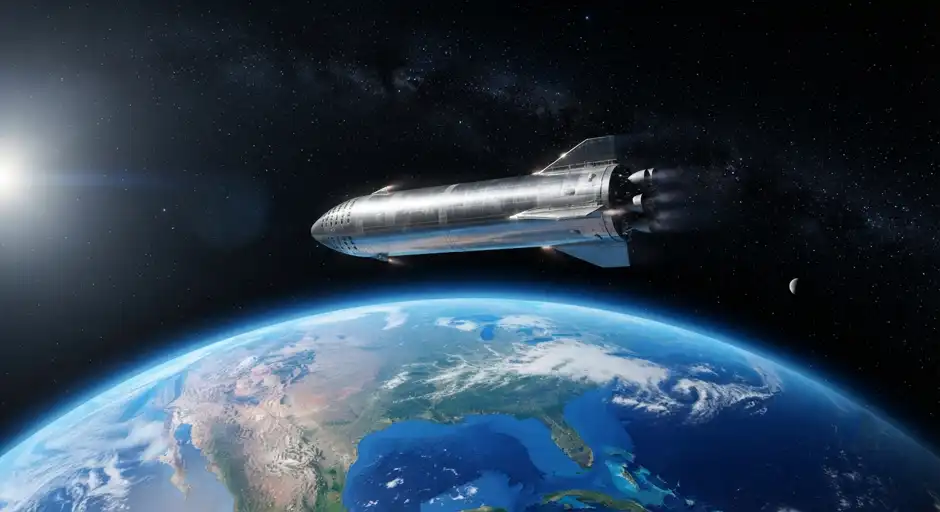
Why this matters physically: Ship carries six Raptors, generally described as three sea-level and three vacuum-optimized. Losing a vacuum engine means less thrust and lower efficiency for the final push to orbital speed of roughly 7.7 km/s. A weaker burn takes longer, and a longer burn wastes more propellant fighting gravity. It also forces the vehicle to steer around an asymmetric thrust. That the Ship still made orbit shows both real performance margin and flight software that can adapt on the fly. It is also a warning: engine reliability is the recurring theme of this program, and crewed flights will demand engines that are far more predictable.
Reports highlight that the booster had its own small issue. Super Heavy relit only 31 of its 33 engines during the boostback burn, yet it still made a controlled splashdown in the Gulf about seven minutes after liftoff. That is a soft splashdown, not a tower catch, so this booster was not recovered for reuse.
The payload: 26 Starlink V3 satellites
The mission’s real milestone may be commercial. Flight 14 was the first Starship mission to earn revenue for SpaceX, deploying 26 Starlink satellites. SpaceX says it has made contact with every one of them. Earlier V3 deployments on Flight 13 were suborbital, so those satellites fell back to Earth, whereas these will stay up. There was a scientific twist too. Three of the satellites carry cameras to image Starship’s heat shield and transmit the pictures to operators, supporting future efforts to check heat-shield readiness for a return to the launch site. Satellites inspecting the vehicle that launched them is a useful trick for a program that hopes to catch and reuse its Ships.
The early end
The plan was about ten hours and six orbits. Instead, controllers took the first scheduled checkpoint and came back early, with a deorbit burn about two hours and twelve minutes into the flight. SpaceX did not say what drove the decision. One report says the specific reason remains under review, and that the engine shutdown was part of the context, but SpaceX does not confirm that link. The mission still hit its two primary goals, though it ended about seven hours early. A rough check on the orbit: at 275 km altitude, one lap takes about 90 minutes, so the deorbit burn came roughly a lap and a half in.

Anomaly #2: the splashdown
Reentry is where Starship earns its keep. The vehicle hits the atmosphere at orbital speed, surrounded by plasma at temperatures that would melt most metals, protected by thousands of heat-shield tiles. The Ship survived that trip and performed a controlled landing burn over the Pacific, but the splashdown was rougher than July’s and produced a large fireball over the water. Another account says Ship 41 went up in flames within seconds of touching the water, unlike Flight 13’s Ship, which stayed intact. The vehicle was always going to be lost in the ocean, so the fireball didn’t cost SpaceX anything it hadn’t planned to lose, but it’s an open question for engineers. Was it residual propellant, a landing-burn shortfall, or tank damage? It is too early to speculate.
Why it matters
Reaching orbit is the gate to everything else. SpaceX still has to demonstrate ship catches, on-orbit propellant transfer, and crew life-support systems before Starship can fly astronauts. Refueling is the big one, since a moon or Mars mission needs multiple tanker flights to top off a ship in orbit. SpaceX is under intense pressure to get Starship ready for a crucial NASA test flight next year. Although successful, glitches like these push future ambitious programs much further.
References
SpaceX. (n.d.). Starship. https://www.spacex.com/vehicles/starship
Sutton, G. P., & Biblarz, O. (2017). Rocket propulsion elements (9th ed.). Wiley.