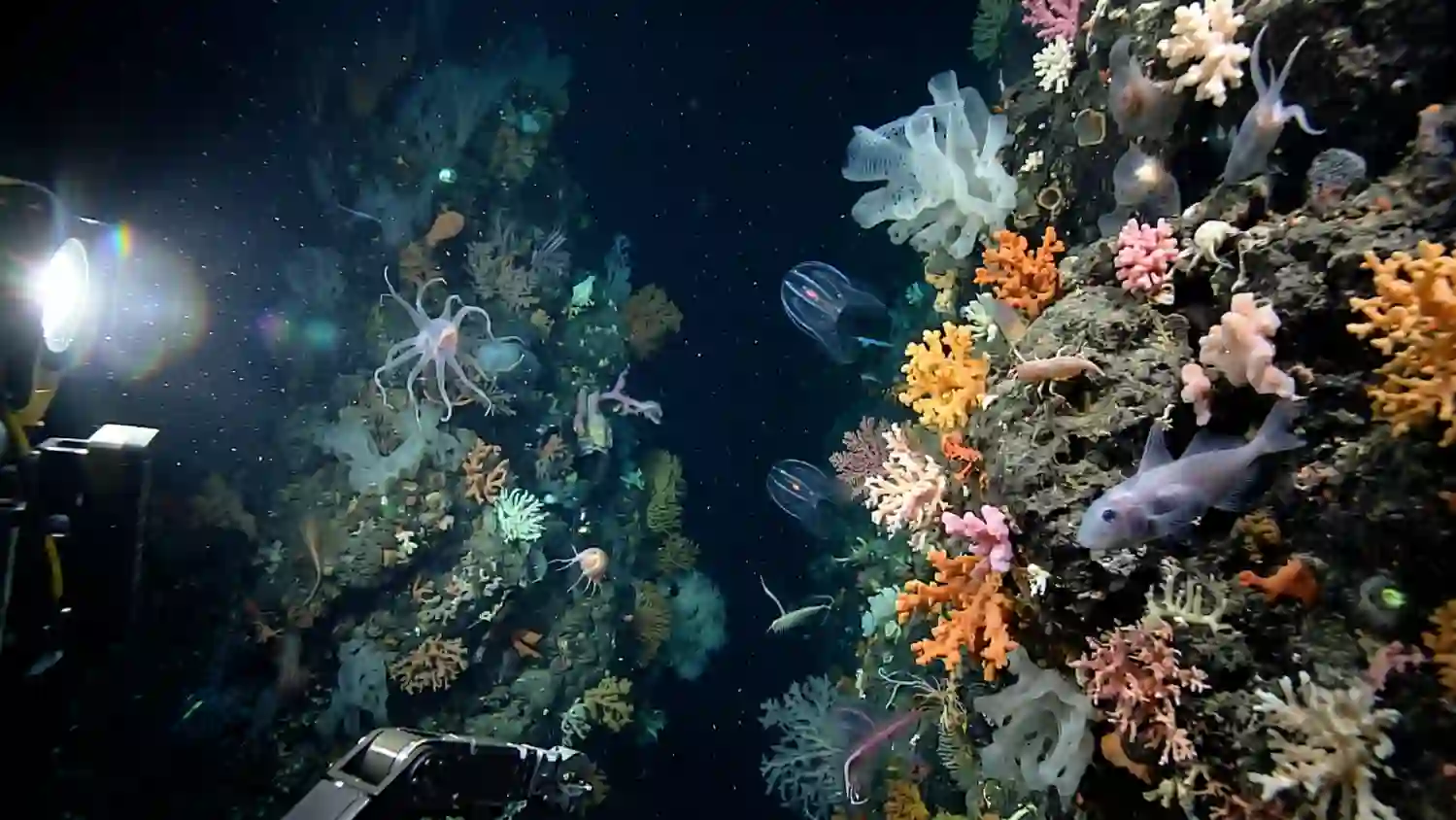
Thousands of metres beneath the Atlantic Ocean, where sunlight never reaches and pressure is immense, scientists found something that sounds almost impossible: 57 species that had never been scientifically identified before. The discoveries came from Argentina’s Mar del Plata Submarine Canyon, a vast underwater valley more than 3,500 metres deep.
During a 2025 expedition, scientists used a remotely operated vehicle to explore the canyon and collect biological samples. A year later, taxonomists examined those specimens in detail—and revealed a remarkable diversity of previously unknown life. Among the most unusual discoveries was a translucent sea cucumber nicknamed “Loki”, named for the horn-like appendages on its body.
The expedition, known as Talud Continental IV or the Underwater Oases of the Mar del Plata Canyon expedition, took place in August 2025 aboard the research vessel Falkor (too). Scientists used the remotely operated vehicle SuBastian to descend into the canyon, reaching depths of around 3,900 metres. Its cameras allowed them to observe animals directly on the seafloor, while robotic arms collected specimens for closer examination.
The canyon is particularly interesting because submarine canyons can transport organic material and nutrients from shallower waters into the deep ocean, creating habitats capable of supporting surprisingly diverse communities. The Mar del Plata Canyon is also located near the Brazil Malvinas Confluence, where warm subtropical and cold, nutrient-rich waters meet. The expedition initially suggested that at least 40 species might be new to science. But the real number became clearer only after specialists examined the collected material.
In July 2026, an international Species Discovery Workshop brought together 20 taxonomists and early-career researchers in Buenos Aires. Over two weeks, the team used integrative taxonomy, combining characteristics such as anatomy and morphology with other evidence to identify species and record their findings in the Ocean Census NOVA database. The result was 57 species new to science, along with five new genera.
The discoveries included:
- 20 new copepod species tiny crustaceans that are important components of marine food webs.
- 22 new echinoderms, including sea cucumbers and crinoids.
- 14 new cnidarians, including corals and sea pens.
- One new scaphopod, a type of mollusc.
And these numbers may not be the final count. They say many collected specimens were not examined during the workshop, meaning additional discoveries could still emerge from the expedition.
One of the most memorable animals was a strange deep-sea sea cucumber belonging to the genus Peniagone. Nicknamed Loki, the animal was documented at approximately 2,577 metres. Its unusual horn-like appendages reminded researchers of the headgear associated with the Norse god Loki. It is one of up to 10 potentially new sea cucumber species identified during the workshop. Importantly, “Loki” is a nickname rather than its final scientific name. It is currently referred to as Peniagone sp. while taxonomic work continues.
Finding dozens of new species is more than adding names to a catalogue. They need to know what lives in the deep ocean before they can understand how these ecosystems function and how vulnerable they may be to human activities such as deep-sea mining, fishing and climate-driven changes in ocean conditions. The discoveries also demonstrate how much of the deep ocean remains poorly understood. Even after an expedition has returned to shore, the work is far from over. Specimens must be compared with known species, carefully described and, increasingly, examined using genetic information before new species can be formally established.

The Mar del Plata expedition therefore produced two discoveries at once: a collection of extraordinary animals and a reminder that the ocean floor still contains enormous biological gaps in our knowledge. A remotely operated vehicle provided the first glimpse. But it was the painstaking work of taxonomists examining specimens under the microscope and comparing them with everything scientists already know that turned those strange creatures from underwater observations into 57 potential new chapters in the catalogue of life.