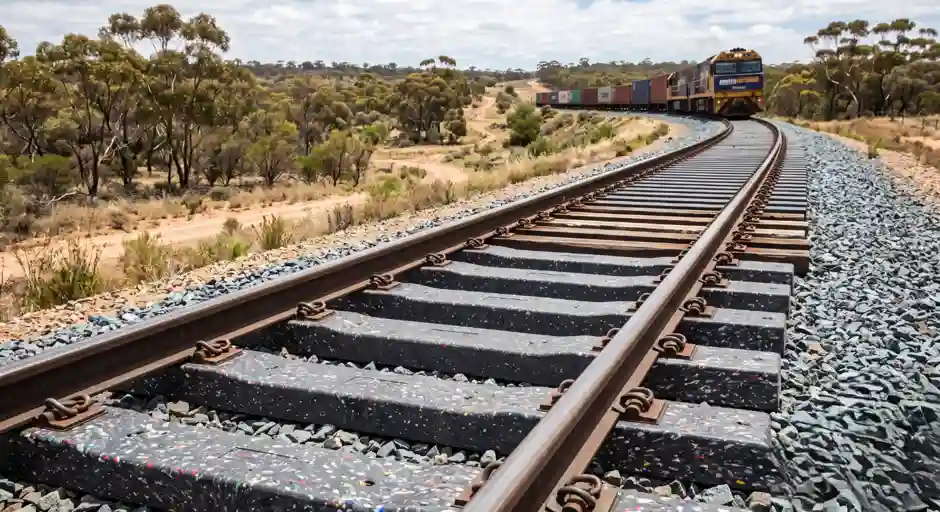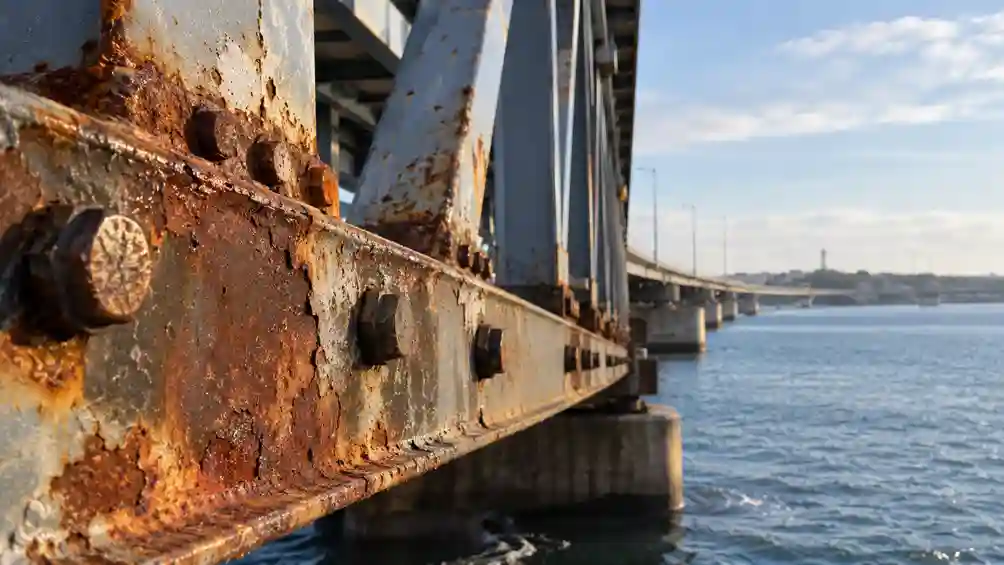
Rust may look like a simple surface problem, but corrosion is one of the most persistent threats to modern infrastructure. Bridges, pipelines, ships, buildings and industrial equipment all depend on protective coatings that keep water, oxygen and corrosive chemicals away from metal. The problem is that these coatings eventually develop scratches, cracks and microscopic defects creating pathways for corrosion to begin.
Researchers are now developing a different approach: a coating that can respond to damage and repair its own protection.
Scientists at the University of Queensland have engineered nanoparticles that function like tiny containers inside a water-based protective coating. The particles contain benzotriazole, a corrosion inhibitor commonly used to protect metals. When the coating experiences conditions associated with corrosion, the nanoparticles can release the inhibitor near the damaged region, helping suppress the electrochemical reactions responsible for rust formation.

The important innovation is that the coating does not rely entirely on remaining physically intact. Conventional anti-corrosion coatings work primarily as barriers: if the barrier is breached, water, oxygen and dissolved salts can reach the underlying metal. The new system is designed to provide an additional layer of active protection, responding to changes in its local chemical environment.
According to the University of Queensland researchers, laboratory testing showed that the new coating could slow corrosion by more than 600 times compared with existing high-performance coatings. The researchers suggest that technologies of this type could potentially extend the service life of steel used in bridges, buildings, vehicles and other infrastructure.
The idea is part of a broader shift toward smart corrosion-control materials. Other 2026 research has explored coatings that can both detect early corrosion and release inhibitors, while another approach combines water repellency with radiative cooling to reduce seawater penetration and temperature-driven corrosion in marine structures.
However, impressive laboratory performance does not automatically mean a coating is ready for bridges or pipelines. Real infrastructure experiences years of mechanical abrasion, ultraviolet radiation, temperature fluctuations, salt exposure and repeated wetting and drying. Long-term field testing will be needed to determine whether these materials retain their self-repairing behaviour under such conditions.
If they do, corrosion protection could shift from simply building a stronger barrier to creating materials that actively respond when that barrier begins to fail. Instead of repeatedly finding damage and repainting a structure, future infrastructure could potentially contain coatings capable of detecting the early chemical signs of corrosion and protecting themselves before substantial damage develops.