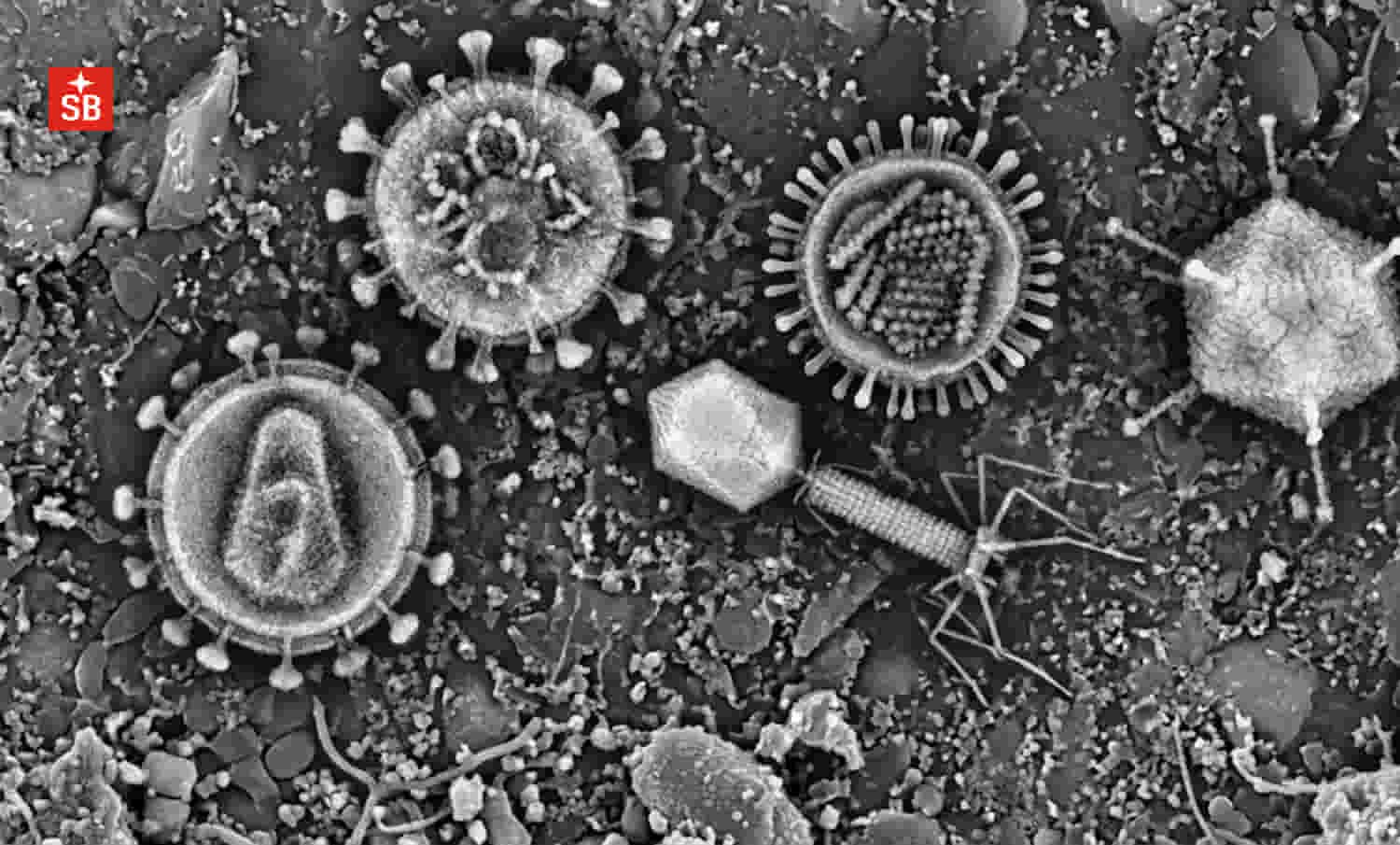
Dig up a handful of soil, and it is packed with billions of viruses. These tiny invaders infect bacteria and fungi living underground, quietly influencing how carbon and nutrients move through the soil. But there is a problem. Scientists do not fully agree on the best way to find these viruses in the laboratory. A new study shows that the method you choose can completely change what you discover.
| Key Points: 1. All sequencing was done using Illumina technology 2. Viruses were identified and quality-checked using geNOMAD and CheckV 3. In total, 46 metagenomes and 39 metatranscriptomes, identifying over 28,000 unique virus types |
Researchers at the Pacific Northwest National Laboratory tested seven different methods to extract viruses from soil collected from a grassland in Washington State. They then compared the viruses detected by each method. The results were surprising. Every method told a different story.
The seven preparation methods tested
- Vir DNA (DNA Virome), Physically isolated free floating virus particles from the soil and then extracted their DNA.
- Vir RNA (RNA Virome), Physically isolated free floating virus particles from the soil and then extracted their RNA.
- Tot DNA (Total Metagenome), Extracted all DNA present in the soil sample without separating any specific group.
- Tot RNA (Total Metatranscriptome), Extracted all RNA present in the soil sample without separating any specific group.
- PolyA RNA (Poly A Enriched RNA), Extracted total soil RNA and specifically enriched genetic material carrying a poly A tail, a chemical marker commonly found in genes actively expressed by eukaryotes such as fungi, plants, and animals.
- BAr DNA (Bacterial and Archaeal Enrichment), Used a density based separation technique, known as a Nycodenz gradient, to isolate bacterial and archaeal cells before extracting their DNA.
- Euk DNA (Eukaryote Enrichment), Used a flotation technique to separate fungal hyphae and fine plant roots before extracting DNA.
For DNA viruses, a targeted approach performed best. When scientists first isolated virus particles instead of sequencing all the genetic material in the soil, they detected far more viruses and obtained cleaner, more complete genetic information. This single method identified more than 80 percent of all the DNA viruses discovered in the study. It also detected viruses infecting microbial groups that none of the other methods found.

For RNA viruses, however, the story was different. Isolating virus particles did not detect more viruses than sequencing all the RNA present in the soil. Both approaches identified a similar number of RNA viruses. However, the targeted method produced cleaner data. In contrast, sequencing all the RNA was better at detecting viruses that infect fungi. This is because many fungal viruses remain inside their host cells instead of floating freely in the soil, making them easier to detect when the entire RNA content is sequenced.
The choice of method even changed the scientific conclusions. When researchers examined how viral activity changed with soil moisture, some methods revealed clear patterns, while others detected no pattern at all, even though the same soil samples were analysed. One method that enriched bacterial and archaeal cells uncovered a completely different group of viruses, possibly dormant viruses hidden within their hosts, that none of the other methods detected.
The researchers compared the process to describing an elephant after touching only one part of it. Each method captures something real, but no single method captures the complete picture. A study using one method might conclude that soil viruses respond in one way to changing environmental conditions, while another study using a different method on the same soil could reach the opposite conclusion.
This discovery has implications far beyond the laboratory. Understanding how soil viruses influence carbon cycling and nutrient movement could improve predictions of how ecosystems respond to climate change and help develop more sustainable farming practices. If the methods scientists use unintentionally bias their results, it becomes much harder to build an accurate picture of what is happening beneath our feet.
The researchers conclude that there is no single “best” method for studying soil viruses. Instead, scientists should choose the method that best fits their research question and, whenever possible, combine multiple approaches to obtain a more complete understanding. As research into the hidden world of soil viruses continues, this study serves as an important reminder that the tools we use can shape the discoveries we make.