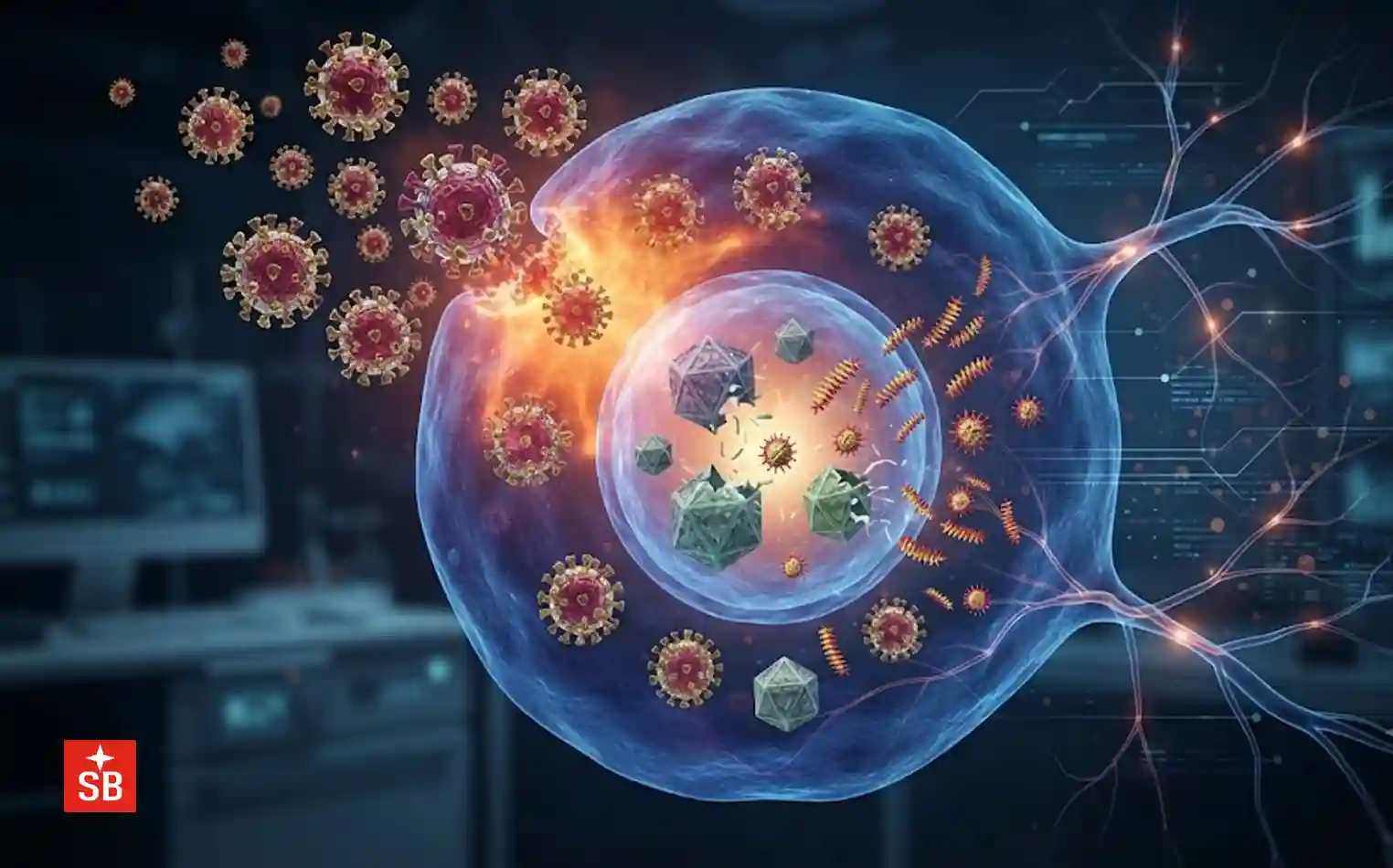
A landmark study published this week in the journal Nature has revealed that Long COVID-19 infections can “awaken” dormant viruses that typically remain harmless in the human body. The findings offer new, potential clues into the biological drivers of Long COVID and challenge long-held beliefs about why these latent viruses reactivate. In simple terms, some viruses may behave like quiet passengers inside the body, remaining unnoticed until changing conditions give them a chance to become active again. This finding adds another piece to a medical puzzle that is still being assembled.
The research, led by scientists at Boston Children’s Hospital and involving 15 biomedical institutions across the United States, followed 1,154 hospitalized COVID-19 patients over the course of a year. By analysing more than 200,000 samples, the team created a comprehensive “multi-omic” profile of how these patients’ immune systems responded to the viruses. Multi-omic research brings together different layers of biological information, allowing scientists to look at the body from several angles rather than through a single window. It is somewhat like studying a city by looking at its roads, buildings, traffic, and electricity together.
What exactly is Long COVID?
Think of Long COVID as a “hangover” that won’t go away. Even after the actual COVID-19 virus has left the body, many people find themselves trapped in a cycle of persistent, mysterious symptoms. This can include overwhelming exhaustion that makes it hard to get out of bed, “brain fog” that makes concentrating nearly impossible, and heart or breathing problems. It’s not just one single illness, but a complex mix of health issues that can last for months or even years, turning the lives of healthy, active people upside down. For some people, the illness can feel like an unwanted guest that has forgotten when to leave.

Long COVID is also a reminder that an infection can leave effects behind even after the main virus is no longer easily detected. The body and immune system do not always return to normal immediately. The story, therefore, may continue even after the headline infection appears to have ended.
Waking the “sleeping” viruses
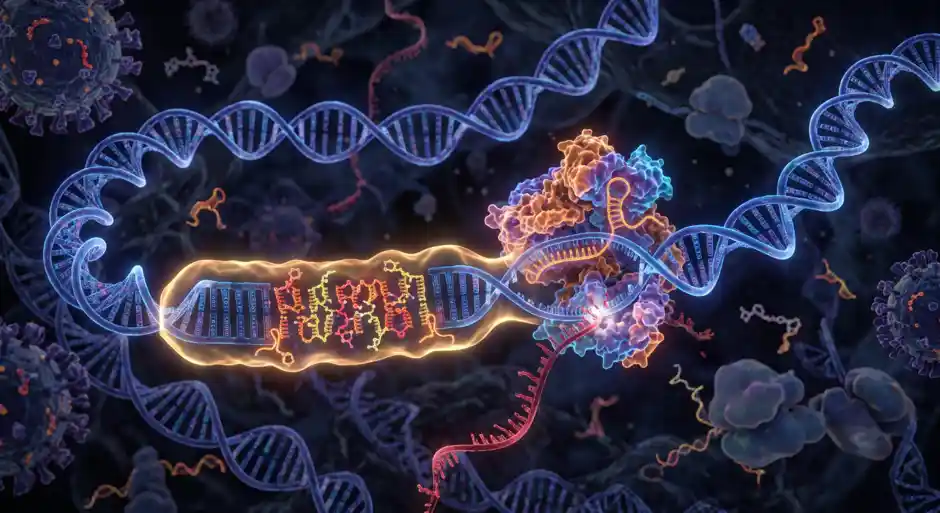
We all carry a “virome”, a collection of viruses that live inside us, usually causing no harm. The study found that in severe COVID-19 cases, 11 of these “sleeping” viruses, including common ones like the Epstein-Barr virus, which causes mononucleosis, began to reactivate. The word “sleeping” is a useful metaphor here, because these viruses are not literally asleep like humans, but can remain in a relatively inactive state before becoming detectable or active again.
Previously, doctors thought this only happened in people with very weak immune systems. However, this study shows that even in healthy people, the intense inflammation caused by a severe COVID-19 infection can cause these dormant viruses to flare up. The immune system, which normally acts like the body’s security team, may undergo major changes during severe infection. When the body’s internal balance is disturbed, previously quiet biological processes may start making noise.
The finding also highlights an important biological idea, reactivation does not necessarily mean that a dormant virus is suddenly causing disease on its own. It may instead be a sign of what is happening inside the body. In science, one clue can point towards another hidden process, but it still needs careful investigation before becoming a final answer.
A possible piece of the puzzle
The researchers paid close attention to a group of viruses called Anelloviridae. They discovered that patients who still showed signs of these viruses months after their initial COVID-19 infection were much more likely to report symptoms like severe fatigue and physical weakness, the classic signs of Long COVID. This association gives researchers another thread to follow, but a thread is not yet the whole fabric. Scientists still need to understand whether viral reactivation contributes directly to symptoms or simply travels alongside other biological changes.
“This gives us a new way to look at how COVID-19 affects the body long-term,” says Dr. Ofer Levy, one of the lead researchers at Boston Children’s Hospital. “It’s a big step toward better understanding the disease and, hopefully, finding ways to treat it.” His statement reflects the cautious optimism that often accompanies an important scientific finding, promising clues may open doors, but further research must show which doors actually lead to effective treatments.
The researchers’ multi-omic approach is particularly important because Long COVID does not appear to have a single biological signature. Different systems of the body may interact in complicated ways, making the condition more like an orchestra than a solo performance. If one section changes its rhythm, the effects may be felt across the entire system.
What this means for you
While this discovery doesn’t mean these viruses are the only cause of Long COVID, it is a major clue. In the future, doctors might be able to test for these viral markers to see who is at risk for long-term complications and provide more personalised care. Such markers could potentially act like biological warning lights, helping researchers identify people who may need closer monitoring.
The researchers noted that this study focused on patients who were hospitalised with earlier strains of the virus. More work is needed to understand how these findings apply to people who were vaccinated or those who had milder cases of COVID-19. This is an important limitation because a study population can influence how widely its findings can be applied. In other words, one piece of the map does not describe the entire country.
For now, the study provides a vital new perspective: for some, the battle against COVID-19 doesn’t end when the test finally turns negative, it’s about managing the “echo” that the virus leaves behind. That echo may come from changes in the immune system, inflammation, viral reactivation, or a combination of several factors that scientists are still trying to understand.
The irony is that a virus does not always need to remain loudly visible to leave a biological trace. Sometimes, the quietest signals may tell researchers the most interesting stories. As the proverb says, “Still waters run deep.” In Long COVID research, scientists are learning that beneath an apparently settled infection, the body’s biology may still be telling a complicated story.
The study does not provide the final answer to Long COVID, but it adds another valuable clue. And in medical science, solving a difficult puzzle often begins not with one perfect answer, but with learning which pieces belong together.