Enzyme-Linked Immunosorbent Assay (ELISA) is a commonly used laboratory technique for detecting and measuring specific antigens or antibodies in a sample. It works based on the specific reactions between an antigen and an antibody. ELISA is widely used because it is sensitive, relatively simple to perform, and does not involve radioactive materials.
1. Principle
The basic principle of ELISA is the specific binding between an antigen and its antibody, followed by detection using an enzyme reaction. One component of the reaction is attached to a solid surface, usually the wells of a microtiter plate.
An enzyme-labelled antibody is used to identify the target antigen or antibody. After the specific binding reactions have taken place, an appropriate substrate is added. The enzyme reacts with the substrate and produces a coloured product. The intensity of the colour is measured using a microplate reader.
In most ELISA methods, a stronger colour indicates a greater amount of the target substance. However, in competitive ELISA, the relationship is usually reversed. Horseradish peroxidase (HRP) and alkaline phosphatase (ALP) are two commonly used enzymes.
2. Types of ELISA
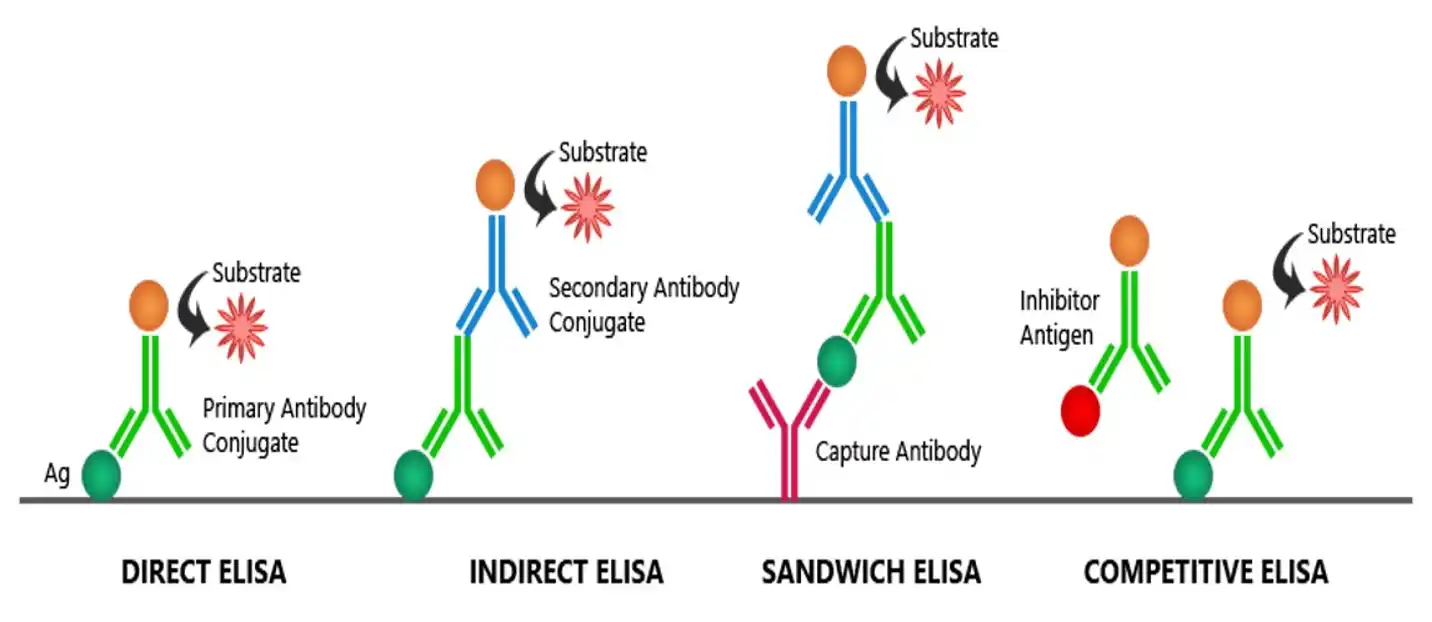
There are four main types of ELISA: direct, indirect, sandwich, and competitive ELISA.
In direct ELISA, an enzyme-labelled antibody binds directly to the antigen attached to the surface of a microtiter plate. It is a simple and quick method but is generally less sensitive than some other types.
In indirect ELISA, an unlabelled primary antibody first binds to the antigen. An enzyme-labelled secondary antibody then binds to the primary antibody. This method is commonly used to detect antibodies present in a patient’s blood or other samples.
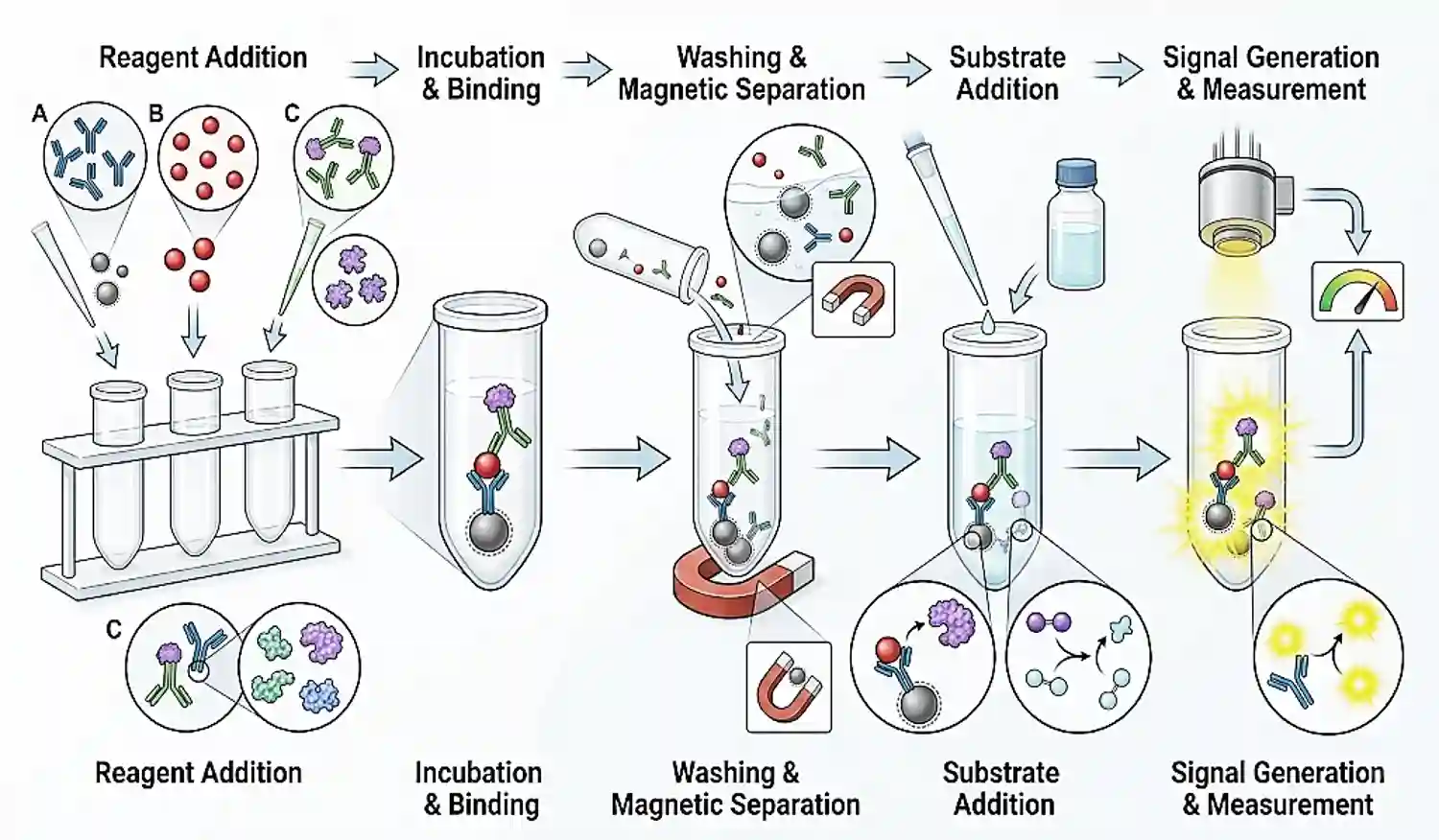
Sandwich ELISA is mainly used to detect antigens. The antigen is captured between two antibodies. One antibody, called the capture antibody, is attached to the plate, while another antibody acts as the detection antibody. Because two antibodies are involved, this method is highly specific and sensitive.
In competitive ELISA, the antigen in the sample competes with a labelled antigen for a limited number of antibody-binding sites. Therefore, the signal generally decreases as the amount of antigen in the sample increases.
3. Procedure
Although the exact procedure differs depending on the type of ELISA, the general steps are similar.
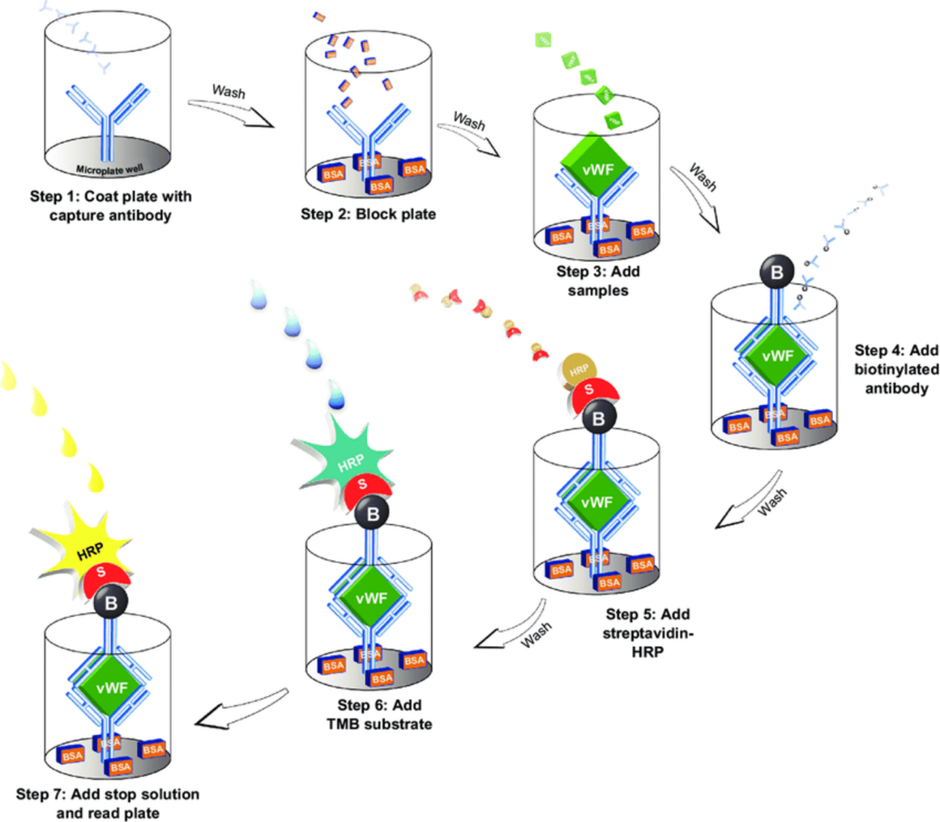
First, the antigen or capture antibody is attached to the wells of a microtiter plate. The remaining empty sites are then blocked to prevent unwanted or nonspecific binding.
The test sample and suitable standards or controls are added to the wells and allowed to incubate. During this time, the target antigen or antibody binds specifically to its corresponding antibody or antigen.
The wells are then washed to remove substances that have not bound. An enzyme-linked antibody is added and allowed to react with the target. After another washing step, a suitable substrate is added. A colour develops because of the enzyme–substrate reaction.
Finally, the intensity of the colour is measured using a microplate reader. The result is compared with standards or controls to determine the amount of the target substance present in the sample.
4. Applications
ELISA has many applications in medicine, research, food testing, and biotechnology. In clinical laboratories, it is used to detect infections such as HIV and hepatitis and to measure hormones, antibodies, cytokines, allergens, and other disease-related markers.
In research laboratories, ELISA is useful for studying immune responses, inflammation, proteins, and disease biomarkers. In the food industry, it can be used to identify food allergens and certain microbial contaminants.
Overall, ELISA is an important laboratory technique because it provides a convenient, sensitive, and reliable way to detect and measure biological substances. Its wide range of applications has made it one of the most used immunological methods in modern laboratories.