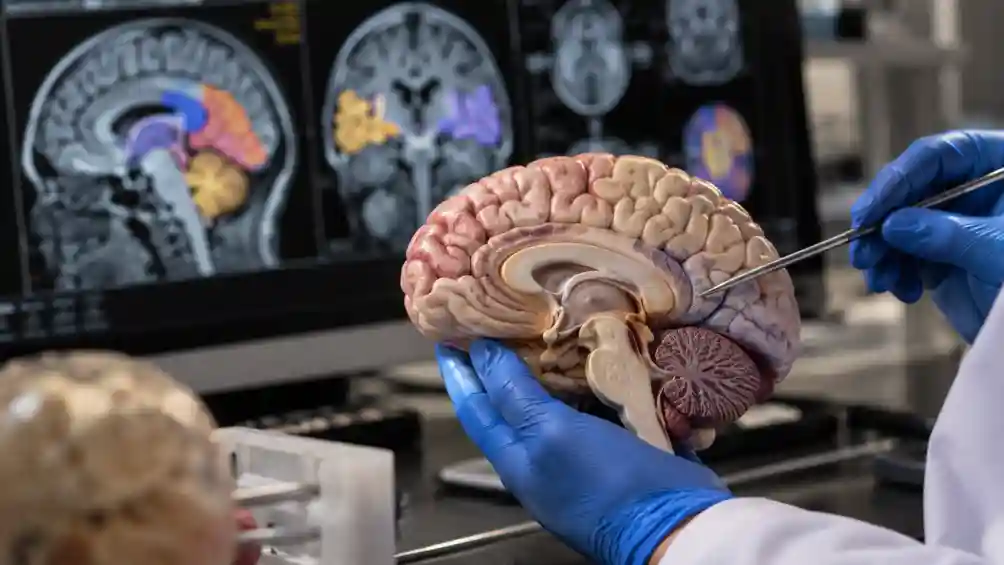
For centuries, the human brain has been treated as a single organ. But new research is challenging one of the basic assumptions about how this extraordinarily complex structure develops. Scientists have found evidence that the brain may arise from two distinct developmental systems, which emerge separately before eventually becoming part of the same organ.
The study, published in Nature Neuroscience in September 2026, focused on a fundamental question in developmental biology: does the entire brain originate from one common population of neural progenitor cells, or do different parts of the brain arise from separate progenitors? Researchers found evidence supporting the second possibility.
The researchers identified two populations during early development. The first, called the anterior neural ectoderm, gives rise to the forebrain and midbrain. These regions are involved in functions ranging from sensory processing and movement to higher-order cognition. The second, the posterior neural ectoderm, gives rise to the hindbrain, which forms much of the brainstem and coordinates essential functions such as breathing, swallowing, sleep and other automatic processes.
Importantly, the researchers did not simply observe different regions of an already formed brain. Using lineage tracing in mouse embryos, together with experiments involving human pluripotent stem cells, they found that these two progenitor populations emerge in parallel during gastrulation and become committed to different developmental fates. Their chromatin landscapes also diverged early, providing molecular evidence that the two populations were already being programmed toward different identities.
The discovery has a practical consequence. Scientists have historically struggled to generate certain types of human hindbrain neurons from stem cells in the laboratory. By understanding that hindbrain cells originate from a distinct developmental pathway, the researchers were able to generate hindbrain rhombomere 5/6-specific motor neurons from human pluripotent stem cells. This could provide better laboratory models for studying disorders affecting the brainstem, including amyotrophic lateral sclerosis and spinal muscular atrophy.
The evolutionary implications are equally intriguing. The researchers propose that this developmental division may have deep evolutionary roots, potentially extending back hundreds of millions of years. However, the study does not mean that humans literally possess two separate brains. Rather, it suggests that the structure we call the brain may be a composite organ with two distinct developmental origins.
This changes an important question in neuroscience. Instead of asking how one group of cells builds the entire brain, scientists may now need to understand how two developmentally distinct systems become integrated into one remarkably coordinated organ.