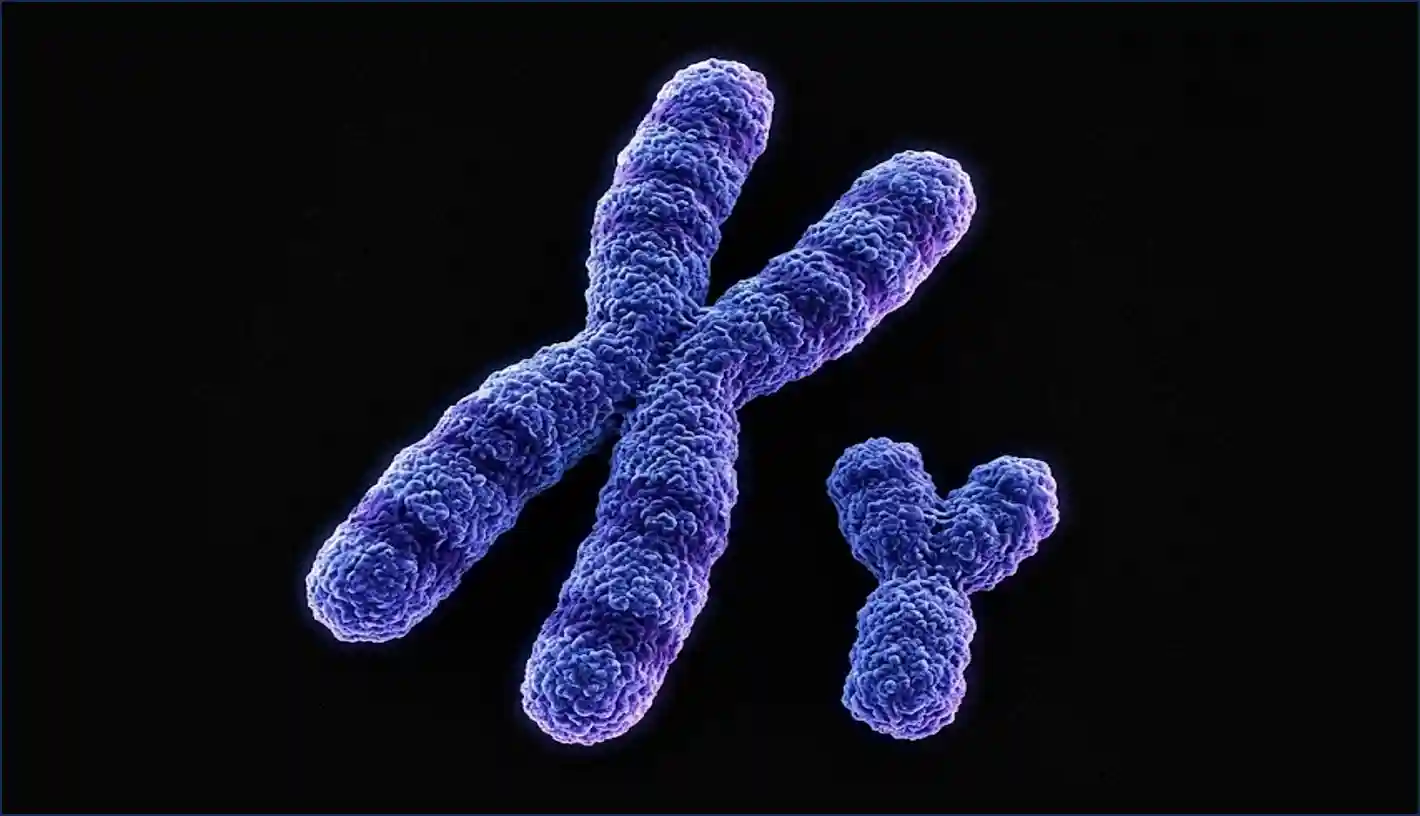
The Y chromosome has often been treated as the relatively simple member of the human chromosome pair: important for sex determination, but containing far fewer genes than the X chromosome. Cancer biology is revealing a more complicated story.
A new study has found that cancer cells can selectively delete sections of the Y chromosome, rather than simply losing the entire chromosome. These missing regions are enriched in genes, and their loss appears to alter cellular programs involved in growth, stress responses and immune signaling. The findings suggest that Y-chromosome loss may be more than a random consequence of cancer development.
In some tumors, specific parts of the chromosome may be lost because doing so gives cancer cells an advantage. The Y chromosome is not simply “there” or “gone”. Scientists have known for years that cancer cells can lose the Y chromosome, a phenomenon called loss of Y chromosome (LOY). LOY is also found in normal cells as men age, particularly in blood cells. But it is frequently observed in several cancers as well.
Traditionally, researchers often treated LOY as an all-or-nothing event: a cell either retained the Y chromosome or lost it. The new study suggests that reality is much messier. Researchers from the University of Arizona and Cedars-Sinai analyzed high-coverage whole-genome sequencing and gene-expression data from 160 male cancer cell lines in the Cancer Cell Line Encyclopedia. Instead of asking simply whether the Y chromosome was present, they examined which specific sections had disappeared. Cancer cells appear to “erode” specific regions
They identified 24 protein-coding genes on the Y chromosome that were repeatedly lost across the cancer cell lines. Fifteen of these genes were also found to be lost in at least one independent dataset, including sequencing data from bladder tumors. Importantly, the same recurrent deletions were not found in the healthy male genomes examined from the 1000 Genomes Project.
This supports the idea that these particular deletions are somatic changes acquired during cellular development, rather than inherited Y-chromosome differences. They also developed a measure called the Y EroSion (YES) Score to describe Y-chromosome loss as a spectrum rather than a simple present-or-absent state. And the sections that remained were not necessarily meaningless leftovers. Retained Y-linked regions remained transcriptionally active and were enriched for functions connected with cell proliferation, immune signaling and stress adaptation.
How could losing DNA help a tumor?
Cancer cells constantly face pressures that normal cells do not: rapid growth, metabolic stress, DNA damage and attacks from the immune system. The study found that Y-chromosome erosion was associated with changes in gene regulation throughout the cell. The researchers suggest that losing particular Y-linked genes could therefore reshape pathways that influence how tumors grow and respond to their surroundings. This fits with earlier experimental work.
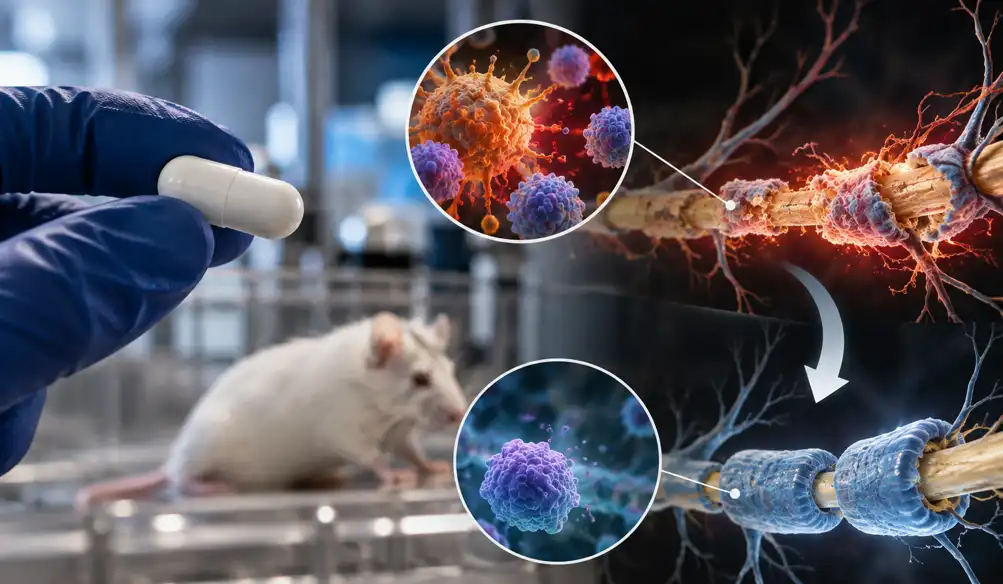
In bladder cancer, researchers previously found that complete Y-chromosome loss could make tumors more aggressive in mice with functioning immune systems. The Y-negative tumors promoted dysfunction or exhaustion of CD8+ T cells, suggesting that Y loss can help tumors evade immune attack.The new study adds another layer: tumors may not need to throw away the entire Y chromosome to gain an advantage. They may selectively remove particular pieces while keeping other regions intact.
Could this lead to new cancer treatments?
Potentially, but the study is still primarily a genomic and mechanistic discovery. They suggest that understanding exactly which Y-linked regions disappear could eventually help identify biomarkers or treatment vulnerabilities in male cancers. But the new study does not establish a treatment based on Y-chromosome erosion, nor does it show that preventing these deletions would stop cancer in patients. The authors specifically note that the findings need validation in primary tumor cohorts.
Cancer cells do not simply accumulate random genetic damage. Some alterations may be retained because they help the tumor survive, while others disappear. And in male cancers, they are now finding that the Y chromosome itself can become part of that evolutionary process not necessarily disappearing all at once, but being gradually and selectively worn away.