A tsunami can destroy coastlines, reshape rivers and create entirely new habitats. But in Japan, the 2011 disaster also triggered something much less visible: two fish species that normally lived apart suddenly began exchanging genes. The surprising part came years later. Researchers tracking the fish found that although the tsunami-triggered hybridization was real, most of the DNA introduced from one species was gradually eliminated. Within about a decade, the population had returned to an almost entirely single-species genetic composition.
The finding gives a rare real-time look at how species boundaries can survive even after hybridization occurs. When the tsunami brought two species together. The story began with the Great East Japan Earthquake and tsunami of March 2011. In Otsuchi, Iwate Prefecture, the tsunami exceeded 10 metres in height and dramatically altered the landscape.
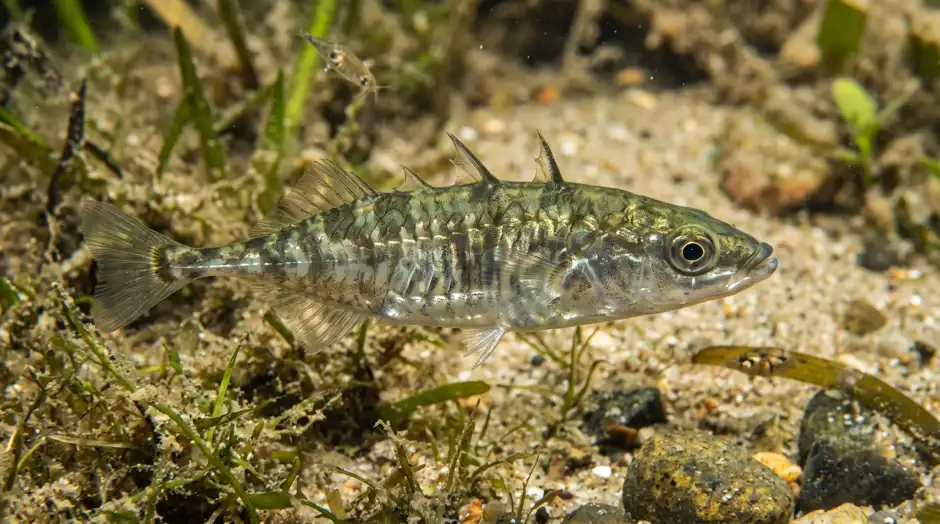
The earthquake-related land subsidence and tsunami created new freshwater habitats, including spring-fed ponds. These unusual conditions brought together two closely related stickleback species: the freshwater threespine stickleback (Gasterosteus aculeatus) and the marine Japan Sea stickleback (Gasterosteus nipponicus). They believe the tsunami carried marine stickleback into the newly formed freshwater habitat, while the backwash carried freshwater fish from upstream into the same area. The two species, which would normally have limited opportunities to meet, suddenly found themselves sharing the same environment.
And they hybridized. They watched evolution unfold. The team did something unusual: instead of examining the hybrid population at a single point in time, they followed it for nine years. When researchers sampled the population in 2012, 38% of the sampled fish were hybrids. Their genomes contained DNA from both species. But when they continued sampling through 2020, the genetic mixture began to disappear.
Japan Sea stickleback-derived genomic regions rapidly declined, and by 2020 the population had become almost entirely genetically similar to the freshwater threespine stickleback. Because these fish have a generation time of roughly one year, most of the foreign genome disappeared in approximately 10 generations. So the hybridization happened, but it did not permanently erase the distinction between the species.
Why did the foreign DNA disappear?
They found that some parts of the Japan Sea stickleback genome disappeared particularly quickly. These included genomic regions associated with traits such as freshwater adaptation, movement between freshwater and the sea, mate choice and hybrid male sterility. These are exactly the kinds of traits that can create reproductive barriers between populations. But there was another surprise. Those major reproductive-isolation regions could not completely explain the rapid disappearance of Japan Sea stickleback DNA across the genome.
Computer simulations suggested that many weaker genetic incompatibilities scattered throughout the genome may also have contributed. In other words, species boundaries may not depend on one or two powerful genetic barriers. Instead, they can be maintained by the combined effects of several strong barriers and many smaller ones. A rare glimpse of evolution in real time Hybridization is not unusual in nature. Closely related species can exchange genes when environmental changes bring them into contact.
What makes this case remarkable is the opportunity to observe what happened after the initial mixing. The tsunami effectively created a natural experiment. A sudden environmental disturbance brought two species together, they detected the resulting hybrid population, and genomic sampling over the following years revealed how the foreign DNA was progressively removed.
It shows that hybridization does not automatically mean that species boundaries disappear. Sometimes, evolution can act like a filter. Genes from another species may enter a population, but reproductive barriers and genetic incompatibilities can determine which pieces survive into future generations and which gradually vanish. The tsunami changed the landscape in a matter of hours. But the genomes took years to reveal what happened next.
Source: