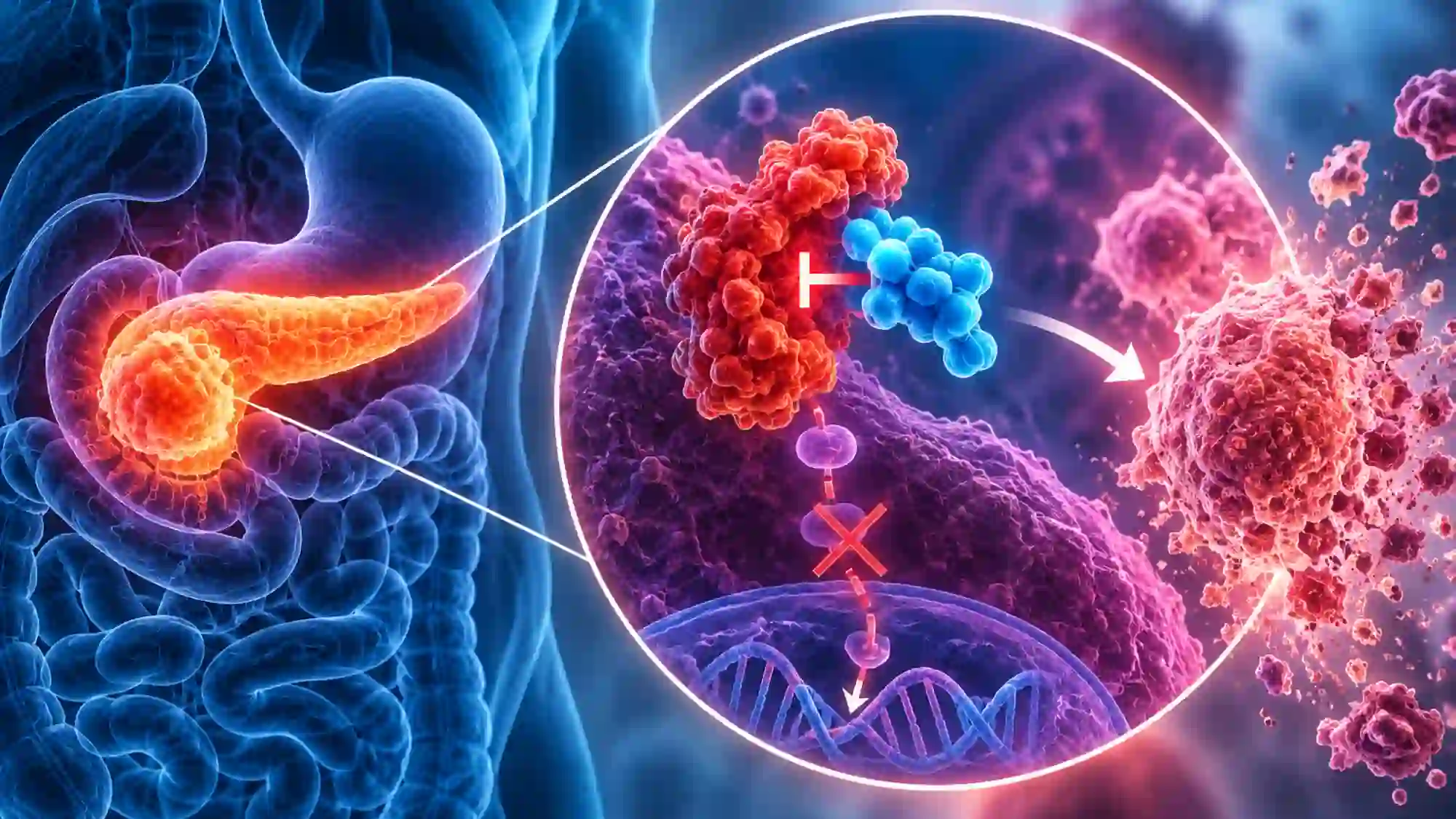
Pancreatic cancer has long been considered one of the hardest cancers to treat. One reason is its remarkable ability to grow aggressively while remaining difficult to target with conventional therapies. But a major shift in cancer treatment has arrived: scientists are now targeting one of the molecular systems that directly drives pancreatic tumour growth.
On August 26, 2026, the U.S. Food and Drug Administration approved daraxonrasib (Rasonque) for adults with metastatic pancreatic adenocarcinoma who have already received systemic therapy or are not candidates for combination chemotherapy. It is the first approved therapy of its class to target the RAS signaling system in this setting.
The genetic engine: RAS and KRAS
To understand why this matters, think of RAS proteins as molecular switches inside cells. Under normal circumstances, these switches turn growth signals on and off at the appropriate times.
In pancreatic cancer, however, mutations in genes such as KRAS can disrupt this control system. The resulting abnormal RAS signaling continuously tells cancer cells to grow, survive and divide. KRAS mutations occur in the vast majority of pancreatic cancers, making the pathway one of the most important targets in pancreatic cancer research.
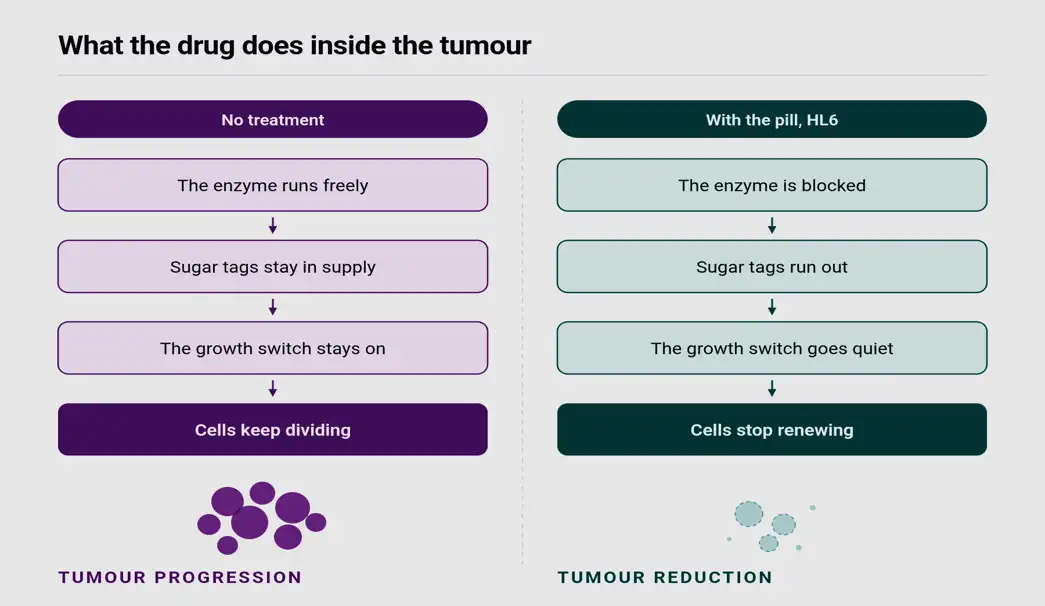
Daraxonrasib takes a different approach from traditional chemotherapy. Rather than broadly attacking rapidly dividing cells, it inhibits multiple forms of active RAS proteins, aiming to shut down a central signaling pathway that cancer cells depend upon.
What did the clinical trial show?
The FDA approval was based on the RASolute 302 trial involving 500 people with metastatic pancreatic adenocarcinoma whose disease had progressed after one previous line of systemic treatment.
Patients receiving daraxonrasib had a median overall survival of 13.2 months, compared with 6.7 months for those receiving standard chemotherapy. Median progression-free survival was 7.2 months versus 3.6 months, while the objective response rate was 30% compared with 11%.
These results are significant because pancreatic cancer has historically offered few effective targeted treatment options.
A breakthrough but not a cure
Daraxonrasib does not eliminate pancreatic cancer, and resistance to targeted therapies can eventually emerge. Researchers are therefore investigating how RAS inhibitors can be combined with other treatments and whether earlier intervention could produce greater benefits.
The approval nevertheless represents an important change in strategy: instead of simply trying to kill cancer cells faster than they can grow, researchers are increasingly trying to switch off the molecular machinery that makes cancer growth possible.
For pancreatic cancer, that could mark the beginning of a new era in precision oncology.
Sources: