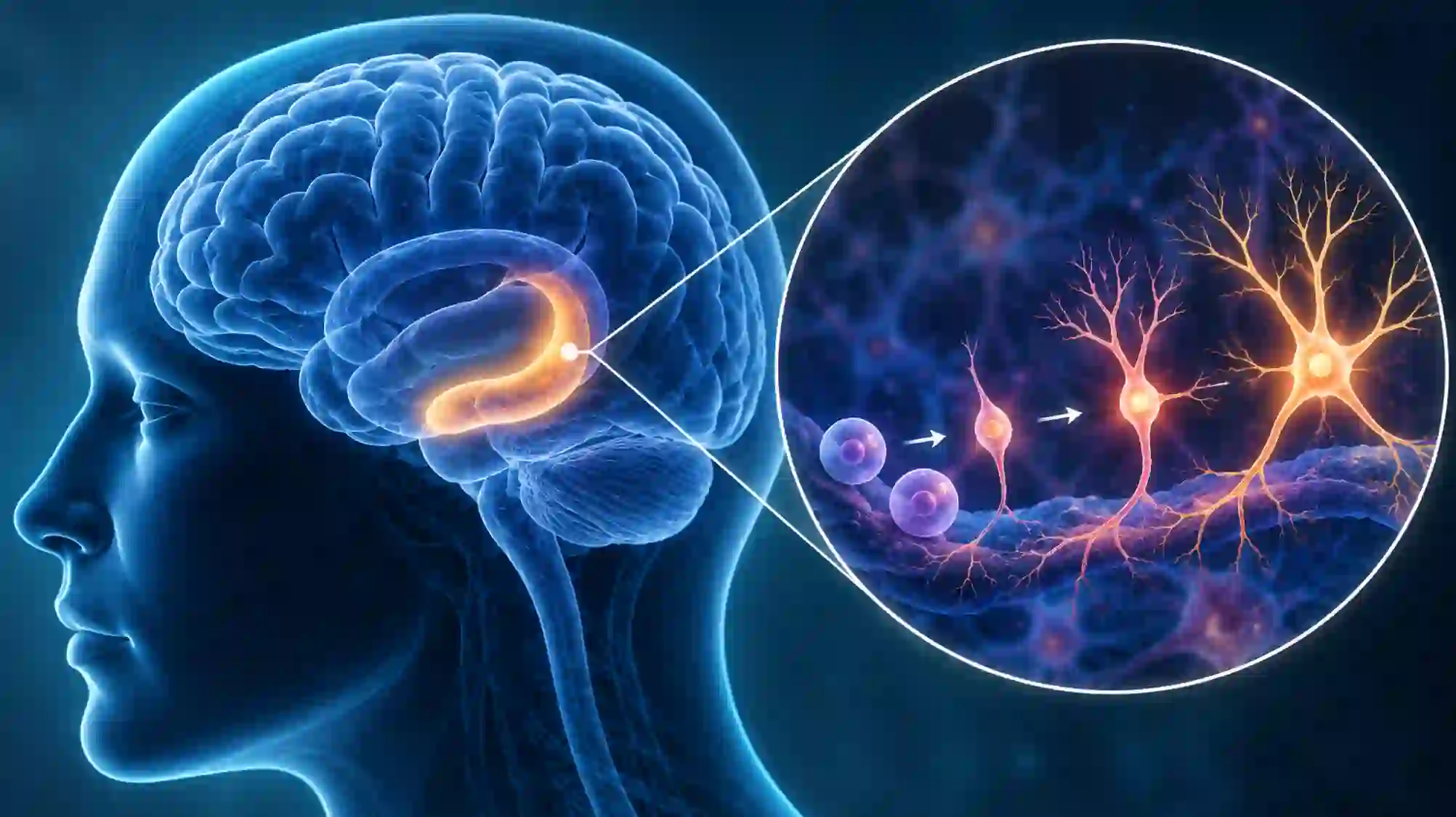
For much of modern medical history, scientists believed that the adult brain had a limited ability to produce new neurons. Unlike tissues such as skin or blood, the nervous system was thought to lose most of its capacity for regeneration after development. But research over the past several decades has challenged this idea.
The process at the centre of this discovery is called adult neurogenesis the formation of new neurons from neural stem and progenitor cells.
In mammals, the best-established site of adult neurogenesis is the hippocampus, a brain region involved in learning, memory, and emotional regulation. Within the hippocampus, neural stem cells can give rise to immature neurons that gradually develop and integrate into existing neural circuits.
But there is an important scientific debate: how much neurogenesis actually occurs in the adult human brain?
Studies have produced conflicting results. Some research has identified immature neurons in the human hippocampus even in older adults, while other studies have reported very little detectable neurogenesis after childhood. Differences in how human brain tissue is collected, preserved, and analysed may partly explain these conflicting findings. A recent review concluded that adult human hippocampal neurogenesis remains an active area of investigation rather than a completely settled question.
Why are scientists so interested in whether adults can make new neurons?
Because neurogenesis may contribute to brain plasticity the ability of the nervous system to adapt and reorganise. Research suggests that newly generated neurons may participate in learning and memory and could influence how the brain responds to stress and environmental experiences.
The bigger question is whether this natural process could eventually help repair damaged brains.
After conditions such as stroke or traumatic brain injury, the brain’s regenerative response can increase. However, the number of new neurons generated naturally appears insufficient to replace large amounts of damaged tissue. Researchers are therefore exploring ways to stimulate endogenous neural stem cells, improve the survival of newly generated neurons, or convert other brain cells into neurons. These approaches remain experimental.
Ageing adds another challenge. Evidence suggests that neurogenesis can decline with age, although the extent of this decline in humans remains uncertain. Researchers are investigating how the cellular environment, inflammation, lifestyle, and disease affect the brain’s ability to generate and integrate new neurons.
So, can your brain rebuild its own neurons?
To some extent, possibly yes but not in the way a damaged liver or skin can regenerate.
The adult brain appears to retain at least some capacity for producing new neurons, particularly in the hippocampus, but scientists are still determining how extensive and functionally important this process is in humans.
The exciting possibility is that understanding neurogenesis could eventually lead to therapies that help the brain repair itself rather than simply compensate for damage.
The brain may not be as biologically fixed as we once believed. Its ability to change and perhaps to create new neurons could be one of its most remarkable forms of resilience.
Sources: