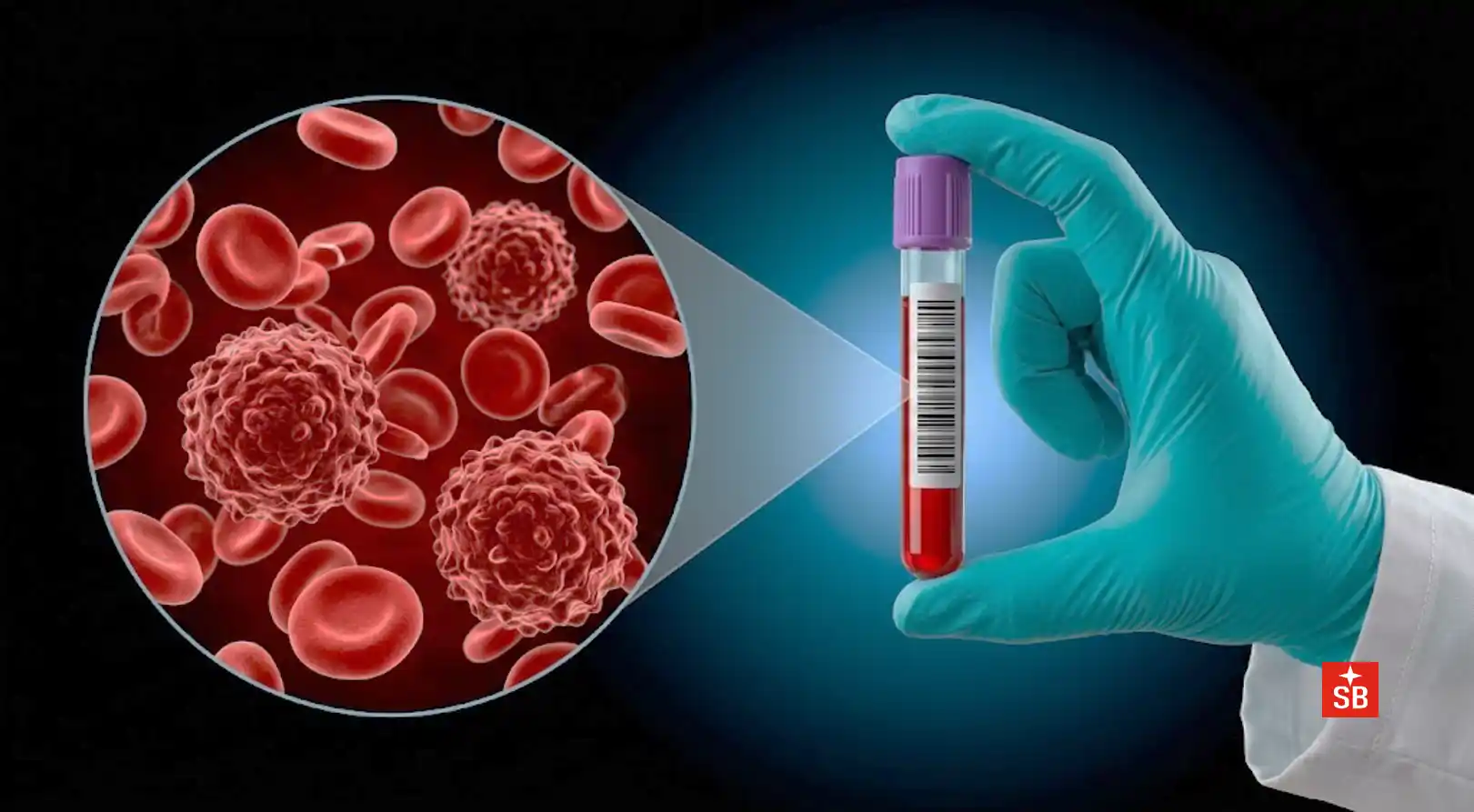
Imagine intercepting a malignant tumor months or even years before a single symptom manifests. A massive NHS clinical trial in the UK is currently evaluating a single-draw Multi-Cancer Early Detection (MCED) test that aims to shift cancer care from reactive treatment to preemptive interception.
The Molecular Mechanism: Deciphering Epigenetic Fingerprints
The test targets cell-free DNA (cfDNA) circulating in the bloodstream. When normal or malignant cells undergo apoptosis or necrosis, they shed fragmented genomic material into the plasma. However, sequencing raw genetic mutations often yields false positives due to clonal hematopoiesis of indeterminate potential (CHIP)—benign, age-related blood mutations.
To bypass this noise, the platform utilizes targeted bisulfite sequencing and machine learning to detect abnormal DNA methylation patterns. Cancer cells display characteristic hypermethylation and hypomethylation across genomic CpG islands. Because tissue-specific methylation signatures act as a cellular return address, the test can pinpoint the Tissue of Origin (TOO) with over 80% to 90% accuracy, guiding clinicians directly to the tumor’s location.
Targeting the Invisible Killers
This single blood draw screens for roughly 50 distinct cancer types, significantly expanding early detection beyond the five standard routine screenings (breast, cervical, colorectal, lung, and prostate). Crucially, over two-thirds of cancer deaths are caused by malignancies that currently lack routine screening protocols—such as pancreatic, esophageal, liver, and ovarian cancers. These aggressive tumors are notoriously silent until they reach advanced stages.
The clinical impact of shifting the detection timeline is stark:
| Disease Stage | Typical 5-Year Relative Survival | Primary Clinical Bottleneck |
| Stage I / II (Localized) | ~80% – 90% | Highly asymptomatic; missed without targeted screening |
| Stage IV (Distant Metastasis) | ~10% – 20% | High tumor burden, systemic spread, therapeutic resistance |
Evaluating the Metrics: Sensitivity vs. Specificity
In preliminary validation studies (such as the PATHWAY and SYMPLIFY trials), the Galleri MCED platform demonstrated an overall specificity of ~99.5%, keeping the false-positive rate under 1%. Highly specific testing is essential to avoid overwhelming healthcare systems with unnecessary follow-up imaging and invasive biopsies.
However, overall sensitivity varies by stage and cancer type:
- Overall Sensitivity: ~51.5% across all stages.
- Stage I–III Sensitivity: ~43.9% across top aggressive cancers.
- Stage IV Sensitivity: Escalates to >90% as tumors shed larger quantities of circulating tumor DNA (ctDNA).
While lower early-stage sensitivity remains a challenge, catching even a fraction of asymptomatic Stage I pancreatic or esophageal tumors yields a significant clinical net positive compared to current diagnostic standards.
The Road to Standard Care
Real-world implementation hinges on resolving key epidemiological questions around overdiagnosis (detecting indolent tumors that would never cause harm) and proving a clear reduction in late-stage cancer incidence and overall mortality.
If ongoing population-scale trials validate these endpoints, annual ctDNA methylation screening could soon integrate into routine preventive care alongside standard lipid panels and metabolic checks, fundamentally transforming oncology from late-stage intervention to early molecular eradication.
Source:
Klein, E. A., Richards, D., Cohn, A., Tummala, M., Lapham, R., Cosgrove, D., Chung, G., Clement, J., Gao, J., Bander, P. B., Fung, E. T., & Liu, M. C. (2021). Clinical validation of a targeted methylation-based multi-cancer early detection test using circulating cell-free DNA. Annals of Oncology, 32(9), 1167–1177. https://doi.org/10.1016/j.annonc.2021.05.806
Save, T., Neal, R. D., & Round, T. (2024). A multi-cancer early detection (MCED) test: Clinical update for GPs. British Journal of General Practice, 74(745), 380–382. https://doi.org/10.3399/bjgp24x739113
Schrag, D., Beer, T. M., McDonnell, C. H., 3rd, Stanford, J. L., Higgins, M. J., Copeland, A., Chung, G. G., Seiden, M. V., & Liu, M. C. (2023). Blood-based multi-cancer early detection test in an asymptomatic screening population: The PATHFINDER study. The Lancet, 402(10409), 1258–1270. https://doi.org/10.1016/S0140-6736(23)01700-2