A pregnancy test can turn a few drops of urine into two lines within minutes. But urine doesn’t contain a tiny marker that simply says “pregnant.” So what exactly is the test looking for?
The answer is human chorionic gonadotropin, or hCG – a hormone produced after a fertilised egg attaches to the lining of the uterus. Once pregnancy begins, hCG enters the bloodstream and eventually reaches the urine, where a pregnancy test can detect it. But detecting one particular hormone among thousands of molecules in urine requires some molecular precision. That is where antibodies come in.
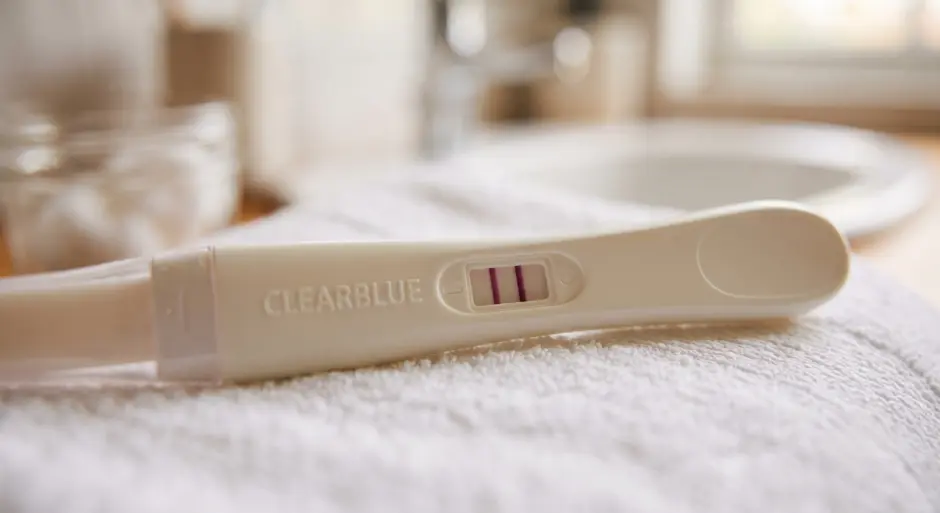
Pregnancy test strips contain antibodies designed to recognise and bind specifically to hCG. When urine moves along the strip, it carries any hCG with it. If hCG is present, it binds to these antibodies and forms a complex that continues moving along the test strip. Eventually, this complex reaches another region containing additional antibodies. These antibodies capture the hCG-antibody complex in one place. Because the antibodies are attached to coloured particles, enough of them accumulate there to produce a visible line.
That is the famous second line.
But then what is the first line for?
It is the control line, and it has nothing to do with pregnancy. It appears when the urine has travelled correctly through the strip, confirming that the test itself worked. So a positive test generally produces both a control line and a test line, while a negative test produces only the control line.
There is, however, a timing problem. Immediately after conception, there may not be enough hCG in the urine for the test to detect. As pregnancy progresses, hCG rises rapidly, making it easier for the test to pick up. This is why testing too early can produce a false negative, even when someone is pregnant.
More concentrated urine, such as the first urine of the morning, can also make hCG easier to detect. So that little plastic stick is essentially performing a miniature immunoassay. It uses antibodies to recognise one specific hormone, captures that hormone on a tiny strip, and converts a molecular interaction that is invisible to us into something as simple as a coloured line.
Sources: