What happens when a cell loses the machinery scientists thought it absolutely needed to stay alive?
Apparently, it finds another way. Researchers at Montana State University and collaborating institutions have uncovered a previously unknown cellular pathway that allows mammalian cells to continue producing cysteine, an amino acid essential for life, even when two major systems responsible for maintaining cellular cysteine production are disabled. The discovery challenges a long-standing assumption about how mammalian cells survive and could eventually reveal a new vulnerability in cancer cells.
Why is cysteine so important?
Cysteine is not just another building block for proteins. Cells use it for protein production, antioxidant defense and several metabolic processes. One important source is cystine, the oxidized form of cysteine. To turn cystine back into usable cysteine, cells normally rely heavily on two disulfide-reducing systems involving thioredoxin reductase and glutathione reductase. For years, researchers assumed that mammalian cells could not survive without at least one of these systems functioning. Then the mice provided an unexpected clue. They had created mice whose liver cells lacked both systems. Instead of dying as expected, the animals survived. That suggested that their cells had somehow found another route to obtain the cysteine they needed.
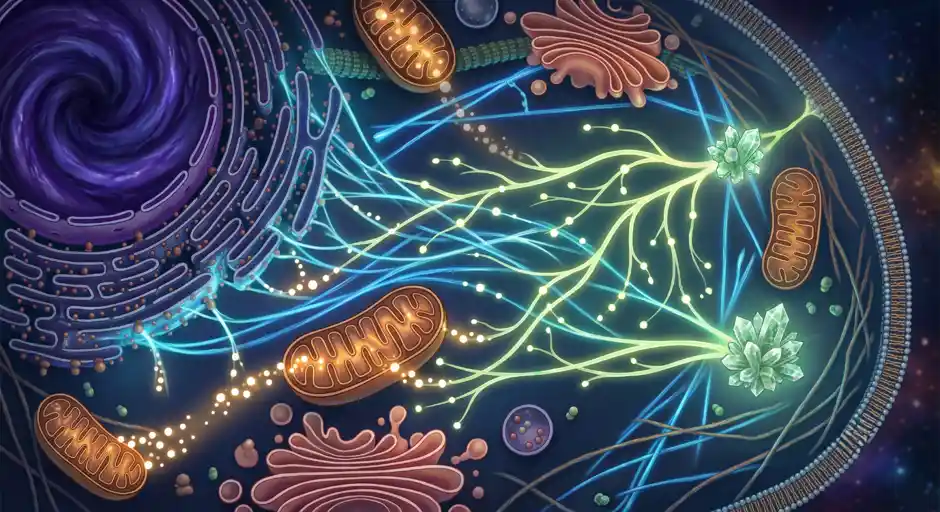
After years of investigation, the researchers identified the missing piece. Rather than breaking the sulfur–sulfur bond connecting the two halves of cystine, the conventional route , the cells can instead break a carbon–sulfur bond. This reaction produces an intermediate called cysteine persulfide, which can then undergo a non-enzymatic reaction to generate cysteine.
In the genetically modified mouse livers, this alternative pathway supplied most of the cysteine produced when the usual reductase systems were absent. The pathway depends on pyridoxal-phosphate-dependent chemistry and appears to respond to changes in cellular sulfur metabolism. In other words, the cell was not simply surviving with less cysteine. It had discovered a completely different biochemical route to make the molecule.
And what does this have to do with cancer?
This is where the discovery becomes particularly interesting. Cancer cells are frequently exposed to conditions that produce oxidative stress, including the effects of some cancer treatments. Cysteine is important for maintaining the cell’s antioxidant defenses, so the ability to obtain it through an alternative pathway could potentially help stressed cells survive. They therefore propose that some tumors might exploit this backup system to withstand treatment.
If future research confirms that cancer cells depend on this pathway under particular conditions, blocking it could potentially make those cells more vulnerable to existing therapies. But there is an important distinction: the study did not develop a cancer drug or demonstrate that blocking this pathway kills tumors in patients.
The cancer-treatment idea is a potential application arising from biological discovery. For now, the most fundamental finding is perhaps even more interesting. Cells that were thought to have only one essential route to cysteine had another one hidden in reserve. Sometimes, biology survives by having a backup plan that nobody knew existed.