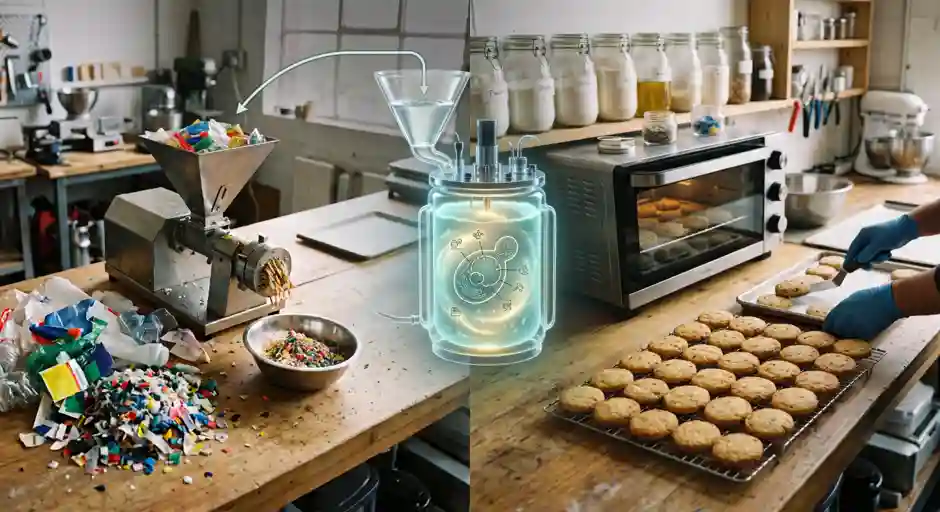
What happens when plastic waste that is difficult to recycle is given a job that requires it to withstand tonnes of pressure?
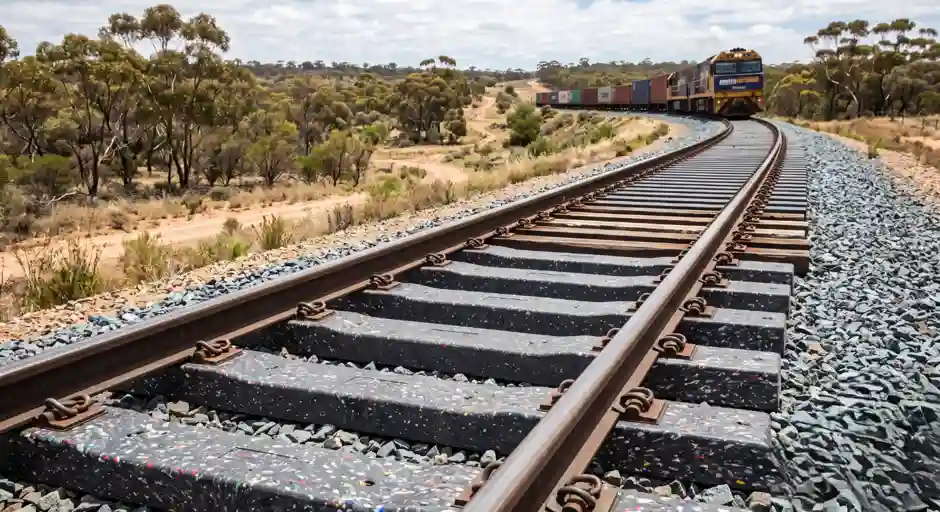
In Australia, some of it ends up underneath railway tracks. Researchers and engineers have spent years developing railway sleepers made largely from recycled plastic waste. The Australian-made product, known as Duratrack, was developed as an alternative to conventional timber sleepers, while also creating a use for plastics that might otherwise have gone to landfill. The research began in 2015 through collaboration between the Monash Institute of Railway Technology and recycling company Integrated Recycling.
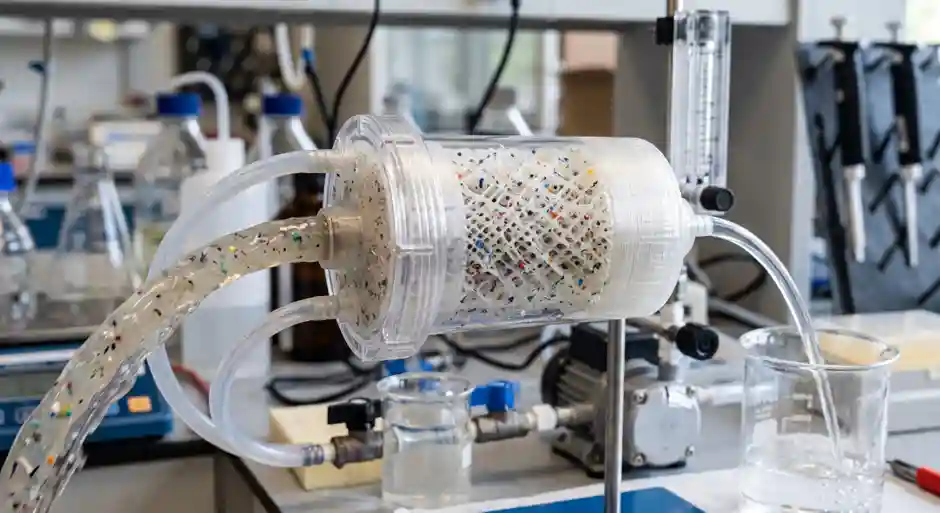
Railway sleepers are the structural blocks placed beneath rails. They help hold the track at the correct spacing and transfer the loads produced by passing trains into the ground. Traditionally, sleepers can be made from materials such as timber, concrete or steel. But timber sleepers eventually deteriorate and need to be replaced. The project took a different approach: use waste plastic as the raw material for a new composite sleeper. Duratrack uses a mixture of recycled plastics, including agricultural films, pipes and polystyrene.

Some of these materials are particularly difficult to recycle through conventional systems. In its tested formulation, the sleeper contains about 85% post-consumer recycled plastic. Instead of allowing those materials to become landfill waste, they are processed and incorporated into a solid railway component.
But can plastic really hold up a railway?
That was the difficult part. Railway infrastructure is not an easy environment for new material. Sleepers must tolerate repeated loads, vibration and changing environmental conditions while maintaining the geometry of the track. Researchers at Monash’s Institute of Railway Technology therefore tested the recycled-plastic sleepers in laboratories and under real railway conditions. The testing included measurements of strain, vibration, noise and load-transfer behaviour. Small-scale trials were conducted on tourist and heritage railways before the technology moved toward larger railway applications. In 2019, 190 recycled-plastic sleepers were installed at Richmond Station in Melbourne as part of a trial.
Further testing included an in-track trial at Tottenham Junction, where Duratrack sleepers were installed alongside timber sleepers and monitored under railway conditions. They eventually demonstrated that the sleepers could be used as timber alternatives for specified low-speed rail applications, and the product received approval from Metro Trains Melbourne and V/Line for such uses.
One of the biggest attractions is durability. Duratrack has a stated design life of up to 50 years, compared with roughly 15 years for a typical timber sleeper cited in the project’s research. The recycled-plastic material is also resistant to problems that can affect timber, including termites, water-related rot and fungal deterioration. That longer lifespan could mean fewer replacements over the lifetime of a railway track.
There is another number that makes the idea particularly interesting: according to the project developers, installing approximately 1,500 Duratrack sleepers over one kilometre of track can divert around 64 tonnes of plastic waste from landfill. The project also estimated that replacing timber sleepers could avoid the use of hundreds of trees per kilometre, depending on the sleeper design and timber source.

The idea goes beyond simply replacing wood with plastic. At the end of its service life, Duratrack is designed to be recyclable again. That creates the possibility of keeping the material within the manufacturing system rather than sending the old sleeper directly to landfill. There are still limits.
The product’s demonstrated approval is for particular rail applications, including low-speed settings; replacing conventional sleepers across every type of high-speed railway would require materials capable of meeting more demanding performance requirements.
They have continued investigating how recycled-plastic sleepers could be strengthened for broader applications. But the experiment demonstrates an important principle of circular manufacturing: sometimes the best place for waste is not a recycling bin, but a completely different product. Plastic that once protected crops or carried goods can, after processing, end up supporting the tracks that carry trains—and potentially remain there for decades.