What if planting trees could help stop soil from becoming salty?
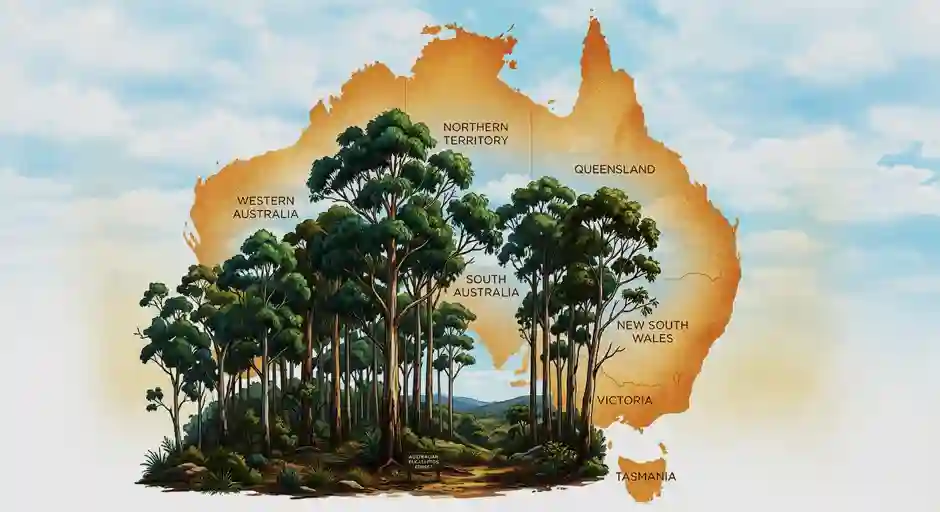
That was the idea behind an experiment in south-western Australia that began in 1976. Researchers planted eucalyptus trees over an area affected by a saline seep, hoping that the trees’ deep roots and high water consumption would lower the amount of water reaching the groundwater below. Decades later, the experiment has revealed something more complicated: the trees dramatically changed the groundwater system, but they did not eliminate the underlying salinity problem.
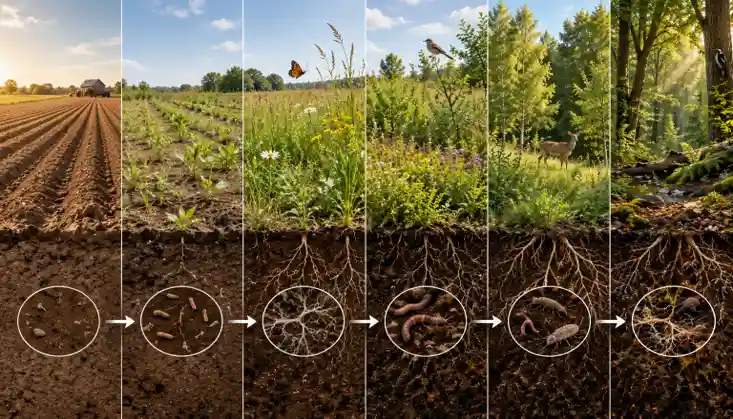
To understand why, we first need to understand how dryland salinity develops. Australia naturally contains large amounts of salt stored deep in its soils. Under native vegetation, deep-rooted plants continuously take up water, helping keep groundwater levels relatively low. When deep-rooted vegetation is cleared and replaced by crops or pastures that use less water, more rainwater can seep down into the groundwater. As the water table rises, it can bring dissolved salts closer to the surface. When that water evaporates, the salt is left behind in the soil.
Eucalyptus trees seemed like a logical solution. Their roots can explore deep layers of soil, and they can use large amounts of water. So the researchers planted a mixed eucalyptus plantation over the saline seep and monitored what happened. The trees did use substantially more water than traditional crops and pastures. They also altered groundwater conditions beneath the plantation. But after years of observation, the saline seep remained. In other words, changing the amount and movement of groundwater was not enough to remove the salt already stored in the landscape.
There is an important lesson here. Groundwater and soil are connected, but they are not the same thing. A tree can change how much water moves through the ground without necessarily reversing the chemical changes that have accumulated in the soil over decades.
The experiment also showed why simply planting a particular tree species cannot be treated as a universal solution to environmental problems. Soil type, groundwater depth, rainfall, salt distribution and the characteristics of the trees themselves all determine what happens underground. The eucalyptus trees were not useless. They changed the water system in measurable ways. But the decades-long experiment showed that changing the flow of water is not always enough to undo the legacy of salt already embedded in a landscape.
Sources: