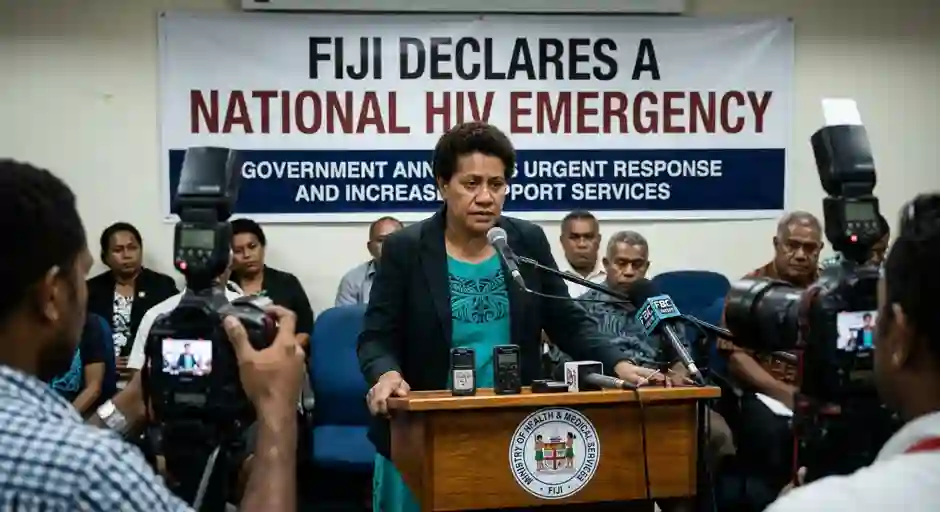
Fiji has declared a national HIV emergency after a sharp rise in infections, with the government estimating that about one in every 60 adults in the country is now living with HIV. Five years ago, the estimate was about one in 167. In 2025 alone, Fiji recorded 2,016 new HIV diagnoses, a 27% increase from the previous year. UNAIDS estimates that around 9,100 people were living with HIV in Fiji in 2025, but only 39% were aware of their status and about 22% were receiving antiretroviral treatment.
To understand why this matters, it helps to understand what HIV does. Human immunodeficiency virus (HIV) attacks cells of the immune system, particularly CD4 cells, which help coordinate the body’s defence against infections. Without treatment, HIV can progressively weaken the immune system and eventually lead to AIDS. But HIV is now a treatable condition. Antiretroviral therapy, or ART, uses combinations of medicines to stop the virus from multiplying. When treatment suppresses HIV to an undetectable level, a person does not sexually transmit the virus — a principle known as U=U, or Undetectable = Untransmittable.
The challenge in Fiji is getting people tested and connected to prevention and treatment early enough. Among cases where the transmission route was known, more than half were linked to sexual transmission and over 42% were associated with injecting drug use, according to UNAIDS. Health authorities are therefore expanding free testing, HIV-prevention medicines such as PrEP, treatment and harm-reduction services, including plans for a needle-and-syringe programme.
Expanded testing also explains part of the rise in reported diagnoses: finding more infections means more people who previously did not know they had HIV are being identified and can begin treatment. But the scale of the increase indicates that transmission itself has also risen sharply. UNAIDS estimates that new HIV infections in Fiji increased 12-fold between 2010 and 2025. The emergency declaration is therefore not about an untreatable disease suddenly appearing. It reflects a public-health system trying to find infections earlier, prevent new ones and get more people onto effective treatment.
And importantly, HIV is not spread through ordinary everyday contact. Reducing stigma is part of controlling the epidemic because fear and discrimination can discourage people from getting tested or seeking care.
Sources: